
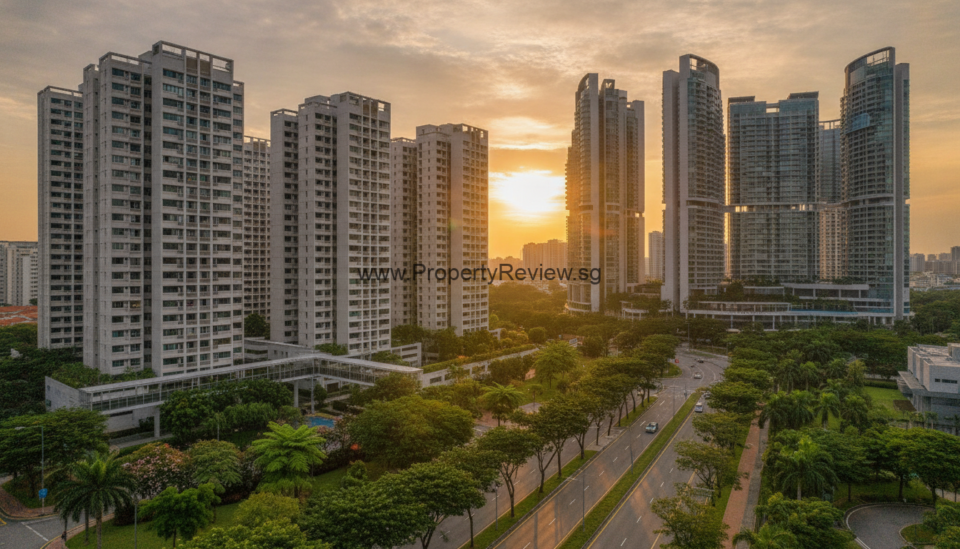
For more than three years, the 15-month wait-out period was a major obstacle for private property owners and former private property owners who wanted to move into a non-subsidised HDB resale flat. Introduced in September 2022 as a cooling measure, it required eligible sellers to wait after disposing of their private home before buying into the resale market.
The rule was designed for a market still absorbing pandemic-era demand. The backdrop is now more measured. EdgeProp’s report on Urban Redevelopment Authority data said private home prices rose 0.6% in the fourth quarter of 2025 and 3.3% across the year, while private rents fell 0.5% in the quarter. That combination points to a market that is still resilient, but less driven by urgency.
Why the policy change matters now
The immediate beneficiaries are likely to be “right-sizers”: homeowners, including empty nesters, who want to sell a private property and move to a more manageable HDB flat while unlocking capital. Under the old rule, they faced a difficult choice between postponing the move and renting for over a year.
The removal of the wait-out period reduces that friction. A private-home sale and an HDB resale purchase can potentially be coordinated more closely, although buyers must still satisfy the other eligibility rules that apply to HDB resale flats. The change is therefore not a blanket relaxation of every housing condition; it removes one timing barrier.
Will HDB resale prices surge?
More demand from former private property owners could support prices for larger resale flats, especially five-room flats and Executive Apartments in established estates. These homes may appeal to buyers accustomed to larger layouts and mature neighbourhood amenities.
However, the policy change does not automatically imply a broad-based price spike. Buyers remain constrained by affordability, financing rules and their willingness to pay. The market is also receiving additional public-housing supply, while buyers across the property market appear more conscious of price ceilings than during the earlier post-pandemic upswing.
- Affordability still matters: cash proceeds from a private sale do not eliminate the need to assess monthly commitments and transaction costs.
- Financing guardrails remain: HDB loan and Mortgage Servicing Ratio rules continue to shape purchasing power.
- Demand will be selective: location, remaining lease, condition and layout will continue to differentiate flats.

The rental-market ripple effect
The wait-out rule also created a temporary rental cohort: private owners who had sold their homes but could not immediately buy a qualifying HDB resale flat. Some had to rent while waiting, adding demand to a rental market that had already experienced a sharp post-pandemic run-up.
With the wait removed, some of those households may move directly from their sold property into their purchased resale flat. That could ease a small but meaningful source of rental demand. It comes at a time when private rents have begun to soften and vacancy has risen, according to the EdgeProp report.
The effect should not be overstated. Singapore’s rental market is influenced by employment, household formation, immigration, completions and the availability of units across different price bands. But fewer forced renters is directionally consistent with a calmer rental environment.
Private-market supply adds another layer
The policy shift is arriving alongside a substantial pipeline of private housing. The Business Times reported that as many as 11 new condominium projects, representing about 3,550 units, could launch in the second half of 2026. Analysts cited in the report did not expect average launch prices to breach S$4,000 per square foot in the near term.
Incoming supply can give buyers more choice and reduce the fear of missing out that often fuels aggressive bidding. It also creates a more competitive environment for sellers, particularly where new projects offer comparable amenities or transport access.
For former private-home owners considering a move to public housing, the message is mixed but constructive: there may be more flexibility to act, yet there is no need to assume that every segment will rise at the same pace.
What affected homeowners should check
For private-property sellers and right-sizers
- Calculate net proceeds: account for the outstanding mortgage, CPF accrued interest, selling costs and any applicable Seller’s Stamp Duty.
- Coordinate timelines: ask whether the private sale completion and HDB resale completion can be aligned to avoid unnecessary temporary accommodation.
- Confirm HDB eligibility: removal of the wait-out period does not remove citizenship, ownership, income, lease and other applicable requirements.
- Budget for the next purchase: include renovation, legal fees, moving costs and cash-flow needs rather than focusing only on the headline sale price.
For existing HDB resale buyers
- Stay disciplined on price: competition from cash-rich buyers should not replace an independent assessment of value.
- Compare the lease: remaining lease affects financing, CPF usage and long-term flexibility.
- Compare locations, not just size: transport, schools, amenities, noise and future developments can materially affect liveability.
A more fluid housing journey
The end of the 15-month wait-out period is best understood as a calibration to a more balanced market, rather than a return to unrestricted demand. It supports a normal housing lifecycle: households can upgrade, hold, or right-size with fewer timing constraints.
Former private property owners may provide additional support for selected parts of the HDB resale market, but moderating private-home growth, softer rents and a large upcoming supply pipeline should keep the broader picture more nuanced. For homeowners, the opportunity is to make a decision based on lifestyle, cash flow and long-term housing needs—not simply on the fear of missing the next market move.
This article is for general information only and does not constitute financial, legal or investment advice. Readers should verify current HDB and regulatory requirements and seek qualified professional advice before transacting.