
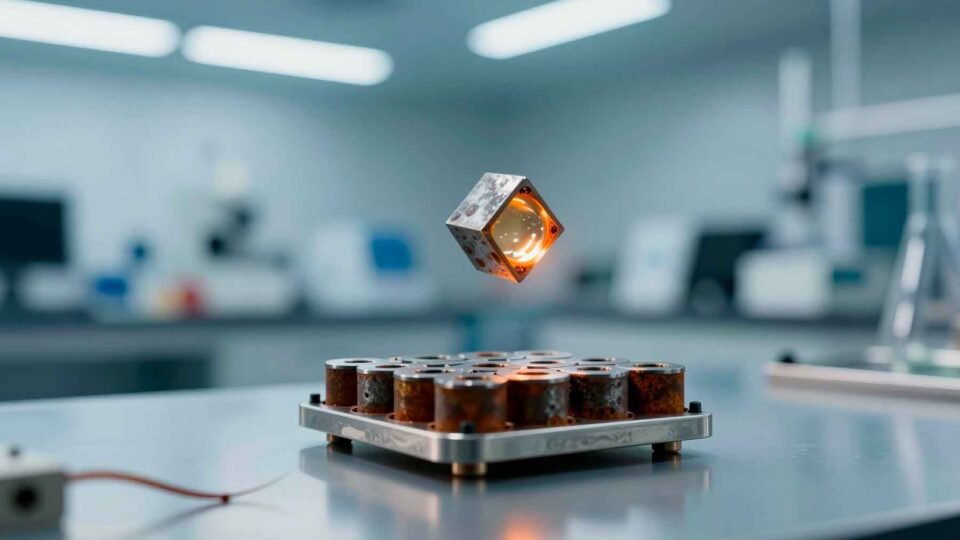
Hydrogen fuel cells run on clean chemistry. Hydrogen meets oxygen, electricity flows, and only pure water leaves the exhaust pipe. For decades, one major obstacle blocked this dream. The reaction required platinum. Platinum is a rare, hyper-expensive precious metal. Its high cost kept clean fuel cells out of reach for everyday life.
Now, researchers built a breakthrough catalyst out of iron. Iron is cheap and plentiful. They engineered it at a scale smaller than a virus.
The platinum problem holding hydrogen back
Proton exchange membrane fuel cells act like hydrogen power banks. They generate clean power, start up fast, and emit zero carbon. That makes them ideal for electric cars, portable electronics, and local power grids.
She has a talent for turning complex ideas into sharp, memorable insights that stay with readers long after they’ve finished reading.
Platinum sits at the heart of these cells. It speeds up the oxygen reaction that creates usable electricity. But platinum costs tens of thousands of dollars per pound. Mining it is tough. Most global supplies sit locked in just a few countries.
Scientists tried replacing platinum with iron for years. Iron is dirt cheap. However, early iron catalysts failed fast. They exposed too few active sites. They bound too tightly to oxygen molecules. Harsh chemicals like hydrogen peroxide destroyed them in short order.
A hollow shell with a hidden strategy
A team at the Chinese Academy of Sciences tried a new design. Professors Dan Wang and Zhang Suojiang built a hollow, multi-shelled nanostructure. They called it HoMS.
Each particle measures about 10 nanometers wide by 4 nanometers tall. That is exceptionally tiny. A single influenza virus spans hundreds of nanometers across.
Instead of spreading iron on the outside, they tucked single iron atoms inside the shell. An outer carbon layer shields the active iron inside from chemical damage. The team calls this “inner activation, outer protection.”
Why the curve changes everything
Curving the surface created a major scientific mystery. According to classic chemistry rules, curving the iron layer should have forced it to cling too tightly to oxygen. That clinginess slows the reaction and reduces performance.
Yet this new design shattered performance expectations anyway.
A second effect solved the puzzle. The outer carbon shell contains nitrogen and tiny missing iron gaps. This outer layer acts like a microscopic force field. It generates an electrostatic push that repels oxygen atoms with up to 1.55 electron-volts of force. That push-back prevents the iron from over-binding to oxygen, solving a decades-old chemistry roadblock.
Record numbers on the scoreboard
The lab results blew past previous non-platinum benchmarks.
The catalyst achieved a low oxygen reduction overpotential of 0.34 volts. Lower numbers mean less wasted energy and higher overall efficiency.
Under real-world testing conditions, it generated a record power density of 0.75 watts per square centimeter. That sets a new world record for non-platinum fuel cells.
Durability was the biggest win, according to the study “This Tiny Iron Catalyst Could Transform the Future of Clean Energy,” published in the Institute of Process Engineering, Chinese Academy of Sciences. Standard iron catalysts degrade in hours. This new design kept 86% of its initial power after 300 continuous hours of heavy operation. It successfully prevented chemical erosion.
What comes next for iron and hydrogen
One lab study will not change the automotive market overnight. Manufacturing these hollow nano-shells at a commercial scale remains a massive challenge. Factories must build trillions of these particles with atomic accuracy.
Still, publishing in Nature proves the science stands up to peer review. If factories scale this process, fuel cell manufacturing costs could drop by millions of dollars.
That brings us to the ultimate secret behind this breakthrough. For 50 years, engineers tried to replace platinum by placing iron on flat surfaces. This team succeeded because they built the catalyst inside out, using a curved interior shell and an invisible electrostatic force field to force cheap iron to act like pure platinum.
Staff Writer
Kelly is an experienced writer with 15 years of experience exploring the big stories that shape our world, from tech breakthroughs and space exploration to climate, energy, and the fascinating quirks of science. She has a talent for turning complex ideas into sharp, memorable insights that stay with readers long after they’ve finished reading.
