
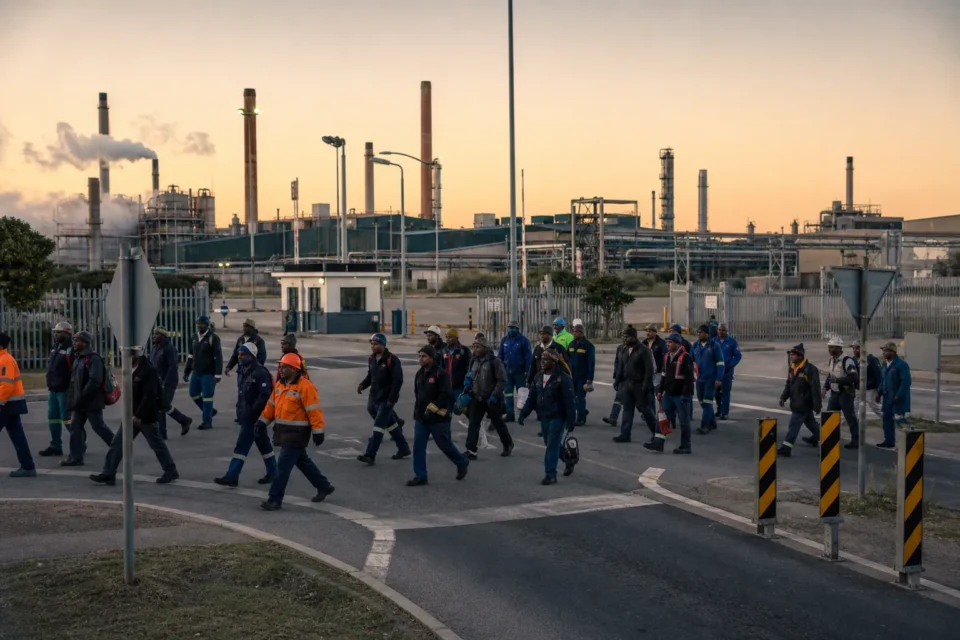
Problems with transport, electricity supply, water supply and the internet create additional costs for businesses and workers in South Africa and reduce productivity, according to Luncedo Mtwentwe, managing director of Vantage Advisory. In a column for TimesLIVE, he noted that productivity depends not only on workers’ efforts during the working day, but also on the condition of infrastructure outside offices, factories and shops.
Time spent commuting
According to Organisation for Economic Co-operation and Development data cited by the author, commuting to work in South Africa takes an average of 107 minutes by train, 84 minutes by bus and 63 minutes by minibus taxi. Even a trip by private car takes an average of 44 minutes.
Mtwentwe stresses that long commutes are not only a transport problem but also an economic one: time spent travelling cannot be used for work, education, childcare, developing one’s own business or rest. According to Statistics South Africa data he cites, the average household in the country spends about 3,000 rand per month on transport. This is the third-largest expenditure category after housing and food.
More current news is available on the UA.News Telegram channel Telegram.
Pressure on small businesses
In the author’s view, productivity is also lost because of power outages, water disruptions, unstable internet, cargo delays caused by road conditions and lengthy processes for obtaining municipal approvals. Large companies can partly offset such disruptions with generators, backup communication channels, larger inventories or additional administrative staff. For small and medium-sized businesses, these costs may determine whether an enterprise can grow and remain in the market.
Mtwentwe points to a contradiction between calls to buy and produce locally and the high cost of local production due to problems with energy, logistics, transport and water. South Africa’s National Treasury, he said, has also acknowledged that infrastructure deficits limit productivity and increase the cost of doing business.
Investment examples
The author cited Morocco as an example of a country where authorities are investing in infrastructure and digital transformation. According to data he provided, Morocco’s economy grew by approximately 4.9% in 2025, the highest figure in a decade. Among examples in South Africa, he named the Volkswagen plant in Kariega in the Eastern Cape province: since 2011, the company has invested more than 10 billion rand in it, and its supplier network has helped create about 50,000 indirect jobs.
Download our app


