
The international financial system has operated downstream from the larger system of international order
ever since the modern state system emerged in Europe four centuries ago. This order has gone through several
major realignments, each with profound consequences. While for much of the past generation, financial
system participants might have safely relegated geopolitics to the history books, the issues at hand are
no longer purely of historical interest.
Indeed, they are compelling policymakers around the world to step up efforts to ensure their financial systems can
operate through a more perilous risk environment. As I will set out today, here in Australia this has been a central
focus of the Council of Financial Regulators (CFR) for some years. A strained geopolitical environment could have
first-order implications for the financial system in various ways relating to: the resilience of critical payments
infrastructure; threats to key institutions posed by disinformation campaigns and insider and foreign interference;
the fragmentation of cross-border capital flows under the shadow of asset seizures; increasingly sophisticated
sanctions evasion techniques; and public-private coordination challenges in strengthening the financial safety net
at home and abroad.
The punchline is this: it is in our collective interest to prepare for a financial system that is more
shock-prone in the future.
International order, geopolitics and the financial system – historical antecedents
Contextualising our current predicament requires some historical context.
After decades riven by conflict, the Peace of Westphalia in 1648 sought to stabilise European affairs by
enshrining the principles of state sovereignty and non-interference. It represented the first effort to
impose a set of neutral rules and norms to regulate the conduct of leading states. But in lacking an
institutional framework to enforce rules and resolve disputes, it failed to deliver sustained peace or
prosperity to the Continent. Mercantilism defined the global economy and the international financial
system remained fragmented.
The Concert of Europe system (1814–1913) that emerged from the carnage
of the Napoleonic Wars was more fruitful. A collective mechanism for stability overseen by leading
states, each with an interest in preserving balance, provided the foundation for the first modern era of
globalisation. Aided by a collapse in transport costs and revolution in telecommunications, capital and
goods flowed across borders like never before. A truly international financial system was born.
But by the early twentieth century, tectonic plates were again moving in an ominous direction. Territorial
disputes escalated and an arms race was fuelled by mercantilist industrial policies. The ensuing
catastrophe of the First World War, followed by a global financial crisis and depression, plunged the
world into a more virulent strain of protectionism and extremism. Missing key members of the great power
club, the League of Nations proved incapable of forestalling an even larger disaster in 1939.
From the convulsion of the Second World War a unique international order emerged. The San Francisco
Accords and Bretton Woods Agreement ushered in an era of unprecedented international stability and
prosperity. Revisionism was of the positive kind – states, large and small, opted to forego
short-term zero-sum gains in favour of the long-term mutual benefits of cooperation. Even in the shadow
of the Cold War, international financial and economic integration scaled new heights. Almost everyone, it
seemed, had skin in the game.
A common perspective forged from the benign geopolitical environment of the post-Cold War period was that
geopolitics had become too abstract, or too marginal, to really matter for the financial system. The
low-risk premiums observed in recent years across global markets are just the latest example. I would,
however, urge caution with this interpretation: some of the more consequential developments in the global
financial system – across markets, payments and institutions – were the product of
geopolitical upheaval.
First, geopolitical shocks that severely disrupt supply chains and energy markets have had a long history
of derailing bond and stock markets. Financial markets had been whistling past the graveyard prior to
August 1914, despite geopolitical tensions simmering for years – the outbreak of World War I came
to markets as such a shock that the US and London exchanges were shut for four and five months
respectively.
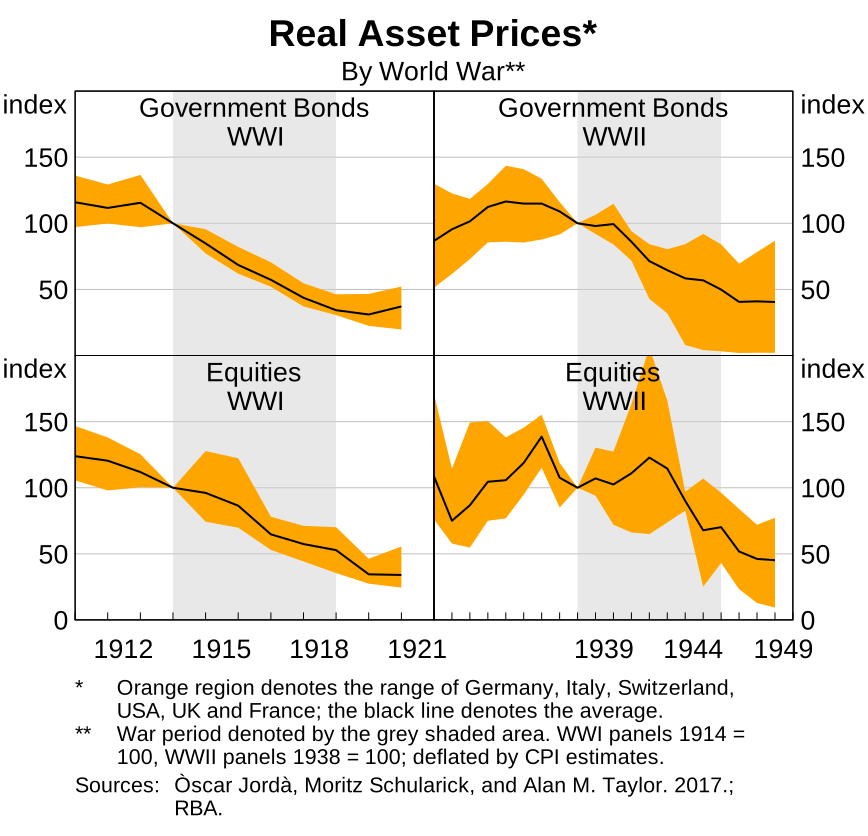
Bond and stock prices were severely hit through both global conflagrations of the twentieth century
(Graph 1). The latter stages of the Vietnam War and the 1970s energy shocks that owed to tensions in
the Middle East also unleashed bouts of inflation and higher interest rates from which it took years for
bond and equity markets to recover.
Graph 1
Second, geopolitical risk has long featured in contingency planning for the payment system – an
issue of particular relevance today that I will return to. When the risk of nuclear war between NATO and
Warsaw Pact members was most grave during the Cold War, the Deutsche Bundesbank stored up to
15 billion marks in a top-secret underground bunker in a small regional town (today it serves as a
public museum).
Historically, military alliances have also factored into the currency composition of central bank foreign
exchange reserves, partly to support payment capacity in times of emergency.
Third, from grave geopolitical shocks a number of leading financial institutions were born. The domestic
central banks of England, France, Austria and Germany, and of course the International Monetary Fund and
World Bank in the mid-twentieth century, form part of a long list. Though as Charles Kindleberger
emphasised in his classic World in Depression, it was the absence of international financial
cooperation in the interwar years that contributed significantly to the international political turmoil
that followed.
I would also note that the financial system has a history of shaping geopolitical developments, just as it
has been shaped by them. The idea that a superior financial system can serve strategic purposes is not
new – strategic competition has often entailed competing methods for mobilising capital. One need
look no further than the role of the British bond market in halting Napoleon’s march across the
Continent.
However, as the end of the Cold War ushered in the era of the peace dividend and Francis Fukuyama declared
the end of history, strategic concerns largely fell off the radar for a generation of economists and
financial market participants. This unusually benign environment had profound implications for
international commerce. In lowering the need for (and cost of) insurance in its various forms, industry
could get on with the business of business by maximising efficiency with scant regard for the
resilience demanded of earlier friction-prone eras. Capital moved seamlessly around the world. Financial
and economic interdependence became a feature, not a bug, of the international system. The lessons of the
1930s had been learnt. Hedging against geopolitical risk barely had to enter the equation.
The return of history?
Not everyone was convinced, however. Foreign policy analysts schooled in the realist tradition warned that
in a world where no country could be entirely sure of its security (and with no global policeman to call
in an emergency), large shifts in the distribution of power had historically been associated with
instability. Particularly where core national interests might diverge, intentions were hard to discern,
and the moderating effect of international law and norms might not bind. John Mearsheimer referred to
this sobering state of affairs as the The Tragedy of Great Power Politics, while Graham
Allison’s historical case studies featured in the Thucydides Trap underscored the
emerging challenges to international stability.
Indeed for a number of years now, challenges to international cohesion have re-emerged. Financial and
economic linkages are again being reshaped by strategic considerations. Some indicators suggest a
fracturing is occurring on a scale and with a speed unseen in eight decades, others less so. What is
clearer is that several forces – strategic uncertainty and a significant shift in the distribution
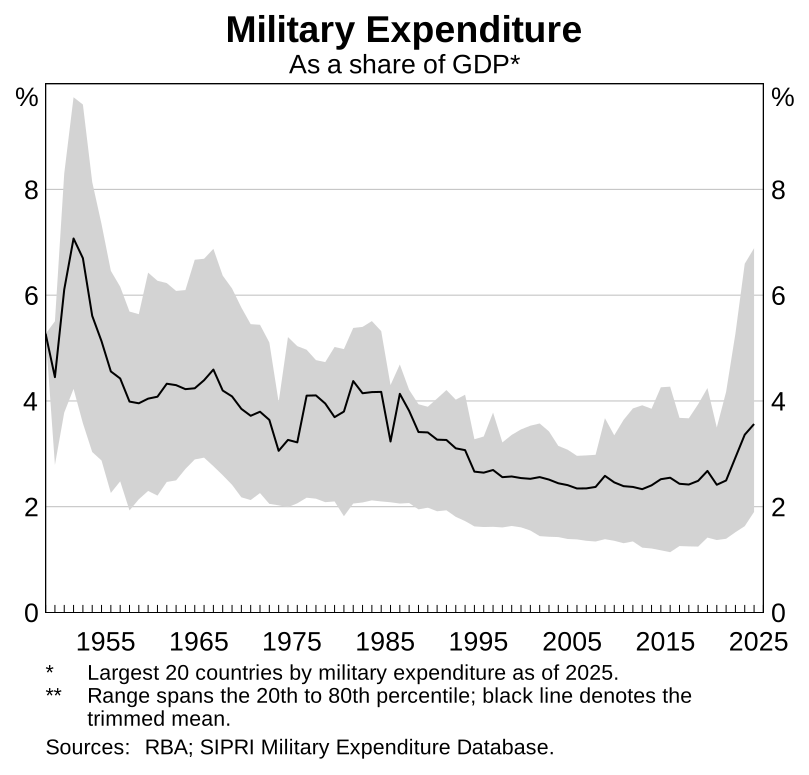
of power among them – are prompting countries to revisit their security posture. Military spending
is rising to levels last seen in the Cold War (Graph 2), adding to strains on public finances. This
also reprises the question Robert Jervis famously posed half a century ago over the Security
Dilemma – in a world of fraying trust and uncertain intentions, how might countries make
themselves more secure without those efforts prompting insecurity in others? The sense of certainty that
pervaded international affairs following the end of the Cold War, and that greased the wheels of global
finance and trade, has perhaps been the first casualty.
Graph 2
Of particular relevance to this audience, a new era of strategic uncertainty has implications that extend
beyond the traditional battleground. In the age of nuclear deterrence, leading international relations
scholars queried whether finance and technology might emerge as the key focal points of strategic
competition. The fact there have been no hot wars among the great powers for decades – an unusually
long time by historical standards – has given this concept of an alternative
battlespace additional impetus.
As has the fact that finance and technology are omnipresent in our daily lives, making them the epicentre
of grey zone activity. As our security agencies have emphasised, coercion is increasingly occurring just
below the threshold of conflict and cyber operations have become a tool of modern statecraft. Two developments
are tilting the offensive-defensive balance in favour of offensive cyber capabilities: a widening attack
surface as more activity becomes digital; and the pitting of state-backed resources against those of
private enterprise. Critical financial infrastructure has been targeted ever since the first wave of
cyber attacks were unleashed on the banking systems of Estonia (2007) and the United States (2012) by
agents alleged to have close state ties. Fears over the pre-positioning of malware in critical
systems continue to grow. Rapid advances in artificial intelligence (AI) and quantum computing only add
to the challenges.
All of this brings us to the old aphorism – we must take the world as it is, not as we wish it to
be. It is in this context that policy makers are dialling up efforts to ensure the financial system can
weather a more challenging risk environment.
Fragmentation in the international financial system?
The issue of whether a more contested strategic environment could see the international financial system
fragment along geopolitical lines has been an area of growing focus. My overall reading is that
fragmentation is unfolding in some respects, less so in others – it very much depends on the
context. But before diving in, I’d make two general points.
First, the shape of the global financial system is always evolving in response to changes in technology
and the composition of global growth. We should, therefore, resist the temptation to view every sign of
change as evidence of a fragmenting system – this label can become a catch all that
obfuscates more than it illuminates.
Second, the extent to which fragmentation might either amplify global shocks or help countries to absorb
them is highly context dependent. A more siloed system might weaken the global financial safety net and
international coordination mechanisms when financial crises hit. At the same time, a deteriorating
strategic environment is understandably prompting renewed focus on the role for self-insurance. How
countries, and industry, get the balance right is a complex question.
Capital Flows
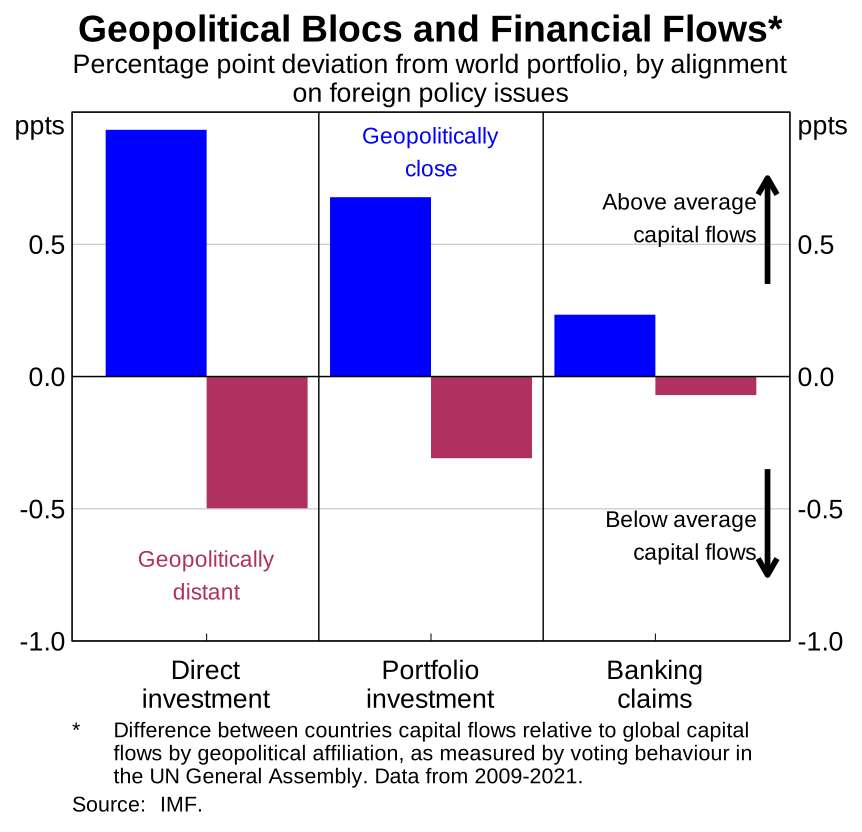
Trends in foreign direct investment (FDI) offer one of the more visible indications of fragmentation
(Graph 3). Countries that are geopolitically aligned are engaging in above-average flows of FDI; the
opposite is true for countries that are geopolitically distant. The longer-term orientation of FDI, and
relatively higher costs of a disorderly exit, mean geopolitical uncertainty is more salient for FDI than
portfolio flows or bank lending. Given the role it plays in global production and technology transfers,
this is also consistent with the emerging evidence of trade fragmentation, a trend that also
characterised the Cold War.
Graph 3
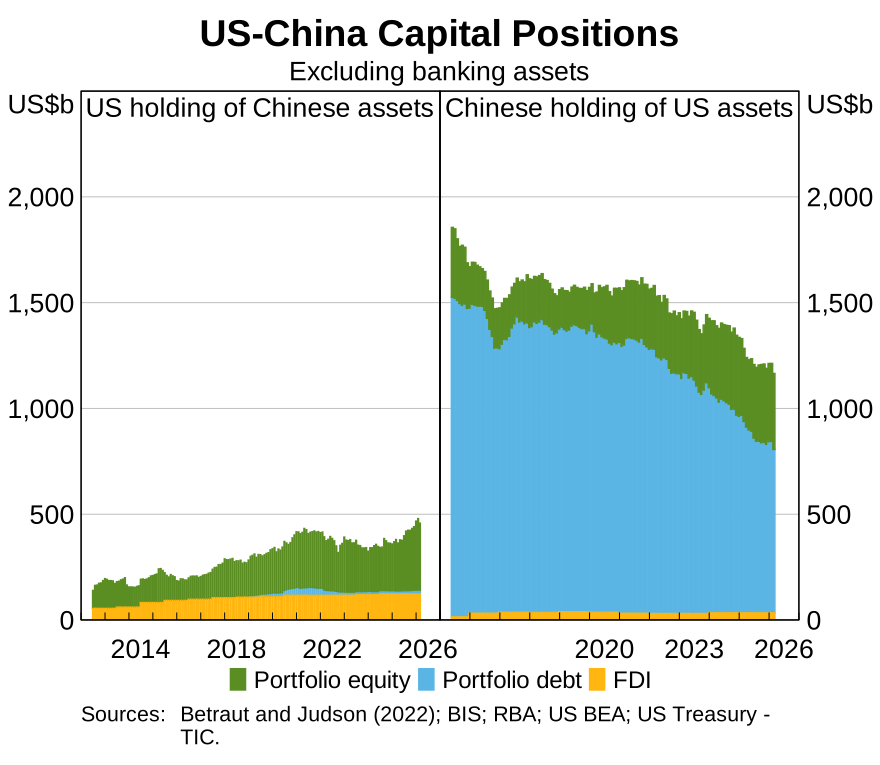
What about capital flows between the US and China? Here there has been a shift in pace, if not direction
(Graph 4). Capital flows from the US to China have slowed to a crawl in recent years. In the other
direction, a literal reading of China’s balance sheet points to outflows from the US in recent years
in favour of emerging market exposures, though the role of custodians outside the US clouds the picture
as to how large these outflows from the US have been in reality.
Graph 4
Official Reserve Assets
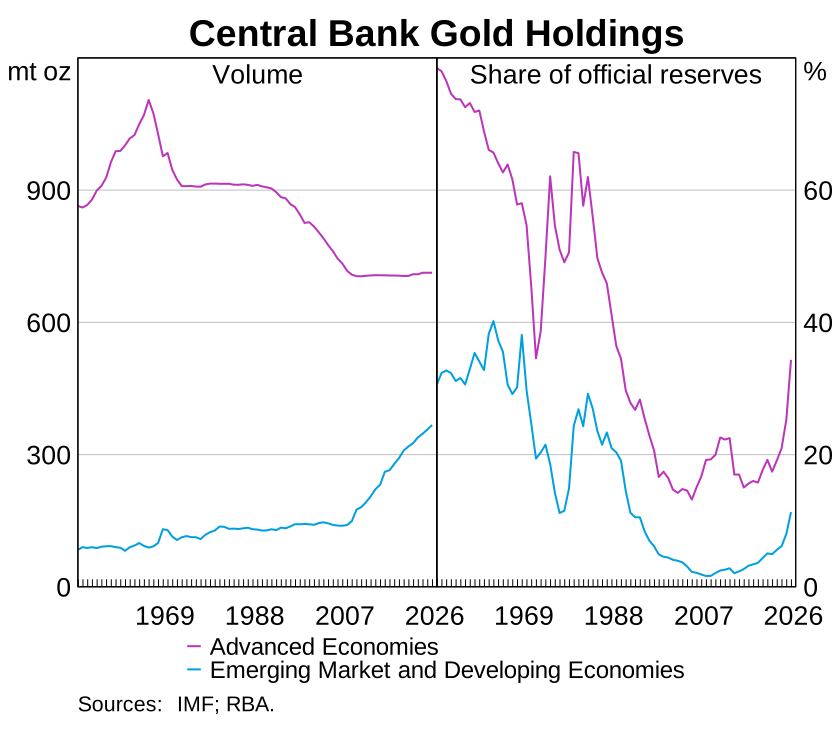
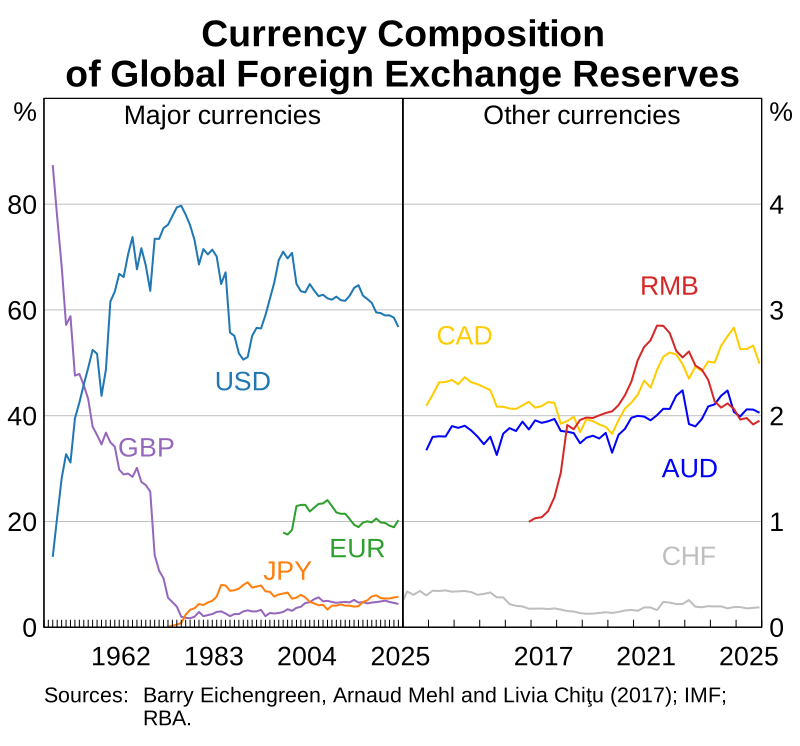
On the narrower topic of reserve asset holdings, recent developments point more to continuity than
rupture. Trends that have been in place for two decades – an increase in emerging market central
bank purchases of gold, and a gradually lower share of the US dollar in the currency mix of reserve
portfolios – have largely continued (Graph 5 and 6). But reports of the demise of the
dollar have been exaggerated. It is still used in 90 per cent of all foreign exchange
transactions, remains the dominant currency in reserve portfolios and is the beneficiary of dollar-based
trade invoicing – for as long as the world pays in dollars it will likely save in dollars. And as my
colleagues have recently noted, a burst of dollar hedging activity around the time of the tariff
announcements last year seems to have abated. Notwithstanding renewed momentum in China to
internationalise the renminbi, its share in global reserve holdings has edged lower over recent years to
just 2 per cent, and of the top dozen currencies by global turnover, it remains the only one
that is not eligible for CLS settlement. Others, like the Canadian and Australian dollars, have been the
beneficiaries of reserve manager diversification.
Graph 5
Graph 6
Cross-Border Payments
By virtue of their sheer scale – enabled by 90,000 banks and potentially totalling
$290 trillion by 2030 – the issue of how cross-border payments are
reflecting strategic considerations has also come into focus. Over the past decade, some emerging market
countries have developed cross-border payment capabilities that sit outside of traditional rails. Iran
and Russia both developed alternative messaging services following the expulsion of domestic banks from
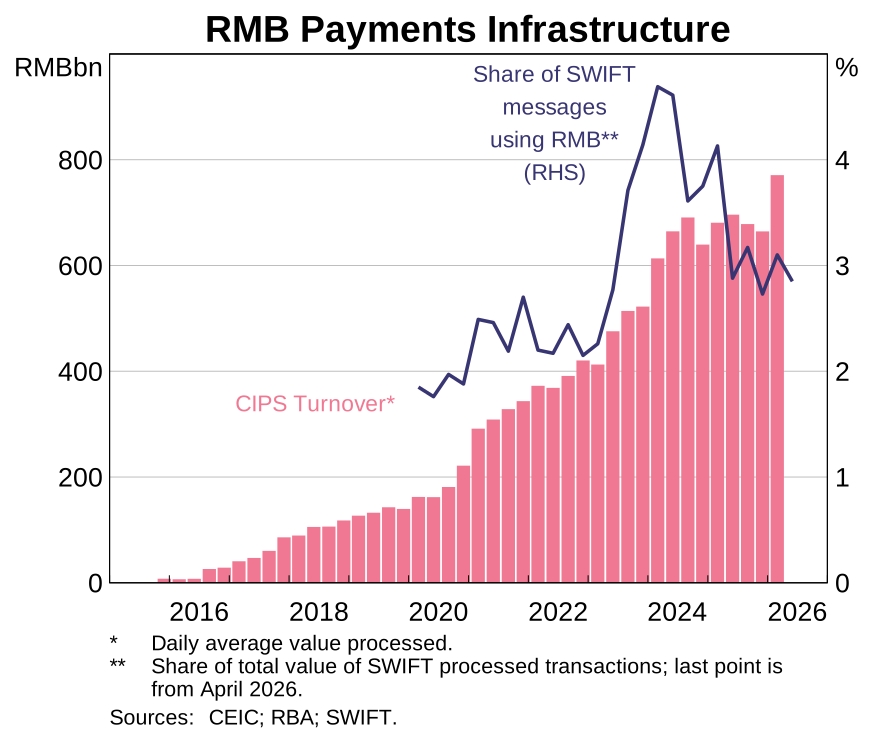
the SWIFT messaging network, though anecdotal reports point to limited uptake. In China, volumes
transmitted through the cross-border interbank payment system (CIPS), which has been clearing and
settling transactions in renminbi since 2015, have grown notably (Graph 7). Energy-related
transactions are reportedly accounting for some of this. At the same time that the renminbi’s
share of SWIFT messages has declined, volumes over the new mBridge platform, which involves a limited set
of countries, are reported to have increased sharply – from $22 million in late 2022, to
$55 billion by late 2025.
Graph 7
Where this all goes remains to be seen. But I can make two points. First, in helping to process around
US$40 trillion in transactions each day, the SWIFT messaging architecture, supported by its
11,500-strong membership base across more than 200 countries, remains the backbone for cross-border
payments. Second, as it has long been recognised that the large volume of transactions processed by
global payment infrastructure are vital to the stability of the international financial system, it is
important that the highest standards of security and integrity are maintained. The engagement of the RBA
in various cross-border initiatives speaks to this, as does the strengthening of digital asset regimes in
many jurisdictions to support responsible innovation in tokenised money.
Sanctions
Since the times of Ancient Greece, sanctions have been an instrument of statecraft. Those imposed by the
United Nations Security Council are legally binding under international law and have been considered a
legitimate tool for maintaining international order. While sanctions increased steadily at the global level
in the decades after the Second World War, over the past decade or so, a number of new trends have
emerged – notably a step up in the use of counter-sanctions and sanctions evasion techniques. These
require a new level of compliance capability from financial institutions operating across borders.
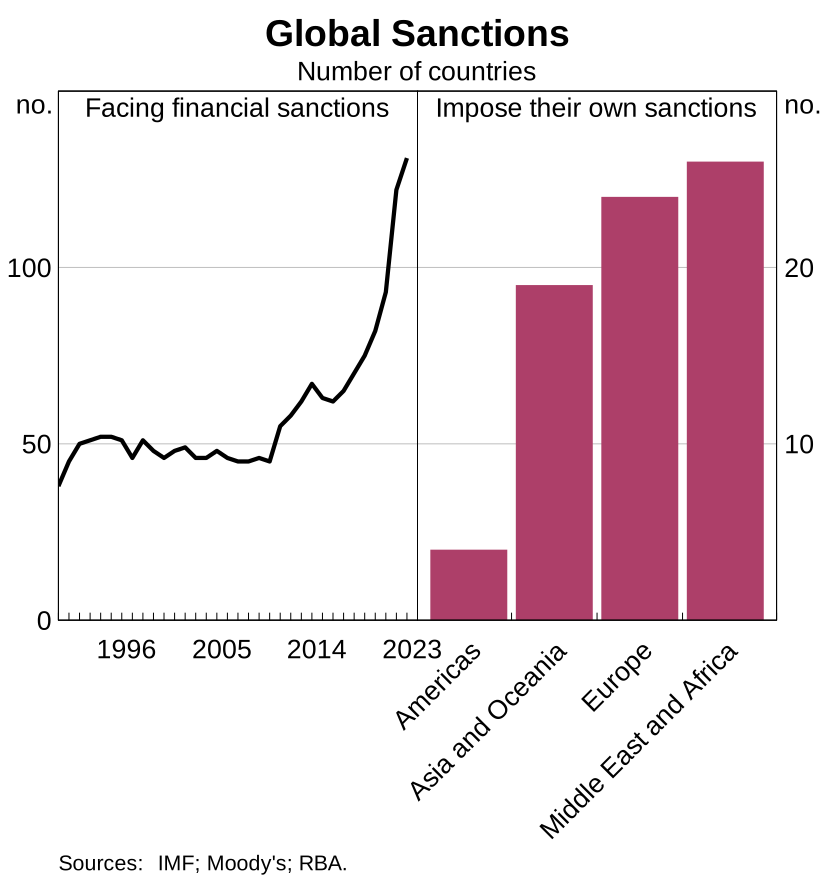
Sanctions are being imposed on, and by, a larger number of states. More than 120 countries were
subject to financial sanctions as of 2023, twice the number of a decade ago and a higher figure than for
trade sanctions (Graph 8, left panel). Financial sanctions accounted for just 12 per cent
of all sanctions in the 1950s, but over the past decade or so that figure has risen to
42 per cent. More than 70 countries across every major
geographical bloc now impose sanctions outside of the formal United Nations process (Graph 8, right
panel). Critically, targeted entities are using more sophisticated strategies to evade sanctions. All of
this makes financial institutions increasingly exposed to significant legal and business risk if they get
it wrong.
Graph 8
Geopolitical risk – considerations for industry
Let me now drill into some risk implications for the financial industry.
There is no universal definition of geopolitical risk. Intuitively, it captures the threat or realisation
of adverse international political events that involve some element of coercion. These possibilities
exist along a continuum, from coercive trade bans, to hostile state actions below the threshold of
conflict (like state-sponsored cyber attacks), up to kinetic shocks in extreme cases. They can be slow or
fast-moving. As my colleagues recently set out, the resulting implications for the financial system can
be wide-ranging and depend very much on the context.
Critically, geopolitical risk has wider dimensionality than traditional financial risks – credit,
market and liquidity. While financial risks are always in focus, these are familiar terrain for industry;
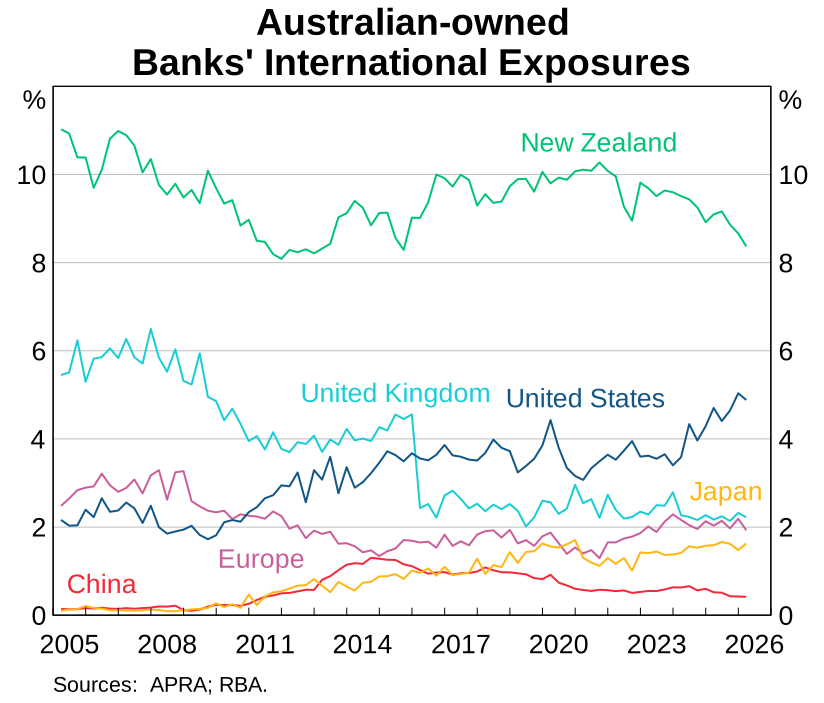
for Australian banks, the composition of international asset exposures is somewhat less problematic
compared to other countries (Graph 9), and their reliance on external funding has declined over the
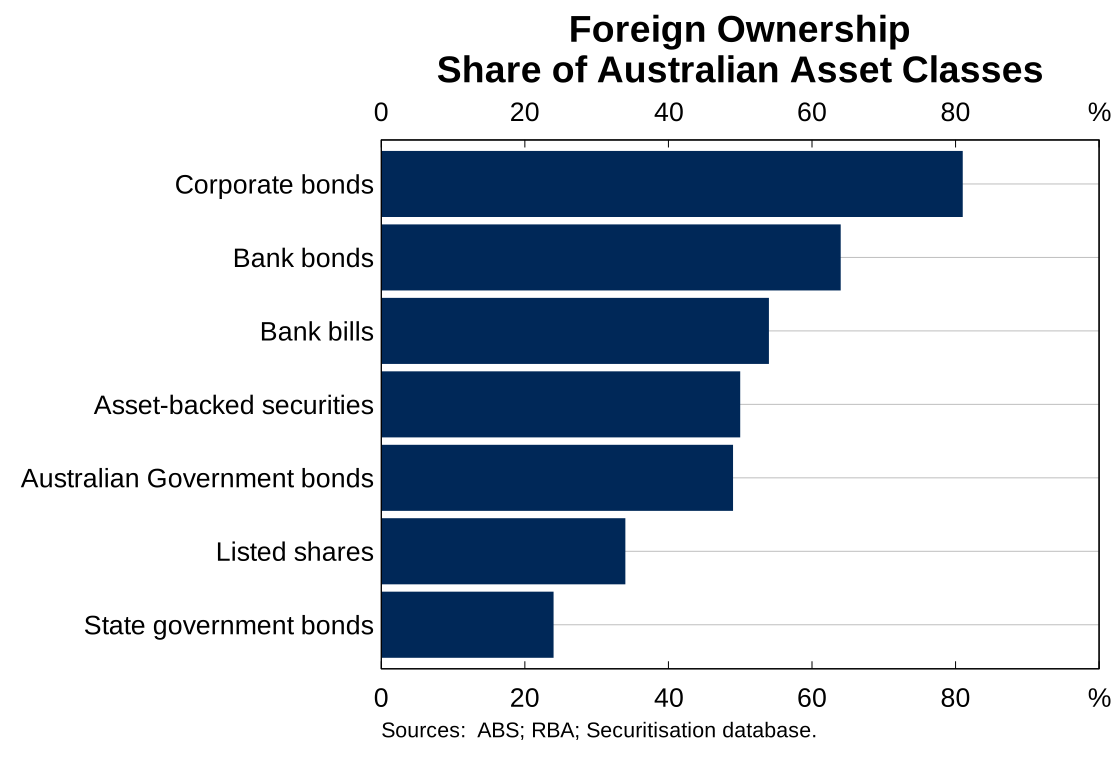
years. I should caution, however, it does not follow that traditional financial risks have gone away: the
high foreign ownership share of our fixed income markets means the Australian financial system will not
be immune from shocks abroad (Graph 10), and around half of the assets of our super fund industry
are invested offshore.
Graph 9
Graph 10
Where I see boards and executives increasingly exercised is in the management of less familiar
non-financial risks that, in periods of geopolitical stress, could cut across the financial system in
complex and novel ways. These have operational, security, political and organisational capacity
dimensions, including:
- threats to critical infrastructure, digital and physical, on which the financial system relies
- risks associated with disinformation and cognitive influence strategies aimed at undermining trust in
key institutions - foreign interference and insider risk
- the risk of asset expropriation
- challenges in the surge capacity to ensure compliance with sanctions and counter-sanctions, as
evasion techniques become more sophisticated - coordination failure across industry and official sector agencies in a polycrisis
scenario, if multiple risks were to crystallise simultaneously.
In recognition of these challenges, the CFR has pursued a program of work to help ensure the financial
system is capable of weathering extreme but plausible shocks. I set out some of the context for this
focus back in 2023, and in the years since, our industry engagement has
been informed by extensive consultation with domestic security agencies and peer institutions abroad. Its
relevance is underscored by Australia’s status as an open economy with strong ties to the
international financial system. We have also been mindful that the issues at hand extend well beyond the
remit of any individual institution, public or private.
In recognising that different elements of the financial system have different responsibilities and
obligations, let me draw out some themes and lessons that should be relevant to a wide audience.
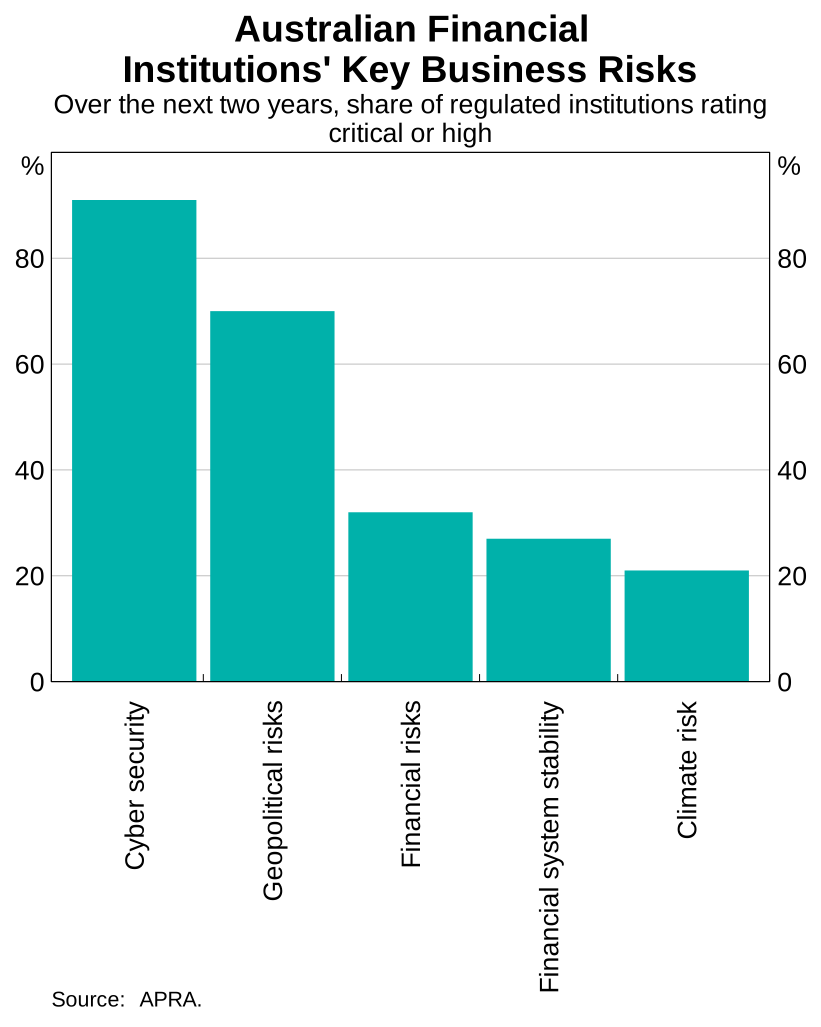
First, financial institutions are elevating geopolitical considerations to the top of their strategic
risks and devoting resources accordingly (Graph 11). Surveys in other countries paint a similar
picture.
This is not just an issue for the most internationally active institutions, nor is it simply an issue for
risk executives. Boards have to engage much more intensively. This includes by ensuring that the
different dimensions of geopolitical risk are appropriately embedded in organisational risk appetite and
related controls, and that it is informing strategic decisions around group structure and strategy. More
institutions are also standing up dedicated geopolitical risk teams to strengthen accountability and
coordination efforts, recognising the issues can cut across organisational silos.
Graph 11
Second, efforts to strengthen crisis preparedness and recoverability planning are dialling up
significantly.
Institutions are hardening their operational perimeters and those more advanced are investing in a wider
range of early warning capabilities, including more active monitoring of disinformation. Defensive AI
capabilities have become a core pillar of resilience planning. All of this is requiring a substantial
uplift in strategic investment, workforce capability and integration across security operations.
As part of these efforts, crisis and contingency plans are also being developed for a wide range of
extreme-but-plausible geopolitical scenarios. Playbooks and fire drills are becoming more expansive,
involving dedicated strategies for operational recoverability, workforce safety (including in offshore
offices) and crisis communication. We see this in industry exercises ranging from disruptions to subsea
cables to sustained outages of the electricity grid.
Let me say a few words here about payments. It is critical that contingency planning efforts are directed
at maintaining a minimal level of service provision in periods of stress. This is the focus of the
industry resilience initiative (IRI) for the payments system overseen by the RBA and APRA, and is also
captured in APRA’s broader operational risk standard CPS 230. I should note similar efforts are
underway internationally – the remarkable stability of the Ukrainian payment system through the
maelstrom of war has shown how innovation can bolster resilience in the most perilous of environments,
and our Scandinavian colleagues are on a similar journey.
The overarching aim of the IRI is to ensure that our payments system can maintain continuity of service in
the event that a major institution goes dark for a period of time. It has involved the setting of clear
resilience objectives, defined triggers and thresholds to guide responses, an industry-wide playbook,
technical solutions to enable payments continuity, and a scenario testing framework. At the industry
level, the program is being coordinated by AusPayNet, with participation by Australian Payments Plus,
Cuscal and the major banks; I would encourage any institution that would like to know more to engage with
AusPayNet. Meanwhile, APRA’s CPS 230 standard requires industry to prepare for material service
disruptions from any number of sources – geopolitical shocks among them – by strengthening
how they manage operational risk, business continuity and third party risk. Importantly, the latter
extends to critical infrastructure and service provision originating outside of the financial system.
A third area of growing attention relates to the increased focus on foreign interference and insider
risks. This is resulting in stronger vetting processes, including at senior levels, a tightening in
access to sensitive information, increased demand for security clearances, and the use of sophisticated
behavioural analytics to manage threats.
A fourth area of focus is requiring industry to build capacity to deal more fulsomely with international
political risk in the form of sanctions, but also threats to offshore personnel and asset holdings.
Sanctions and counter-sanctions give rise to a host of risks for financial institutions: legal,
reputational, operational, and strategic. Despite Russia being a relatively minor exposure for most
financial institutions, Russia’s invasion of Ukraine offered a glimpse into the challenges here:
from difficulties in international harmonisation regarding timing, scope and design; difficulties in
administrative surge capacity for specialised functions in a crisis (including legal
expertise); and challenges associated with sanctions evasion. Discussions with industry suggest that if
they have any doubt over their compliance, they will err on the side of pulling back from activity
– a collective response that could risk becoming disorderly in extreme scenarios. The broader
lesson for industry is that it would be prudent to move beyond viewing the imposition of sanctions as an
episodic risk to be managed in the moment, and more as a structural feature of the operating environment
that warrants a different level of preparedness.
Conclusion
For many decades the major risks to financial stability were thought to be cyclical, generated within the
financial system, and their mitigation and resolution involved familiar toolkits. By contrast, the issues
I have discussed today are structural, originating from outside the system, and cut across the financial
system (and indeed society) in multi-faceted ways that require fresh thinking.
If finance and technology are emerging as the epicentres of a more contested strategic environment, it
will call for a more holistic approach to risk management. Our work with industry suggests some progress
has been made, but it has been uneven and there is much still to do. There needs to be contingency
planning under more extreme scenarios, more demanding fire drills, more intrusive interrogation of
third-party dependencies, and more robust continuity and recoverability arrangements.
My colleagues and I at the RBA and on the CFR are committed to working constructively with industry to
ensure our financial system can withstand a more shock-prone future. But time is of the essence, and
Australians are depending on all of us here to get this right.