
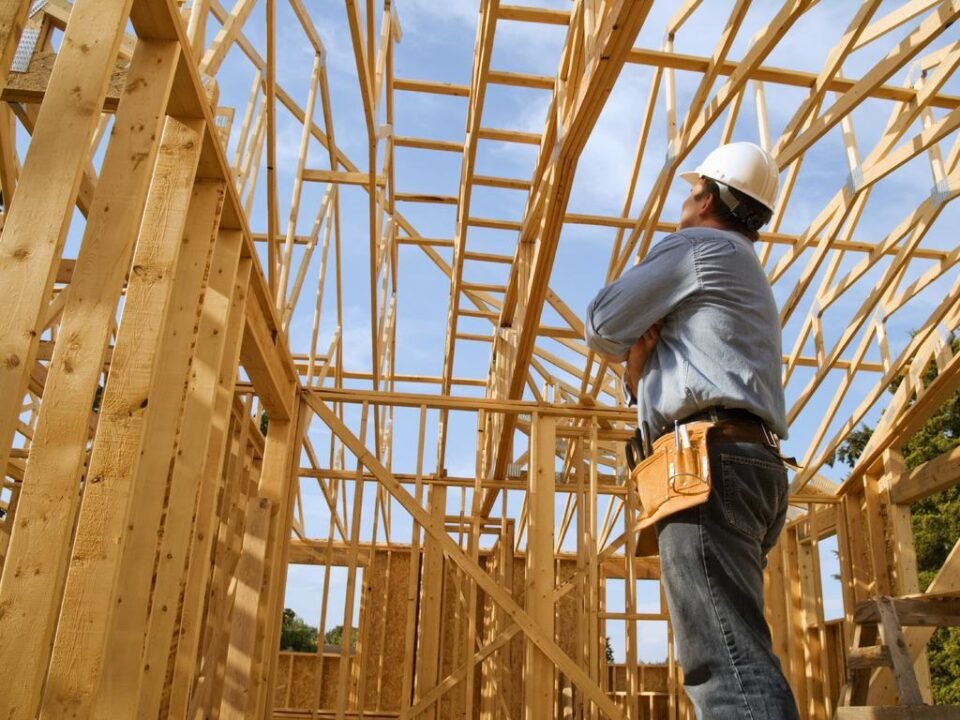
Australia’s housing pipeline is under growing pressure with changes in investor behaviour and tightening project-viability thresholds set to delay or derail new housing at the exact moment the nation is struggling to meet its Housing Accord targets.
Access Wealth managing director and founder Dory Senior said the new-property market is becoming more nuanced, and that the gap between approvals and actual delivery is widening despite relatively positive headline numbers.
He said the risks emerging in the pre-sales and construction-finance environment are not yet fully appreciated outside the industry.
“Building approvals are obviously important, and I’d much rather see them rising than falling,” Mr Senior said.
“But an approval isn’t a completed home. The real issue is how many approved projects are commercially viable, obtain finance, achieve the required pre-sales, commence construction and ultimately become homes people can actually live in.”

Access Wealth managing director & founder Dory Senior
The National Housing Supply and Affordability Council reports quarterly approvals are now 26 per cent higher and commencements 15 per cent higher than immediately before the Housing Accord period.
Despite that, only around 308,000 homes have been completed in the first seven quarters of the Accord’s five-year timeframe, according to the report.
A record 244,000 dwellings were under construction in the March quarter but still not enough to meet demand, Mr Senior said.
He said any reduction in investor participation at the pre-sales stage risks compounding that shortfall.
“Some projects will inevitably be delayed, reworked or abandoned if they can’t achieve the sales required to get out of the ground,” he said.
“If Australia desperately needs more housing, anything that weakens the delivery pipeline becomes a serious concern.”
MORE: 31yo landlord’s grim warning to young buyers
Young couple builds $3m portfolio while renting
Some projects will inevitably be delayed, reworked or abandoned if they can’t achieve the sales required to get out of the ground, according to Dory Senior
He said several recent policy settings have created different incentives for residential and commercial property, with signs already emerging that some investors are reconsidering where they allocate capital.
“We’re seeing increased interest in commercial property from some clients,” he said.
“We shouldn’t assume every investor who steps back from established residential property will redirect their money into a new house or apartment. Some of that capital may leave residential property altogether.”
Mr Senior said this shift comes at a time when investors are becoming more sophisticated in separating short-term noise from long-term fundamentals.
He said the big, detached house on the large block would always have appeal, but affordability, demographics and the way our cities were developing meant smaller lots, townhouses, terraces and higher-density housing were becoming a much bigger part of the market.
“Investors who adapt to how Australians are actually going to live over the next 10 or 20 years will have an advantage over those still trying to buy using a perspective that’s 20 years outdated,” he said.
Mr Senior said investors would not necessarily pivot to the new home market.
Mr Senior said the ability to separate sentiment from fundamentals is becoming a defining advantage for investors.
“Covid-19 gave everyone a pretty good lesson in why that’s important,” he said.
“In early 2020, modelling predicted price falls of 20 to 30 per cent but national home values ultimately fell by only around two per cent before rebounding strongly.
“It’s just as important not to buy into negativity today as it is not to buy into hype when the market is booming.”
Mr Senior said the core challenge remains unchanged.
“Despite all the noise, the fundamental problem hasn’t changed – our population continues to grow and we’re still not completing enough homes,” he said.
“Anything that weakens project viability or slows delivery risks making that problem worse.”
Mr Senior’s comments come after new analysis revealed that a whopping 54.2 per cent of Aussie landlords, or about 1.27 million people, recorded a net rental loss in 2023-24.
It marks the highest share of investors in the red since 2019-20, and a stark reversal from the low-rate glory days of the pandemic.
Carlisle Homes’ Negative Gearing Map analysed ATO data to provide the most recent benchmark of property finances, laying bare a direct link between rising borrowing costs and the current investor cash drain.
In 2021-22, interest paid on mortgages for Queensland investment properties stood at $3.29b. By 2023-24, that figure had nearly doubled to an eye-watering $6.48b, wiping out rental gains and dragging properties in the Sunshine State from a $712m collective profit into a $593m shortfall.
RELATED: QLD landlords face $593 million black hole sparking mass property sell-off
It comes ahead of sweeping tax changes taking effect from 2027, which will ban mum-and-dad investors purchasing established homes from using rental losses to offset their income tax.
Ray White Group chief economist Nerida Conisbee said that construction costs were also accelerating again, adding to the pressure on the new home sector.
“The latest data, for July, shows new dwelling prices were 5.7 per cent higher than a year earlier, compared with annual growth of just 0.7 per cent in June last year,” Ms Conisbee said. “The turnaround has been rapid, with the ABS attributing the increase to builders passing through higher labour and material costs.
“Labour remains scarce, materials are becoming more expensive and a growing pipeline of public and private construction is competing for already constrained resources.”
Ms Conisbee said that the longer-term increase was even more significant.
“Overall house construction input costs are now around 68 per cent higher than in 2012,” she said.
“Many individual building products have increased considerably more.”
Ray White Chief Economist Nerida Conisbee
Ms Conisbee said that construction insolvencies had also hit a record high.
Property and construction group Bathla has gone in to voluntary administration owing their creditors billions. NSW Health Stock Photos. Picture: NewsWire / John Appleyard
“Builders have already absorbed years of rapidly rising labour and material costs, fixed-price contracts and squeezed margins,” she said.
“Another acceleration in costs will be difficult for parts of the industry to absorb.
“Construction costs are once again becoming an important source of inflation.
“New home costs are rising 5.7 per cent annually, well ahead of headline inflation of 3.5 per cent, after having barely been growing a little over a year ago.
“Australia wants to build more homes, more infrastructure, more renewable energy, more transmission, more data centres and more resources projects.
“Much of that construction is needed. The problem is that they are all competing for many of the same workers and materials.
“Australia increasingly has a construction capacity problem, and until that changes, building more will remain expensive.”