
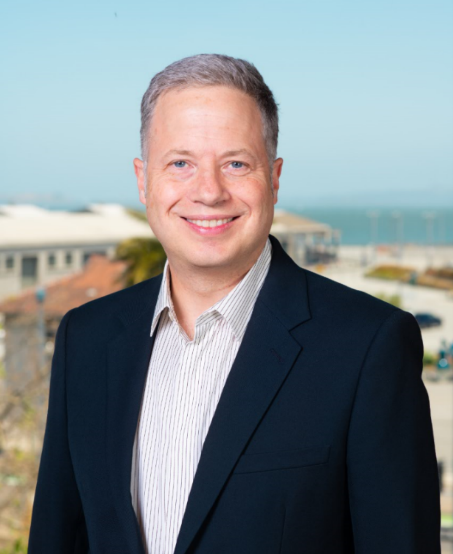
Byron Gill is Managing Partner of Indus Capital, a roughly $6 billion investment firm founded in 2000 by six alumni of Soros’s Asian equity team, and an independent director of Fujitsu. Hedge Fund Alpha spoke to him ahead of the inaugural October 16th Sohn Tokyo Conference, and asked him about a quarter-century of investing across Asia, sitting on a Japanese board from the inside, and why he thinks the birth of a real market for corporate control in Japan changes the calculus for engagement investors like Indus.
Born in Tokyo, raised in Texas
Gill was born in Tokyo, where his father worked for Gillette, and relocated to Texas at age seven, a move his Brooklyn-born mother found a bigger culture shock than Japan itself had been. He held onto just enough memory of Japan, and his parents’ nostalgia for what they called the family’s “Golden Era” there, to want to experience it again on his own terms. He got the chance at 20, returning for his senior year at Keio University, and found the same people who had worked for his father at Gillette waiting for him at Narita airport.
“In an upbringing where a sense of continuity was never obvious,” he said, “that gesture was a lesson in itself.”
Chicken wire and the sell side
Before the buy side, Gill worked at Saison Group, which he describes as the poster child of an overleveraged, overextended conglomerate at the peak of Japan’s bubble. From there he moved into investment banking, covering Japan’s retail sector through the darkest stretch of the country’s deflation, a period when nearly every one of his stock recommendations was a sell.
“I was so unpopular with the sales teams that I joked I needed chicken wire to get through the morning meeting,” he said. Large hedge funds including Soros and Tiger valued that contrarian read enough that he eventually made the move to the buy side.
From the Quantum Fund to Indus
Gill was one of six founding partners who spun out of Soros’s Quantum Fund Asian equity team in 2000 to launch Indus Capital, which marked its 25th anniversary last year. Asked what’s kept the partnership intact across a quarter-century of cycles, he pointed to a deliberate structural choice: rather than building a rigid process around a group of above average sector analysts, Indus hires the smartest people it can find and gives them real freedom, a looser structure he credits with more flexibility through Asia’s many economic and financial cycles.
“I often joke that if we convert a quarter century into ‘hedge fund years,’” he said, “it feels like Indus has been in business for close to a millennium.”
Akasaka, and a bet on Japan’s first mobile internet
The Tokyo Gill remembers from those Soros days looked nothing like the firm’s later footprint. “We were operating out of a dilapidated office in Akasaka wedged in between a fruit stand and a massage parlor,” he said, at a moment he describes as riding a tech boom “not dissimilar to what is happening today.”
His own work at the time centered on a significant position the team held in a major Japanese telecom company that had effectively invented mobile internet, and his interactions with Stan Druckenmiller and a colleague he calls Scott Bessent revolved around that name directly.
Indus’s risk tenets
The most important risk-management lesson, Gill said, isn’t about process or quantitative skill. It’s culture. When Indus’s founding partners set up the firm, they wrote down a page of tenets they’d picked up from mentors like Stan Druckenmiller and Mark Kingdon, added a few of their own, and still run the firm by them today.
- Never invest in the present.
- Cut your losses.
- Don’t try to turn a bad trade into an investment.
- If you buy a stock for a reason that is no longer valid, sell it.
- No matter how much you know about a stock, it owes you nothing.
- The best hedge is to sell.
- Never attempt to use leverage to turn a mediocre return into an attractive one.
- Avoid incremental thinking; be decisive.
- Don’t be afraid to have no positions.
- Don’t fight the tape; respect the markets.
- Beware of sophisticated ways to lose money.
- The object is not to be conservative, the object is to be right.