
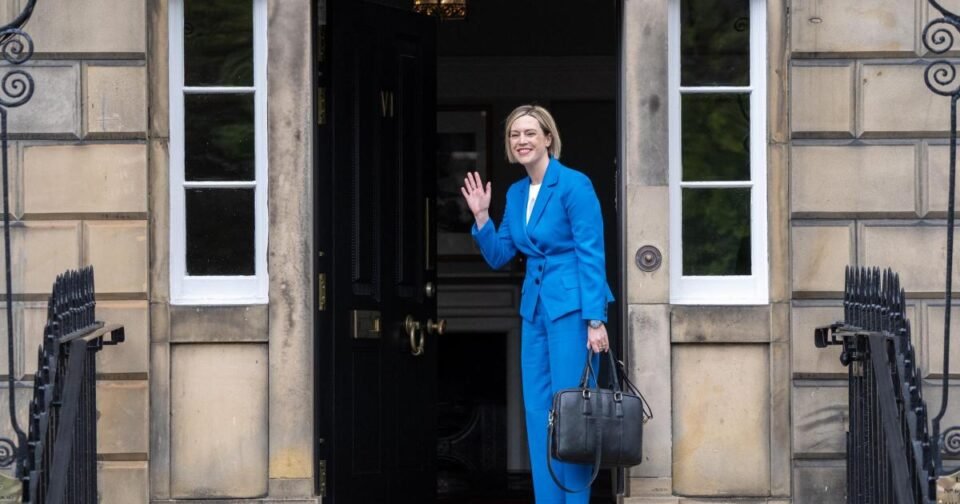
She said the statement would build on information already published this year, including the 2026-27 Budget and the Spending Review.
However, after Committee convener Clare Haughey wrote to Ms Gilruth on September 21 asking her to confirm when the statement would arrive, the minister has now admitted it is not coming.
In a letter ahead of an appearance before the committee on Wednesday, Ms Gilruth said: “I will set out the key fiscal challenges facing the Scottish Budget in more detail at my appearance before the Committee on September 30, and the parliamentary debate on the asks of the UK Government Budget, on October 1.”
She added: “I am currently considering the supporting publications that will accompany the 2027-28 Budget and will consider the Committee’s suggestions as I finalise decisions on this.”
Fiscal statements take on extra importance in the absence of an up-to-date Medium-Term Financial Strategy.
They give committees a chance to scrutinise and influence spending plans before the Budget is finalised. The last one, delivered by Shona Robison in 2024, was used to announce in-year spending cuts.
MTFS are usually published in September, when it would be useful for pre-Budget scrutiny.
However, the minister told the committee that doing so this year would rely on out-of-date forecasts.
The Scottish Fiscal Commission could update its own figures, but the UK Office for Budget Responsibility forecasts used to calculate Scotland’s block grant would still be those from March.
These were produced before the Iran conflict and will be overtaken by the UK Budget in the autumn.
Ms Gilruth wrote: “As a result, the estimated net tax and social security position would be misleading, because the two sides of the calculation would be based on very different fiscal assumptions and different points in time.”
The committee is currently examining whether the Scottish Government‘s plans can bridge an anticipated £4.77 billion black hole by 2029-30.
The Scottish Fiscal Commission’s Fiscal Update in August warned that the economic outlook was weaker than previously forecast, with higher inflation and rising energy prices. It also warned of the risk of higher food prices.
It said the 2027-28 Budget faces “very little new funding”. A £720 million reduction is also due from an income tax reconciliation, correcting forecast errors in the 2024-25 Budget.
The committee will publish its report in late October or early November. The Scottish Government must then respond when it publishes the Budget on December 3.
Scottish Tory finance spokesperson Craig Hoy said Ms Gilruth needed to “come clean on why she has quietly ditched her previous promise to deliver this statement”.
He added: “Even by SNP standards, this is a screeching U-turn on something she pledged she would do only a few months ago.
“The SNP’s economic mismanagement means that a combination of spending cuts and tax rises are on the way unless they start taking the tough, but necessary financial decisions.
“The Finance Secretary must be honest with the committee about the state of Scotland’s finances under the SNP and what she plans to do to tackle the £5billion funding gap that the nationalists have created, in the absence of a statement to the full chamber.”