
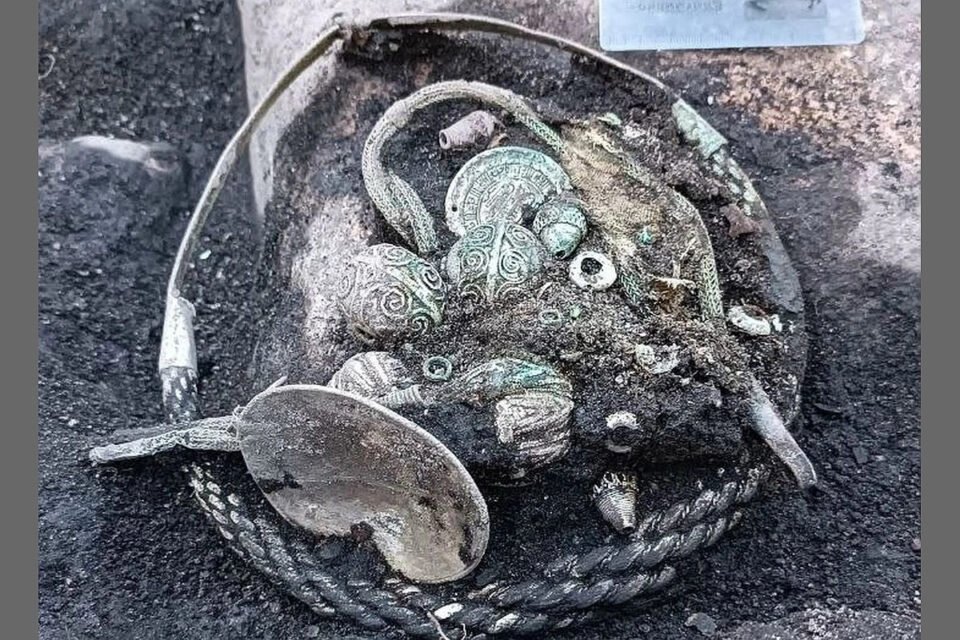
Archaeologists in northwestern Russia have uncovered more than two kilograms of medieval silver, including extremely rare Swedish coins and a mysterious medallion that may depict the ravens of the Norse god Odin.
A remarkable hoard of medieval silver objects has been discovered at Tiversky Gorodok, an archaeological site in Russia’s Leningrad region. Researchers say that, according to their preliminary assessment, it is the richest known hoard of its period found in northwestern Russia.
The discovery was made during archaeological work carried out by a joint expedition from the Museum of Anthropology and Ethnography of the Russian Academy of Sciences, also known as the Kunstkamera, and the St Petersburg research centre Actual Archaeology.
The hoard, which weighs more than two kilograms, contains an unusually diverse collection of silver objects. Among them are several round medallions decorated with granulation and filigree, a large ornamented neck ring, coin pendants, a Karelian-type head ornament, chains made from fine silver wire, a ring and a horseshoe-shaped brooch. A leather headband was also found.
Although the discovery was made in July, it was only publicly announced in early October. Part of the hoard was removed from the ground as a block so that its contents could be carefully excavated and conserved under laboratory conditions.
Extremely rare Swedish coins
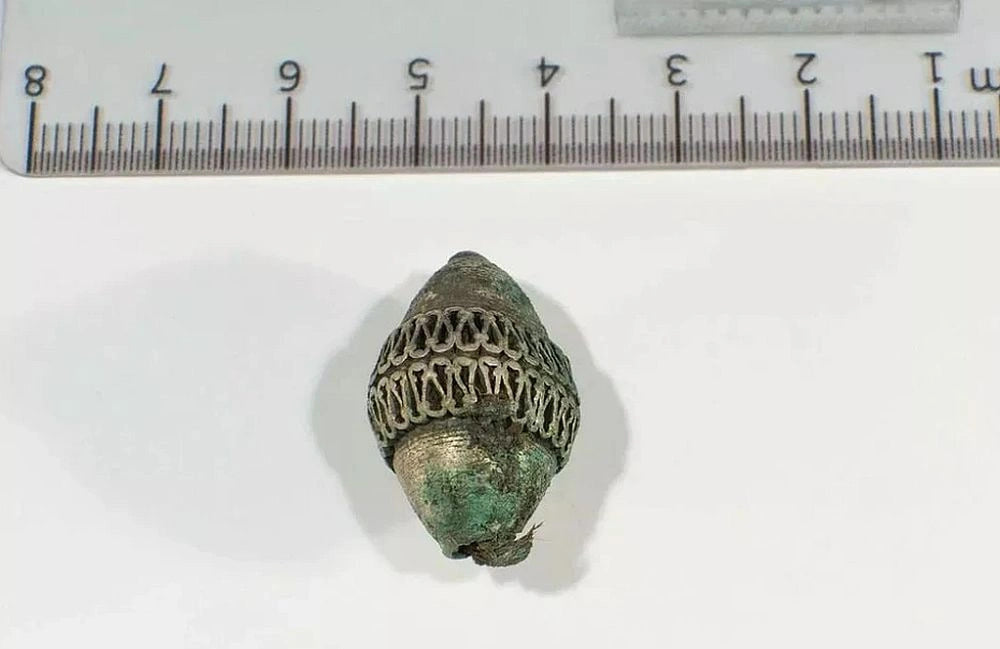
Three coins discovered among the objects have attracted particular attention. The oldest is an Arabic dirham, which numismatists have provisionally dated to between 907 and 912. Researchers stress that the identification was made from a photograph and therefore remains preliminary.
The other two coins are large Uppsala-type bracteates, one-sided coins struck in Sweden between the late 11th and first half of the 12th century. Their rarity makes them among the most significant objects in the discovery.
According to Stanislav Belsky, head of the expedition and a senior researcher in the Kunstkamera’s Department of Archaeology, only two other examples of these bracteates were previously known, both in Uppsala, Sweden. The Tiversky discovery therefore brings the known total to four.
Researchers say that most of the objects in the hoard were probably not produced locally. Instead, they appear to have originated in areas of medieval Rus’ or Scandinavia. The objects are also notable for the high quality of their craftsmanship.
Odin’s ravens?
One of the more intriguing objects is a silver medallion decorated with two birds. Researchers have suggested that the image could represent Huginn and Muninn, the two ravens associated with the Norse god Odin. An object positioned between the birds may represent Odin’s spear, Gungnir. For now, however, this interpretation remains tentative.
If correct, the imagery raises another question. The apparently pagan Scandinavian motif was deposited alongside objects displaying clearly Christian symbolism, leaving archaeologists to determine how these different religious traditions came to be represented within the same collection.
The hoard also contains more than ten large disc-shaped medallions. Each appears to feature different imagery and makes use of sophisticated jewellery techniques. Because portions of the discovery are still undergoing laboratory excavation and conservation, researchers have yet to reveal the complete collection.
A site with a long history
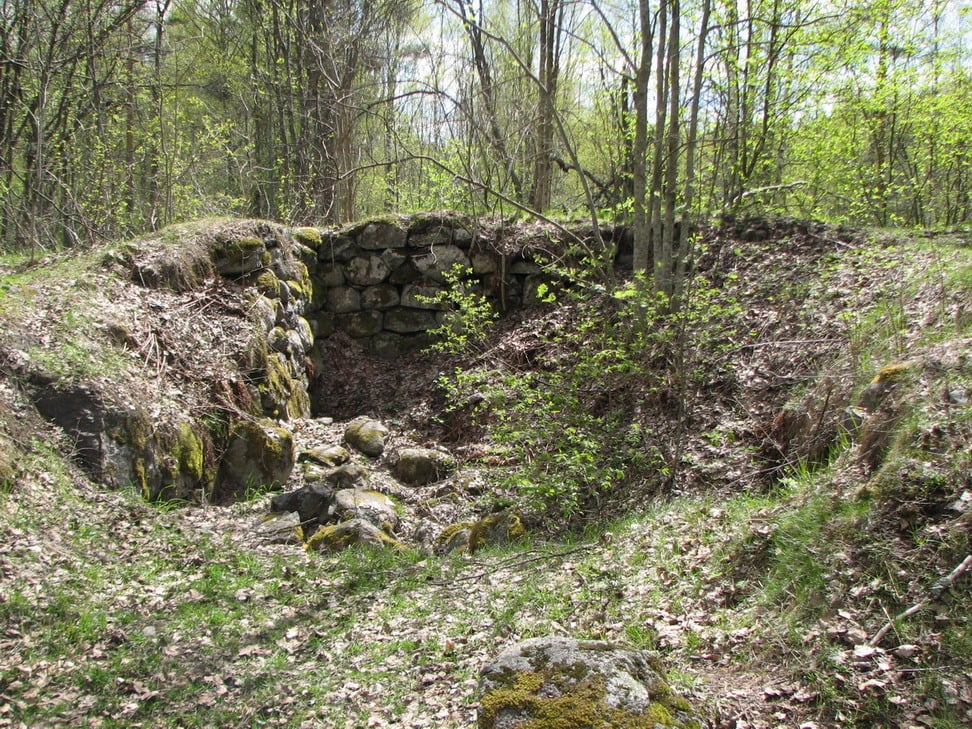
Tiversky Gorodok stands on the Vuoksi River in the Karelian Isthmus and has been studied by archaeologists for more than a century. The latest excavations were undertaken after parts of the archaeological site suffered damage, prompting researchers to investigate the affected areas. The rescue work unexpectedly resulted in the discovery of the silver hoard.
It is not the first treasure to emerge from the site. In 1890, another hoard was discovered at Tiversky Gorodok containing jewellery, a silver chain, silver ingots and eastern coins.
The newly discovered collection, however, is considered exceptional for its size, composition and preservation. Researchers are continuing to clean, conserve and study the objects, which should provide further evidence about the connections between Karelia, medieval Rus’ and Scandinavia during the Middle Ages.
Top Image: The newly discovered medieval silver hoard from Tiversky Gorodok in Russia’s Leningrad region. Phot credit: Stanislav Belsky / Museum of Anthropology and Ethnography of the Russian Academy of Sciences