
Now, in tune with the times, there is much greater emphasis on international diversification, flexible structures and time horizons, and active ownership, while still maintaining a prudent, long-term approach.
“In our interactions with family offices, we see that the second and third generations think slightly differently about managing wealth,” says Sueann Yeo, managing director and head of Asia-Pacific global wealth solutions for EQT, one of the world’s largest private markets firms.
“When in your 20s to 40s, the mindset and expectations about capital preservation, growth and returns will not be the same as someone in their 60s or 70s. In particular, many of the younger generation are now thinking about private equity, infrastructure, alternative investments and different asset-allocation strategies.”
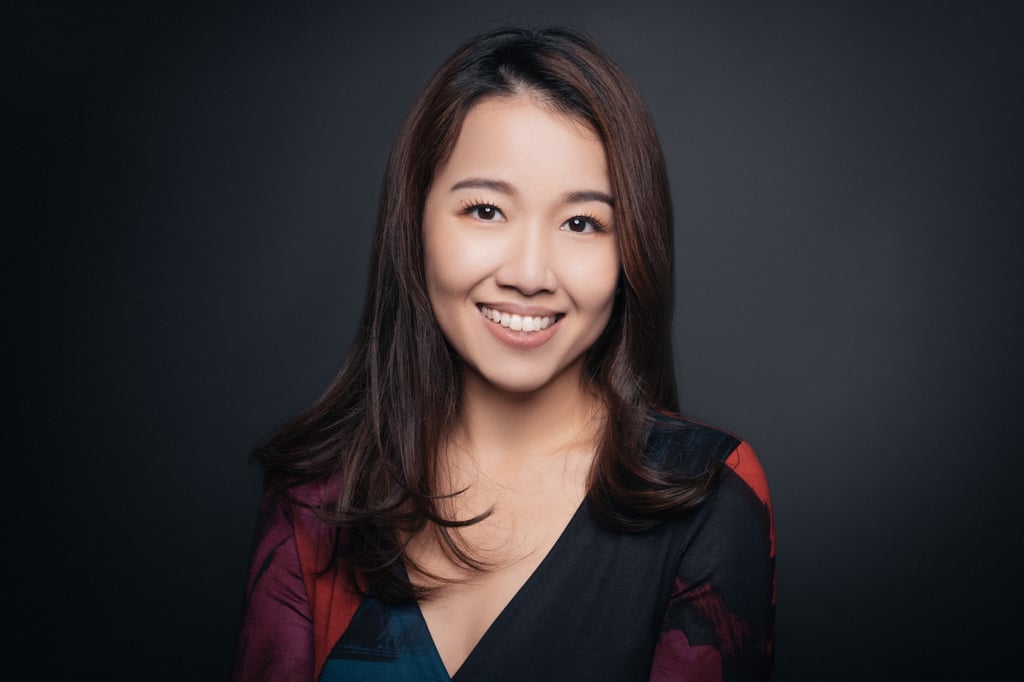
Yeo says that a number of the more institutionalised family offices have been doing this for a long time. The change, though, is that many others are now setting up programmes to scale their allocations to these newer areas materially over a five- to 10-year period.
Secondaries have evolved from a niche strategy into a core portfolio management tool for family offices, rather than simply an alternative route to private equity exposure.
Global secondaries transaction volumes reached a record US$226 billion in 2025, up 41 per cent year-on-year, with momentum continuing into this year as first-half volumes exceeded US$120 billion, up 20 per cent year-on-year.
Rather than framing secondaries as a faster-return alternative to primary commitments, Yeo describes the two as complementary: secondaries provide an additional way to access private markets, with differentiated portfolio characteristics, broader diversification and distinct cash-flow profiles.
“There are a few elements to this: an increasing level of sophistication in the understanding of private assets; more attention to DPI [distributed to paid-in capital, a metric for measuring the cash returned to investors compared with the money they put into a fund]; and a more hands-on approach to strategic asset allocation and setting limits for each category.”
Yeo points to the Wallenberg model as a reference point EQT draws on for its own investment approach – a model built around patient, multi-generational capital, active support for portfolio companies and reinvestment of returns to sustain long-term growth.
She believes this style of long-term, engaged ownership offers a useful frame of reference for Asia’s family offices as they weigh how to balance risk and opportunity across generations.

This kind of evergreen approach enables eligible individual investors and family offices to invest into the same strategies that previously only institutions could access.
It allows investment in private equity without the operational complexity of managing capital calls, distributions and reinvestment decisions typical of close-end structures, while offering more flexible, though not unlimited, access to liquidity.
“Family offices are warming up to the idea of having evergreen structures, which mirrors the content of classic closed-end private equity structures for institutional investors, but with more flexibility,” Yeo says.
“EQT’s private wealth strategies comprise a mix of primary funds, co-investment deals and a cash portion with a soft lock period to manage the liquidity.”
Eligible investors benefit from the immediate deployment with exposure to a diversified portfolio from day one, without the need for continual involvement or decision-making.
Yeo emphasises that this is just one of many options available through the EQT Private Wealth platform, which embodies the principle of active ownership to create value for the private companies taken into its portfolio.
This entails a focus on governance and careful use of the right levers to improve operating performance and revenue – but without the slash-and-cut type of management overhauls often seen elsewhere.
“Publicly and privately managed companies are very different in the way they do their reporting, account to shareholders and view time horizons,” Yeo says. “When we take a controlling interest, it is to create value over the long term.”
More broadly, she notes that while about 60 per cent of gross domestic product growth is in Asia, according to a 2025 figure from the IMF, the buyout assets under management in the region are estimated at less than 10 per cent. Clearly, that indicates huge potential.
“Some investors have always focused on just allocating to the US markets that they understand best,” Yeo says. “But look at where the growth is coming from. There is less capital chasing good assets in Asia, and that creates a very interesting opportunity for private equity.”
The emphasis on long-term capital extends to EQT’s engagement with earlier-stage entrepreneurs. It is demonstrated by the company’s start-up pitch competition EQT Impact Challenge, which has just finished after being held in Hong Kong for the second consecutive year. The latest run attracted more than 200 applications from young businesses developing deep-tech solutions across climate and health.
Five finalists were selected to pitch their start-ups live at the Grand Finale held at M+ in Hong Kong earlier this month. They were judged by their abilities to translate highly technical ideas into products that can be commercialised and scaled.
Advent Gene Therapeutics, which uses artificial intelligence to develop next-generation viral vectors designed to enable safer, more precise and effective delivery of genetic medicines, was named this year’s winner. It has received a €500,000 (US$575,000) investment from the EQT Foundation, the investment firm’s philanthropic arm, alongside access to EQT’s global network, expertise and support.
For Jean Eric Salata, chair of EQT Group and a member of the judging panel, the finale provided a close-up view of the ambition of the founders and the potential of the technologies they are developing. “What we are trying to do here is really focus on companies that can be catalysts for real change and impact,” he says.
One of the wider takeaways from the event was that capital alone is rarely sufficient to help promising technologies reach their potential. The finale reflected a theme running throughout the wider conversation around private markets: the value of patient capital combined with active, long-term support to help create the conditions for sustainable growth.