
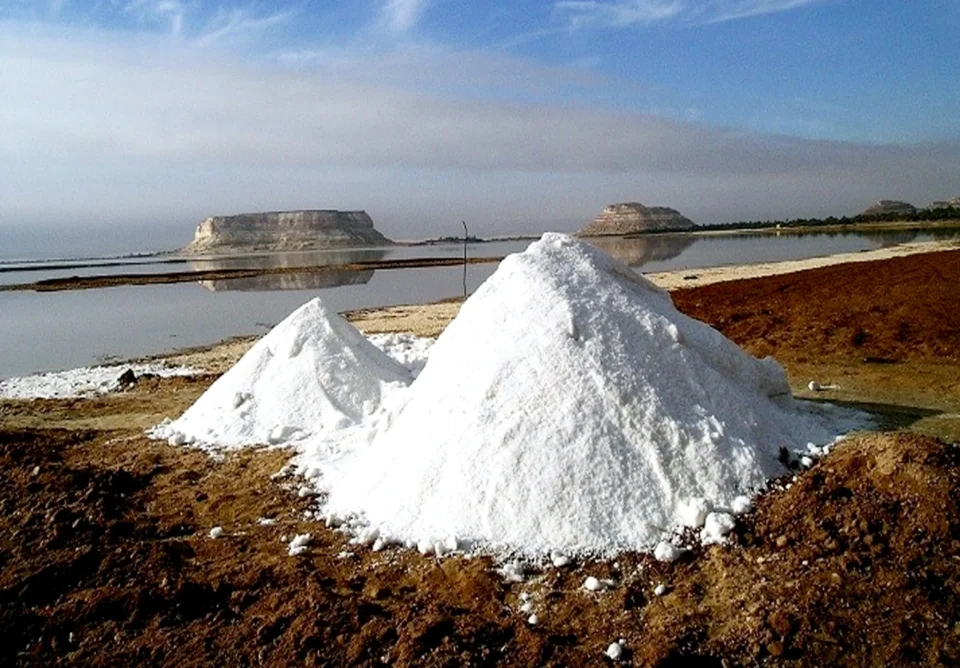
Cairo, Egypt – Salt has held exceptional economic importance throughout history, reaching levels of value in some regions that rivaled gold.
It transformed from a basic food ingredient into a strategic commodity linked to trade, wealth, and economic influence.
In ancient times, salt’s importance extended beyond enhancing the flavor of food;
it was also essential for preserving meat, fish, and other foodstuffs before the advent of modern refrigeration.
Therefore, it became an indispensable commodity, particularly in societies that relied on long-term food storage.
The flourishing of cities and commercial centers
Many regions witnessed a surge in salt value due to its scarcity and the difficulty of obtaining it, especially in areas far from seas and salt mines.
Transporting it required long journeys and high costs, leading to increased prices and creating opportunities for traders to reap substantial profits.
In West Africa, the salt trade played a vital role in stimulating trans-Saharan trade.
Caravans transported salt from production areas to regions experiencing shortages,
forming a vast trade network where communities exchanged salt, gold, and other goods.
This trade contributed to the prosperity of several cities and trading centers.
These cities became important hubs for collecting and distributing goods and strengthened economic ties between North Africa and its interior regions.
At that time, overland caravans were a primary means of transporting goods over long distances.
Its high value is due to its scarcity and high transportation costs
Salt’s importance wasn’t limited to its commercial role; it extended to political and financial spheres.
Some authorities sought to control its production and transportation routes, imposing taxes and duties on its trade.
These authorities profited from the constant demand for salt as a staple in daily life.
Although salt was not generally more valuable than gold, its value skyrocketed in certain regions
and historical circumstances due to its scarcity, high transportation costs, and increased demand.
Therefore, it became associated with commercial wealth at various points in history.
With the development of transportation, increased production, and improved food preservation techniques,
salt became more readily available and less expensive in most markets.
Thus, its status as a scarce commodity declined, while its story remains a testament to the power of basic needs
to generate wealth, shape trade routes, and influence the balance of economic power throughout the ages.