
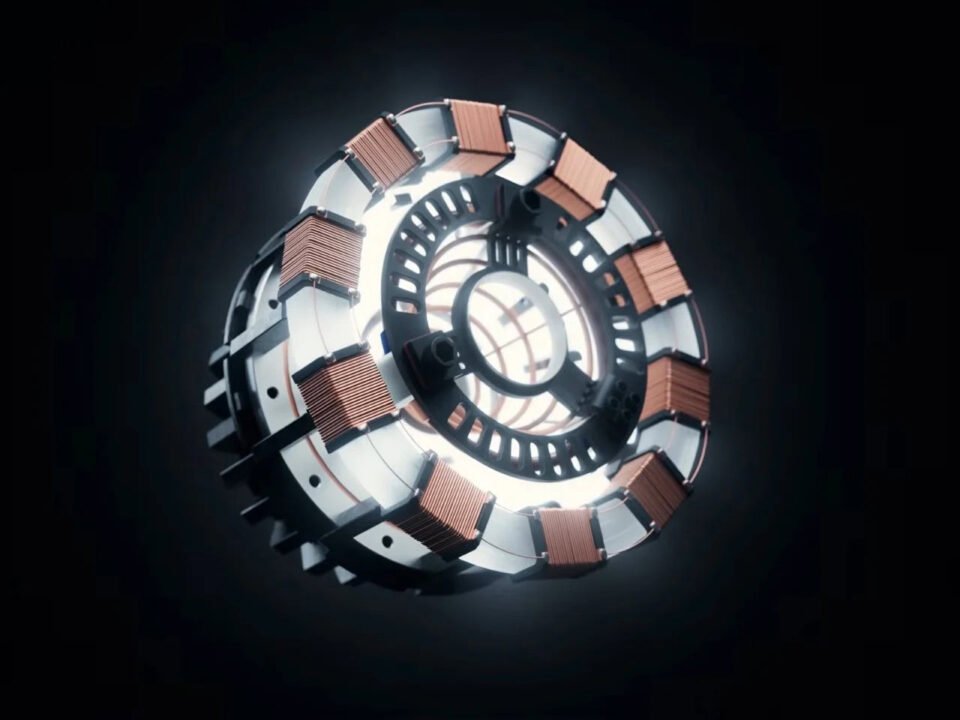
Robert Downey Jr. is set to return to the Marvel Cinematic Universe (MCU) on December 18 in Avengers: Doomsday, but this time as Doctor Doom rather than Tony Stark. With fans buzzing over this casting twist, it’s fitting to revisit the iconic arc reactor—a key element in Stark’s character. This glowing chest piece, originally built from scrap, powered Stark’s suit and shielded him from shrapnel. Even eighteen years post its 2008 debut in Iron Man, it remains a fan favorite prop.
A YouTube creator named Dianax meticulously deconstructed this legendary marvel prop in a 3D animated teardown, providing a hand-modeled, AI-free exploration of the Mark 1 reactor. Key elements such as the palladium ring, deuterium feed, a mini cyclotron, and ten magnetic coils highlight how the plasma arc is contained. Despite real-world challenges like size and resource requirements, the fantasy aspect holds surprising consistency.
How the Arc Reactor Mark 1 Operates, Layer by Layer
Beginning at the core, Dianax’s teardown reveals a central ring of pure palladium within the fusion chamber. Deuterium gas is absorbed by the palladium, preparing the fuel for ignition. A miniature cyclotron accelerates particles at high speeds into the core, instantly ionizing the gas to ignite plasma and commence fusion—emitting energy equivalent to about 1,500 pounds (680 kg) of TNT per second. This aligns with the film’s depiction of a 3-gigawatt output, enough to power Stark’s suit and much more.

The device’s design features magnetic containment rings along the chamber, aided by ten coils to secure the plasma. An energy converter beneath seamlessly transforms plasma into electricity, preventing potential damage from errant plasma. The cooling system efficiently expels excess heat, while a durable casing houses the entire apparatus. This layered arrangement logically divides functions like fuel handling, ignition, containment, conversion, and cooling, offering an intriguing arc reactor breakdown.
Palladium, Cold Fusion, and Stark’s Internal Struggle
In a nod to real science, the 1989 cold fusion announcement by electrochemists Martin Fleischmann and Stanley Pons involved palladium, leading to widespread but ultimately failed replication attempts. Stark’s cave reactor embodies a speculative cold fusion success, attributing its feasibility to his genius. In Iron Man 2, the narrative takes a darker turn as Tony discovers the palladium core’s toxicity. The eventual solution, a new element based on his father’s designs, eliminates this threat, illustrating the reactor’s dual role as both lifeline and liability.


The Science Fiction of Compact Fusion Reactors
The closest real-world counterparts to Stark’s power source are building-sized tokamaks, operating at extreme temperatures far exceeding the Sun’s core. These devices necessitate expansive magnetic coils and vast water resources for cooling. Stark’s fictional zero-loss energy conversion sidesteps these hurdles, departing significantly from current technology. Helion Energy’s Polaris prototype in Everett, Washington, with its direct electromagnetic induction approach, reflects the real-world pursuit of similar breakthroughs. Although functional, its size and complexity keep it far from the compact designs seen in the films.

Dianax’s in-depth, 3D video on YouTube serves as an engaging prelude to the upcoming film. Regardless of Downey’s new role, the arc reactor remains a testament to the enduring intersection of engineering ambition and cinematic imagination.


Source: yankodesign.com
Frequently asked questions
What powers Iron Man’s suit?
The arc reactor, a glowing chest piece originally built from scrap, powers Iron Man’s suit and shields him from shrapnel.
How is plasma contained in the arc reactor?
The arc reactor uses magnetic containment rings along the chamber, aided by ten coils, to secure the plasma.
Why is palladium a concern in Iron Man’s reactor?
In Iron Man 2, Tony Stark discovers the palladium core’s toxicity, which is later resolved by creating a new element based on his father’s designs.