
…Seizes Lithium Rocks, Truck, Computers as Crackdown Exposes Nigeria’s Struggle to Protect Its Burgeoning Mineral Wealth
Matilda Omonaiye/
Nigeria’s battle against illegal exploitation of its mineral resources has taken a dramatic turn in Ogun State, where operatives of the Economic and Financial Crimes Commission (EFCC) have uncovered four suspected illegal lithium processing plants and arrested 15 people, including 14 Chinese nationals.
The operation, carried out in the Ogere area of the state on Friday, October 23, 2026, has thrown fresh light on the growing international appetite for lithium, a strategic mineral increasingly regarded as the new gold of the global energy transition.
According to a statement issued on Monday by the EFCC’s Head of Media and Publicity, Dele Oyewale, operatives of the commission’s Lagos Zonal Directorate 2 stormed the facilities following intelligence gathering and surveillance.
The suspects, comprising 14 Chinese nationals and one Nigerian, were apprehended during the coordinated operation targeting the suspected illegal mineral processing facilities.
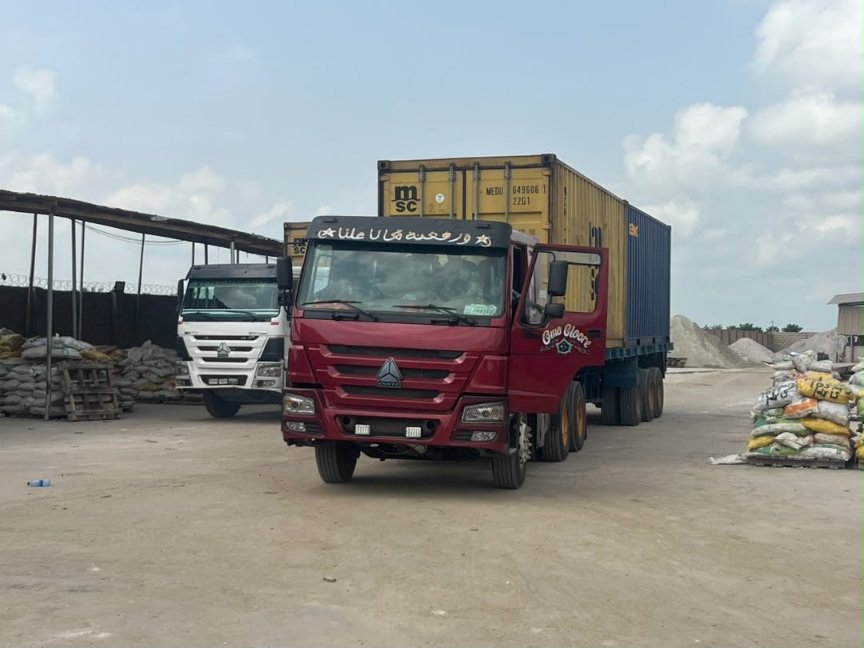
Investigators recovered bags of lithium-bearing rocks, 18 mobile devices, four laptop computers, two decoders, a television remote control and a trailer truck.
The commission did not disclose the identities of the suspects, the quantity or estimated market value of the recovered minerals, or the ownership of the processing plants.
Oyewale said investigations were continuing and that the suspects would be charged to court upon their conclusion.

Why Lithium Is Attracting Global Attention
The discovery comes at a time when lithium has emerged as one of the world’s most strategically important minerals, driven largely by the rapid expansion of electric vehicles, rechargeable batteries and renewable energy storage systems.
Often described as white gold, lithium is a critical component of lithium-ion batteries used in electric cars, smartphones, laptops and large-scale electricity storage facilities.
China dominates significant portions of the global lithium battery supply chain, particularly mineral refining and battery manufacturing, making access to lithium resources an important commercial and industrial consideration.
Nigeria, which possesses lithium-bearing mineral deposits in several states, has increasingly attracted attention from investors seeking opportunities in the international battery materials market.
However, the growing commercial interest has also raised concerns about illegal mining, unauthorised mineral processing, environmental degradation and the potential loss of government revenue.
How Much Is Lithium Worth Internationally?
Unlike gold, lithium does not have a single universally quoted international price. Its market value depends on the form in which it is traded, its chemical composition, purity and processing stage.
Lithium-bearing rocks, such as spodumene ore, generally command substantially lower prices than battery-grade lithium carbonate or lithium hydroxide, which require additional processing.
For perspective, lithium carbonate prices in China exceeded $80,000 per metric tonne at the height of the global battery materials boom in 2022 before collapsing sharply as supply increased and market conditions changed.
By 2024, prices had fallen below $15,000 per tonne during parts of the year, demonstrating the volatility of a market heavily influenced by electric vehicle production, battery demand and mineral supply.
These figures are historical benchmarks rather than verified October 2026 quotations.
The value of the materials recovered in Ogun cannot be reliably estimated without determining their weight, lithium concentration, mineral composition and commercial grade.
Nevertheless, the international importance of lithium makes the alleged operation particularly significant.
Nigeria’s Lithium Opportunity and the Illegal Mining Challenge
For Nigeria, lithium represents an opportunity to diversify an economy traditionally dependent on crude oil exports.
The country’s mineral resources could support investment in mining, refining, battery manufacturing and other industrial activities, provided that exploration, extraction and processing are conducted within the law.
Lithium deposits have been identified in parts of Nasarawa, Kogi, Kwara, Ekiti and other states, generating interest in the development of a domestic battery minerals industry.
But the country’s ambition to benefit from the global energy transition faces challenges, including inadequate geological data, illegal extraction, weak monitoring and the unauthorised movement of mineral resources.
Illegal mining and processing can deprive the government of royalties and taxes while exposing communities to environmental risks.
The Ogun operation raises important questions about how the four facilities were established, where their raw materials originated, whether the operators possessed the necessary licences and where the processed minerals were intended to be sold.
The EFCC has not disclosed whether the recovered lithium was destined for export or whether the suspects were linked to a wider international mineral trading network.
Growing Demand, Fierce Competition
The International Energy Agency has identified lithium as a crucial mineral for the transition towards cleaner energy technologies.
Demand is being driven particularly by electric vehicles and battery energy storage, although changes in battery chemistry, recycling and new mining projects could influence future consumption and prices.
For mineral-producing countries such as Nigeria, the economic opportunity extends beyond exporting unprocessed ore.
Developing local refining capacity could allow the country to retain more value from its mineral resources, generate employment and attract investment in downstream industries.
However, achieving these benefits requires effective regulation, transparent licensing and stronger enforcement against unauthorised operators.
The latest EFCC intervention underscores the importance of protecting Nigeria’s mineral resources at a time when international competition for battery materials continues to reshape global commodity markets.
For now, the 15 suspects remain under investigation, while the four facilities uncovered in Ogere have become the focus of a case that could shed further light on the activities of unauthorised operators in Nigeria’s emerging lithium industry.
The EFCC has promised to prosecute the suspects upon completion of its investigations.
The allegations against the suspects have not been established in court.