
Quick overview
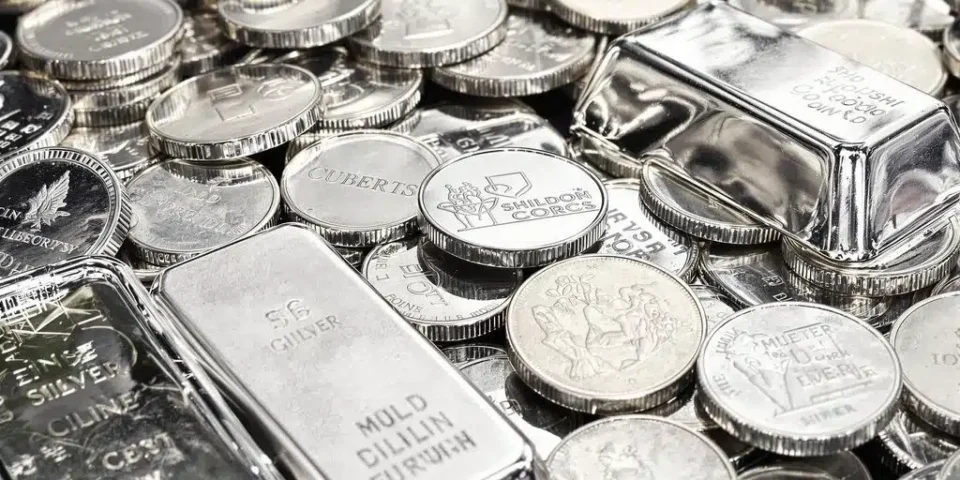
- The silver market is experiencing a significant structural supply deficit while facing short-term monetary pressures, with current prices around $54/oz after a peak of $121/oz in 2026.
- Institutional forecasters remain bullish on silver for 2026-2027 due to unprecedented industrial demand, particularly from solar panel manufacturing and electric vehicles.
- Over 50% of silver consumption is driven by industrial processes, distinguishing it from gold, with emerging technologies like AI and high-performance computing further increasing demand.
- The physical silver market is in its fifth consecutive year of supply shortages, as most global mine production is a by-product of other metals, limiting the ability to quickly increase silver output.
The silver market sits at a compelling macro intersection: record-breaking long-term structural supply deficits versus short-term monetary and cyclical headwinds.

Silver has undergone a sharp technical correction after reaching an all-time peak near $121/oz earlier in 2026. Spot prices trade around $54/oz, holding near multi-month lows as sticky energy-driven inflation and expectations of a potential Federal Reserve rate hike in late 2026 put temporary pressure on non-yielding assets.
Despite short-term volatility, institutional forecasters and long-term commodity models maintain a strongly bullish outlook for 2026–2027 based on unprecedented industrial consumption and stagnant mine supply.
Over 50% of global silver consumption is driven by industrial processes, making it vastly different from gold.
Solar panel manufacturing remains the primary growth catalyst. High-efficiency N-type solar cells (TOPCon and HJT) require higher silver loadings per watt than legacy PERC technologies, driving annual solar silver consumption past 200+ million ounces. High-performance computing, AI data center hardware, power management chips, and silver-coated semiconductors are emerging as major structural demand sources.
Electric vehicles require significantly higher silver content per vehicle (for power management, connectors, and battery modules) compared to internal combustion engines. Institutional ETF holdings have begun recovering after periodic profit-taking. Growing sovereign debt levels across developed markets continue to encourage capital flows into tangible physical assets as a store of value.
The physical market is locked in its fifth straight year of structural supply shortages. Approximately 70% to 75% of global mine production comes as a by-product from primary copper, lead, zinc, and gold mining. As a result, primary silver miners cannot rapidly scale production simply because silver prices increase.

Olumide Adesina
Financial Market Writer
Olumide Adesina is a French-born Nigerian financial writer. He tracks the financial markets with over 20 years of working experience in investment trading