
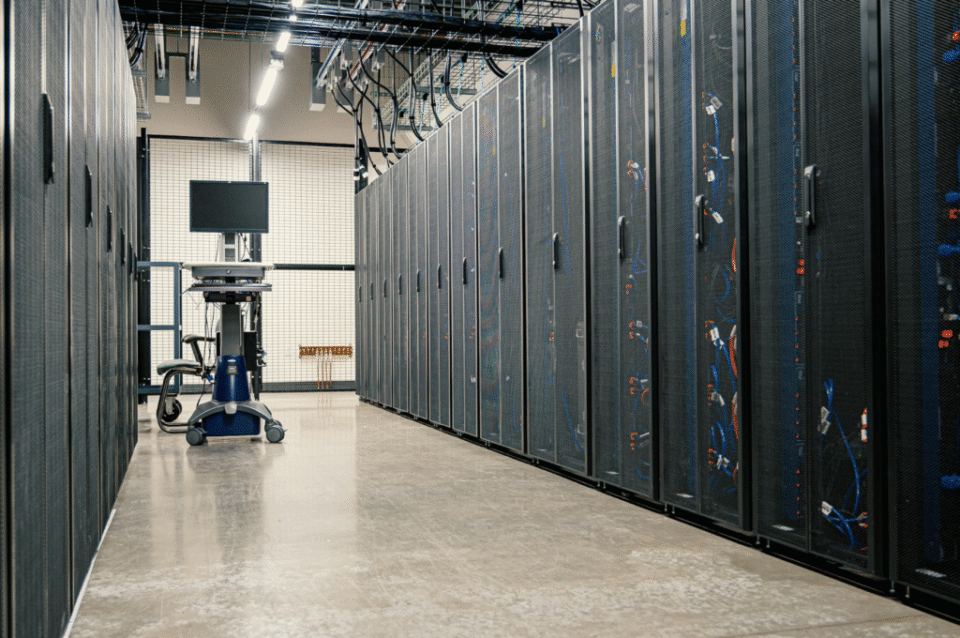
Ireland’s position as one of Europe’s important technology and business destinations is built on more than favourable investment conditions and the presence of global technology companies. Behind its growing digital economy is an extensive network of data centres and cloud infrastructure that keeps businesses, financial services, online platforms and digital applications running.
From storing business information and processing financial transactions to supporting artificial intelligence and cloud-based applications, data centres have become an essential part of modern economic activity. Their importance has increased as companies move more operations online and depend on secure, reliable access to computing resources.
For Ireland, this infrastructure has become a major economic asset. It supports the operations of international technology companies, strengthens the country’s appeal as a foreign investment destination and provides the digital foundation for businesses across different industries.
However, this growth has created a difficult balancing act. As data centres expand, their electricity requirements are placing increasing pressure on Ireland’s power network. The country must now consider how to maintain its technology-led economic growth while ensuring that energy supplies remain reliable, affordable and environmentally sustainable.
Why Ireland Has Become a Major Data Centre Destination
Ireland has developed a strong reputation as a location for international technology operations. Its European market access, established telecommunications networks, business environment and skilled workforce have helped attract major multinational companies.
Global technology businesses, including cloud service providers and digital platforms, have established significant operations in the country. Their presence has encouraged investment in data centres, cloud computing, software development and other technology-related services.
The Greater Dublin Area has become the centre of this activity, with a concentration of data centre facilities serving international and domestic customers.
This concentration has helped create an ecosystem in which infrastructure operators, technology companies, engineering contractors and professional service providers work alongside one another.
For international businesses, locating digital infrastructure in Ireland can support access to European customers and provide a base for managing cloud services, data storage and other technology operations.
The result is a digital economy in which infrastructure investment and foreign direct investment reinforce each other.
Data Centres Are Creating Value Beyond the Technology Sector
The economic contribution of data centres extends well beyond the companies that own and operate them.
Building a modern data centre requires significant investment in land, construction, electrical systems, cooling equipment, networking technology and security. This creates business for construction companies, engineering consultants, equipment manufacturers and specialised contractors.
Once operational, these facilities require technicians, electrical engineers, cybersecurity professionals, maintenance teams and facility managers. They also create demand for telecommunications, energy management and other technical services.
The wider benefits are even more significant.
Banks use cloud infrastructure to process transactions and manage customer information. Hospitals and healthcare providers depend on digital systems to store records and support connected services. Retailers use cloud platforms to manage online sales, inventory and customer data. Manufacturing businesses rely on digital systems for production planning, supply-chain management and automation.
In this way, data centres support economic activity across industries that may have little direct connection with the technology sector.
For Irish businesses, reliable cloud infrastructure can make it easier to adopt digital tools, expand online operations and compete in international markets.
Foreign Investment Is Strengthening Ireland’s Digital Ecosystem
Ireland’s technology sector has become an important part of its foreign investment story. International technology companies have established operations in the country, supporting employment, business services and demand for specialised infrastructure.
Data centres play an important role in maintaining this investment environment. Global companies need dependable computing capacity to operate cloud services, manage digital platforms and support customers across different markets.
The availability of suitable infrastructure can therefore influence where technology businesses choose to establish or expand their operations.
The impact also reaches domestic companies. Local construction contractors, equipment suppliers, engineering firms and professional service providers can benefit from projects linked to multinational investment.
However, the long-term value of this investment depends on building stronger connections with the domestic economy. Greater participation by Irish suppliers, more technical training and increased opportunities for local businesses can help ensure that the benefits of digital infrastructure are distributed more widely.
The Energy Challenge Behind the Cloud Economy
While data centres support economic growth, they also require substantial amounts of electricity.
Unlike many commercial buildings, large data centres operate continuously. Their servers, storage systems, networking equipment and cooling infrastructure need a reliable power supply throughout the day and night.
As more facilities are developed and existing sites expand, electricity demand increases. This has become one of Ireland’s most important infrastructure challenges.
Recent electricity statistics show the scale of the issue. Data centres accounted for approximately 22% of Ireland’s metered electricity consumption in 2024, compared with around 5% in 2015. This sharp increase has placed the sector at the centre of national discussions about electricity supply and future infrastructure planning.
The concern is not simply how much electricity data centres consume. It is also whether the national grid can supply additional power without affecting other users or delaying the country’s wider economic development.
Homes, hospitals, schools, manufacturers and other businesses also depend on reliable electricity. Balancing these requirements with the growing needs of digital infrastructure has become a major policy priority.
Grid Capacity Is Becoming a Business Consideration
Ireland’s electricity network must accommodate changing demand patterns as the economy becomes more digital and energy-intensive.
The concentration of data centres around Dublin has made local grid capacity particularly important. Even when a company is willing to invest in a new facility, insufficient electricity infrastructure can affect its location, construction timeline and operating plans.
This has made access to power a key consideration for data centre developers.
Energy infrastructure investment is therefore becoming closely connected to technology investment. Grid upgrades, electricity transmission, renewable generation and energy storage will all influence how quickly Ireland can expand its digital infrastructure.
For businesses, the implications are significant. A data centre project is no longer simply a question of finding suitable land and securing customers. Developers must also consider the availability of electricity, the cost of energy and the ability to connect to the grid.
This is encouraging greater attention towards locations with suitable power infrastructure and opportunities for closer cooperation between technology companies and energy providers.
Renewable Energy and Sustainable Data Centre Operations
The environmental impact of data centres has become an increasingly important issue for Ireland.
Large facilities require electricity for computing and cooling, while water consumption can also be a concern depending on the cooling technology used. As the number of facilities increases, questions about emissions, resource management and local infrastructure become more pressing.
Technology companies are responding through investments in renewable electricity, energy-efficient equipment and improved cooling systems.
Solar and wind energy can help reduce the carbon intensity of electricity used by data centres. However, renewable generation is not always available at the exact time electricity is required. This makes storage systems, grid flexibility and reliable backup power important parts of the sustainability discussion.
Cooling technology is another area of innovation. More efficient cooling systems, improved server design and better facility management can reduce energy requirements while maintaining reliable operations.
For businesses supplying this market, sustainability is creating new opportunities in energy management software, battery storage, electrical equipment, cooling systems and environmental monitoring.
The next generation of data centres will increasingly be judged not only by computing capacity but also by how efficiently they use electricity and other resources.
Opportunities for Irish Businesses and Smaller Suppliers
The expansion of cloud infrastructure creates opportunities for companies beyond the large technology brands.
A data centre requires a wide network of suppliers throughout its construction and operational life. This includes electrical contractors, mechanical engineers, construction companies, equipment manufacturers, security providers and maintenance specialists.
Smaller businesses can participate by offering specialised products and services that support these facilities.
Some promising areas include:
- Electrical installation, power distribution and equipment maintenance.
- Cooling systems and energy-efficient building technology.
- Fibre-optic networks and telecommunications infrastructure.
- Cybersecurity and digital monitoring services.
- Battery storage and renewable energy integration.
- Construction, engineering and project management.
- Waste management, water treatment and environmental services.
There are also opportunities for software businesses developing tools for energy monitoring, predictive maintenance, cloud management and infrastructure security.
However, entering the data centre supply chain requires technical expertise, reliable delivery and compliance with demanding industry standards. Businesses that can demonstrate quality and operational reliability are better positioned to develop long-term relationships with infrastructure operators.
Cloud Infrastructure Is Helping Traditional Industries Modernise
One of the most important effects of Ireland’s digital infrastructure investment is the support it provides to industries outside technology.
Financial institutions use cloud services to improve transaction processing, digital banking and data management. Retailers depend on cloud platforms to manage online orders, customer information and inventory. Healthcare providers use digital systems to support administration, medical records and communication between facilities.
Manufacturers can also use cloud-based applications to monitor production, analyse operational data and improve supply-chain management.
For smaller businesses, cloud computing can reduce the need to maintain expensive in-house IT infrastructure. Instead, companies can access computing resources through subscription-based services and expand capacity as their requirements change.
This makes digital tools more accessible to businesses that may not have the financial resources to build their own technology systems.
The economic value of data centres is therefore closely connected to how effectively other industries use the services they provide.
The Policy Challenge: Balancing Digital Growth with Energy Security
Ireland’s data centre expansion has created an important policy question: how can the country continue attracting technology investment without putting excessive pressure on its electricity system?
The challenge involves several competing priorities. Data centres support foreign investment, employment and digital services, but their growing power requirements must be considered alongside housing, public services, manufacturing and the country’s climate commitments.
Energy planning, grid development and investment decisions will play a major role in determining the future of the sector.
Businesses will also need greater certainty about electricity connections, planning requirements and sustainability expectations before committing to large infrastructure projects.
A balanced approach could involve encouraging facilities that demonstrate strong energy efficiency, supporting renewable electricity development, improving grid capacity and promoting better coordination between infrastructure operators and energy providers.
The objective should not simply be to build more data centres. It should be to develop infrastructure that contributes to the economy without undermining the country’s long-term energy and environmental priorities.
Conclusion
Data centres and cloud infrastructure have become central to Ireland’s economic development. They support multinational technology operations, attract investment and provide the computing foundation for businesses across finance, healthcare, retail, manufacturing and public services.
Their growth is also creating opportunities for construction companies, engineering firms, energy providers, technology suppliers and smaller businesses that form part of the wider infrastructure ecosystem.
But Ireland’s digital ambitions cannot be separated from its energy challenges. Reliable electricity, stronger grid capacity, renewable power and efficient resource management will be essential to sustaining future expansion.
The next stage of Ireland’s digital economy will depend on finding the right balance between investment and infrastructure responsibility. A strong data centre sector can support long-term economic competitiveness, but its success will ultimately depend on whether the country can power its digital future sustainably.