
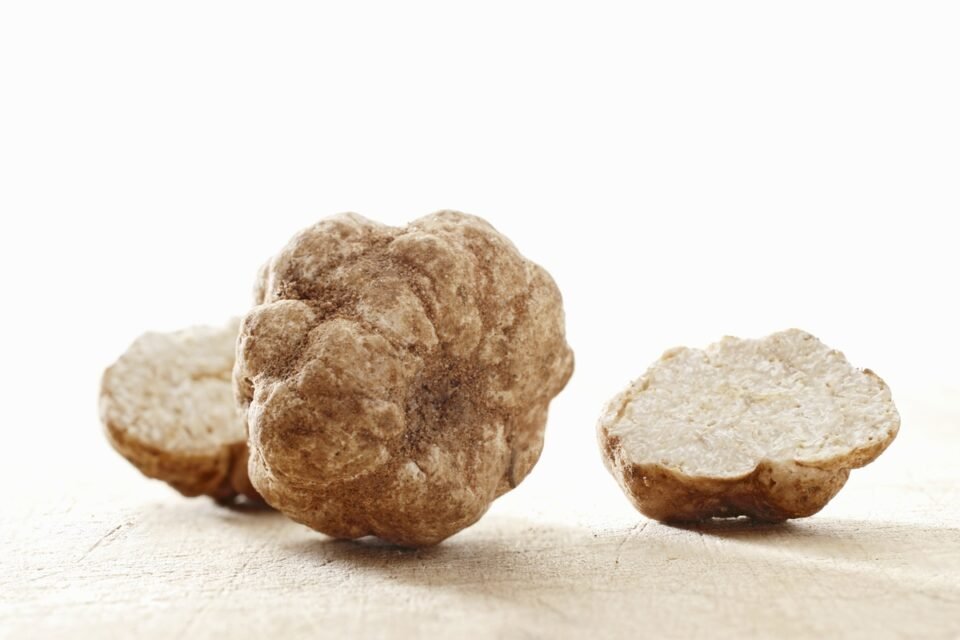

White truffles, among the world’s most expensive foods, are fetching sharply higher prices as heat waves and drought cut harvests. Even a fungus that grows underground has been hit directly by climate change, with output falling at major European growing areas and prices up as much as 30% from a year earlier.
Hunting for ‘White Gold’ Underground: Italian Prices Jump 30%
This year’s white truffle harvest in Alba, in Italy’s northern Piedmont region, has fallen short of previous years, the Associated Press reported on the 1st.
Alba is one of the world’s best-known sources of white truffles. Every October, hunters known as trifolau roam the woods with their dogs in search of truffles hidden beneath the soil.
This year is different. Summer heat waves and drought have dried out the ground, making truffles far harder to find.
Antonio Degiacomi, head of Italy’s National Truffle Study Center, said a lack of rainfall and high temperatures in July and August affected October output.
Dry, hardened soil has also left the truffles smaller. Even when hunters do find them, researchers say they stay fresh for a shorter period than in previous years.
Prices have climbed as supply has shrunk. Axel Iberti, head of the Alba International White Truffle Fair, said local market prices were 20% to 30% higher than in the same period last year.
Croatian Harvest Also Down 30%, With Prices Reaching 6 Million Won per Kilogram
The decline in truffle production is not limited to Italy.
Petar Alebic, who gathers truffles in oak forests near Zagreb, Croatia, estimated that this year’s harvest was down about 30% from a normal year.
He said conditions had worsened each year over the past seven to eight years, with drought leaving truffles smaller and less plentiful. As harvesting alone has become harder to live on, he also runs truffle-hunting programs for tourists.
About 12 species of truffle grow in the area, according to Armin Mesic, a mycologist at Croatia’s Ruder Boskovic Institute.
Among them, the white truffle is the most expensive, trading at up to 4,000 euros per kilogram, or about 6 million won.
Mesic warned that drought and high temperatures are eroding not only truffle output but also quality, and that the areas where white truffles can grow are steadily shrinking.
Truffles are fungi that grow underground in symbiosis with tree roots, and cool, moist soil is essential to their development. White truffles are especially vulnerable to environmental change because, unlike black truffles, there is no established technology for stable large-scale cultivation.
Restoring Forests, Testing Water Supply: More Than a Decade to a Harvest
Growing regions have begun looking for ways to protect the truffle.
Italian researchers are testing irrigation to supply water to forests during prolonged droughts. They are also planting trees and restoring woodland to lower soil temperatures and retain moisture.
Planting trees does not yield truffles right away, however. Newly planted trees can take more than a decade to create conditions suitable for truffle growth.
Researchers are also examining tree varieties that tolerate heat and dry conditions, along with the role of soil microbes.
Experts stress that white truffles are not in immediate danger of disappearing.
Degiacomi said the species is not facing extinction but a challenge, adding that efforts to adapt to climate change are needed.