
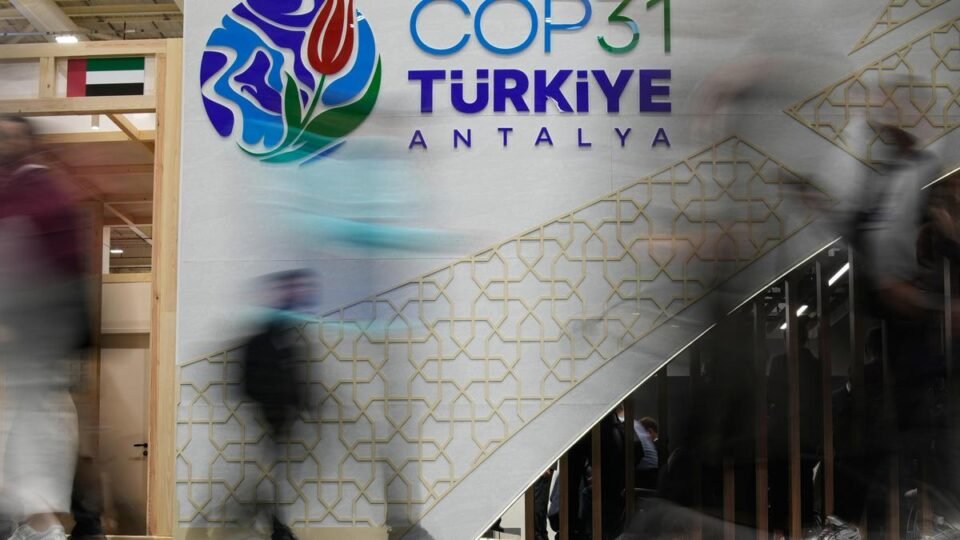
As negotiators from around the world gather in Antalya in Türkiye this week and the next for the annual United Nations climate summit, a familiar argument over climate finance is once again testing the prospects for agreement. Wealthy countries point to rising sums provided for climate action. Developing countries, however, ask a harder question — how much money is reaching them, on what terms, and how quickly enough to meet the costs of a warming world?
For India and much of the Global South, this is not an accounting dispute. It concerns protecting farms from drought, cities from floods and people from extreme heat, while expanding energy access, infrastructure and jobs through cleaner power. Climate finance can make these ambitions affordable.
Need grows faster than money available
The UN Environment Programme’s 2026 Adaptation Gap Report estimates that developing countries will need about $305 billion a year by 2035 to prepare for the increasingly severe climate impacts. Yet developed countries provided only $28.2 billion to $31.7 billion in public money for this purpose in 2024. Even if the aspiration agreed at the previous climate summit in Brazil to triple this finance by 2035 is met, it would cover only 20-29% of the estimated need.
The dispute is about the kind of finance on offer, its conditions and whether countries can access it.
Unfinished bargain
The primary issue begins with responsibility. Under the UN climate convention, developed countries accepted an obligation to provide financial resources to help developing countries address climate change. The 2015 Paris Agreement, a global treaty where nearly 200 nations agreed to cut greenhouse gas emissions and limit global warming to well below 2°C, and aim to keep it under 1.5°C, reaffirmed this.
The landmark pact says wealthy countries should lead in providing and raising climate finance. It also recognises the importance of public money and grants for countries most vulnerable to climate impacts.
For developing countries, this is not charity. It is part of the bargain behind global climate action. Countries with greater historical responsibility for global warming and more financial capacity would support those with fewer resources. This principle remains central to the UN climate process.
However, the meaning of delivery is contested. In the 2009 Copenhagen summit, wealthy nations pledged to provide and mobilise $100 billion a year for developing countries by 2020. The target was missed that year and reached for the first time only in 2022. The total rose to $136.7 billion in 2024, exceeding the target for a third consecutive year, according to the OECD, a club of rich countries.
But the headline figure does not settle the argument. The OECD total includes public finance provided directly and through multilateral development banks, export credits, and private investment attributed to public interventions. It counts the full value of loans as well as grants. In 2024, loans accounted for $68.5 billion, or 67%, of public climate finance. Grants accounted for $29.7 billion, or just a measly 29%.
A grant does not have to be repaid. A low-interest loan is cheaper than commercial borrowing, but it is still debt. For poorer countries facing high borrowing costs, the distinction matters. A loan for a revenue-earning power project is not the same as a grant for flood protection or a heat action plan.
Money announced is not necessarily money disbursed. A pledge may take years to pass approval procedures and reach the agency expected to spend it. The UN climate finance committee says there is no common accounting method for the $100 billion goal.
The OECD counts the face value of loans. Oxfam, an international non-profit, estimates the 2024 total at $32.7 billion to $44.7 billion by using a narrower measure that discounts loans and excludes some sources. These figures answer different questions, but expose the dispute over how much support represents a real transfer of resources.
Private investment is part of the answer, but cannot be the whole answer. Investors are easier to attract to projects that earn money, such as solar and wind power. It is much harder to raise commercial finance for public needs such as coastal protection, urban drainage, early warning systems or stronger health services. These may prevent enormous losses but rarely generate a direct financial return. Public funding, particularly grants, remains essential.
Larger number, unresolved questions
An agreement reached at the climate summit in Azerbaijan in 2024 was meant to move the debate forward. Developed countries agreed to take the lead in providing at least $300 billion a year for developing countries by 2035. The decision also called on all countries and institutions to work towards scaling finance from public and private sources to $1.3 trillion a year.
These are not the same commitment. The amount of $300 billion is the negotiated goal, while $1.3 trillion is a wider ambition involving many sources. The agreement did not settle how much should be grants, loans or direct government support.
India’s position reflects the concern that a larger headline number will mean little if the money is costly or difficult to access. In its formal submission, India called for at least $1 trillion a year from developed countries, primarily as grants and low-cost loans. It wants support to be affordable, predictable and accessible.
This is not a rejection of private investment or domestic fund-raising. It is an insistence that private capital cannot replace the financial responsibility for the climate crisis accepted by wealthy countries, especially where mitigation and adaptation projects offer no commercial return.
India’s needs differ from those of least developed countries and small island states, many facing acute climate risks and tight budgets. But access is a concern across the developing world. Complex applications, limited technical capacity and lengthy project preparation can keep countries from using funds that are nominally available.
The argument at the Türkiye summit is, therefore, about more than the size of the next financial target. It is about whether money is genuinely additional, whether it arrives as grants or debt, whether it can be accessed without years of delay and whether it reaches those who need it most.
Climate diplomacy cannot keep treating finance as a promise to be renewed at each summit. Developing countries are being asked to change their economies while coping with climate impacts that are already imposing heavy costs. They cannot do both on pledges alone. Until the money is predictable, affordable and accessible, the same dispute will return — because the bargain at the heart of global climate action remains unfinished.
Soumya Sarkar is Managing Editor of IndiaClimateDialogue.net.
Published – November 12, 2026 06:30 am IST