
The biggest mistake real estate investors could make in 2027 is to wait for yesterday’s market to return.

Anne Breen is global head of real estate at Aberdeen
Cheap debt and falling yields are not a sound investment thesis for the next cycle. The stronger opportunity lies in buying assets at more realistic prices, then growing income from buildings that meet enduring economic needs.
Our outlook for 2027 is positive but selective. Housing shortages, Europe’s industrial renewal and demand for digital infrastructure offer compelling opportunities, but sector exposure alone won’t be enough. The quality, location and management of individual buildings will matter more than a broad call on a market recovery.
Repricing has improved the starting point for new investment. Higher property yields offer a stronger income base than was available during most of the previous decade. Where supply is constrained and occupier demand is resilient, there’s also scope to grow that income over time.
That matters because interest rates and inflation expectations may continue to unsettle valuations, and higher rates could put short-term pressure on values. Lower bond yields could support capital appreciation, but our investment case doesn’t depend on them. Rather than trying to predict where rates or property yields will move, investors can underwrite returns against the strength, quality and growth potential of rental income.
Real estate can also offer inflation-linked income, and the forces driving physical demand for space tend to be long term and structural, rather than cyclical. That protection isn’t automatic, however. Lease terms, occupier affordability and operating costs all matter. The aim is to own income that can grow in line with, or ahead of, inflation.
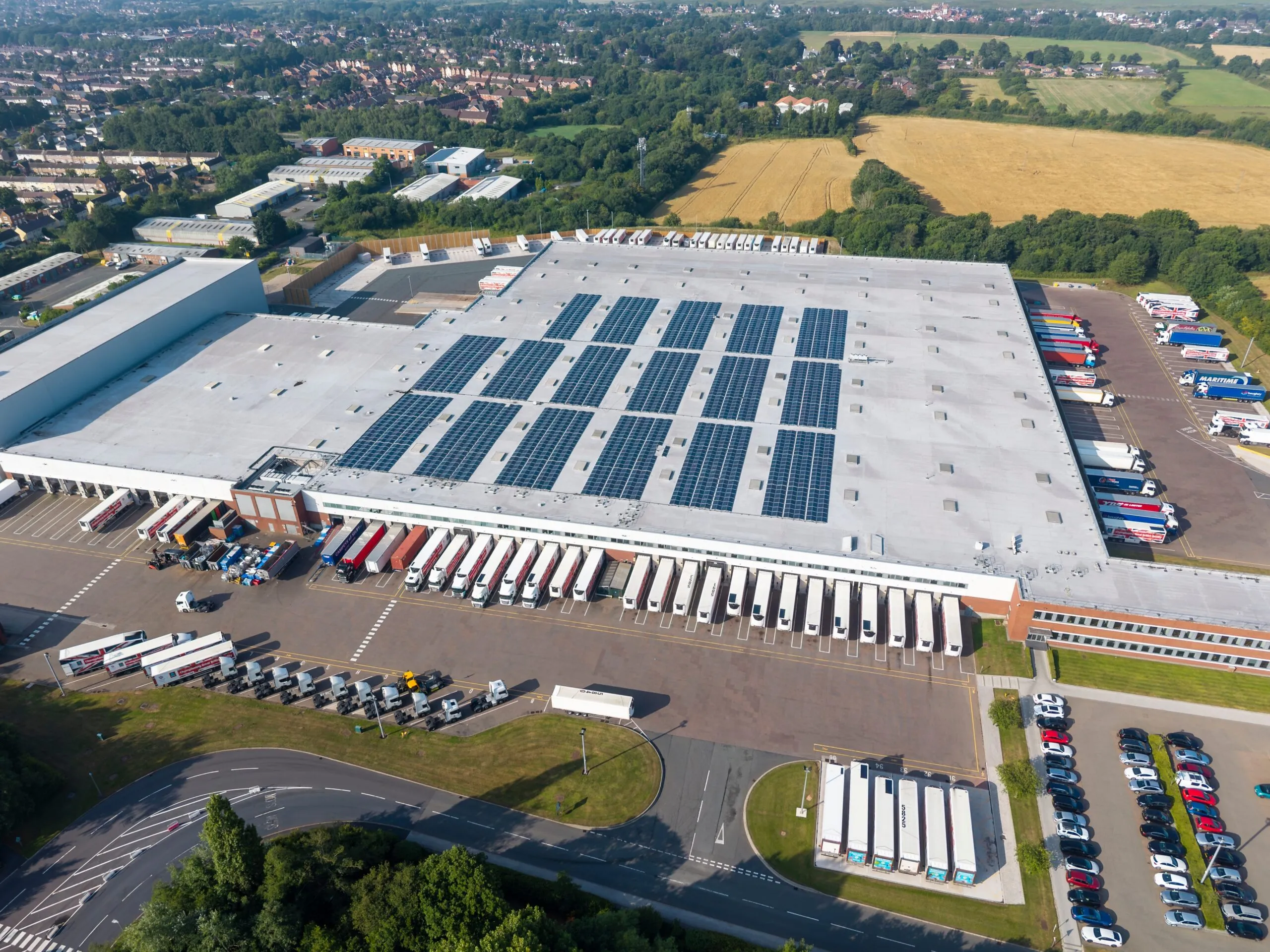
In demand: industrial and logistics assets remain a high-conviction opportunity
European industrial and logistics assets remain a high-conviction opportunity. Demand extends beyond ecommerce to the rebuilding of Europe’s industrial capacity. Onshoring, supply chain resilience, sovereignty concerns and increased defence spending are driving production in Europe, for Europe. The implications reach across manufacturers, component suppliers and distribution networks.
Residential also offers another enduring source of demand. The need for affordable, high-quality homes doesn’t disappear when rates change. Well-run, affordable operational assets offer the strongest proposition.
Whatever the debate about AI valuations and spending, there’s still a fundamental lack of data centre supply in the UK and Europe. Access to power is vital and a site without a credible power solution can’t meet that demand.
The principal risk is assuming financing conditions will revert to those of the past decade. Real estate has repriced significantly, but further adjustment is possible if interest rates rise. Higher rates, volatile energy costs and geopolitical uncertainty can affect values and occupiers’ ability to pay.
Asset selection is equally significant. But the next cycle is likely to bring polarisation within sectors and strong differentiation between individual assets. Two otherwise similar logistics buildings can perform very differently depending on location, quality and access to power. In offices, one building can perform completely differently from its neighbour, depending on whether it offers prime, future-fit space, good floorplates and end-of-journey facilities such as cycle parking and showers. In living, operational quality, location and amenities shape the durability of income.
For portfolios, there is an argument for having several sources of resilient, growing income rather than one large, macroeconomic bet. Detailed asset selection and disciplined financing should take precedence over broad sector labels.
Investors should stop waiting for the old real estate cycle to return. Housing, industrial and distribution space and digital infrastructure remain essential, yet good-quality supply is limited. For investors, the opportunity is to focus on the best-quality assets that meet these needs and turn structural demand into durable cashflows. Our conviction for 2027 rests on a simple distinction: buy income that can grow, not a recovery that must arrive.
Anne Breen is global head of real estate at Aberdeen