
PI Global Investments
Alternative Investments

Druckenmiller thinks stablecoins will replace traditional payment systems within 15 years


Moneywise and Yahoo Finance LLC may earn commission or revenue through links in the content below.

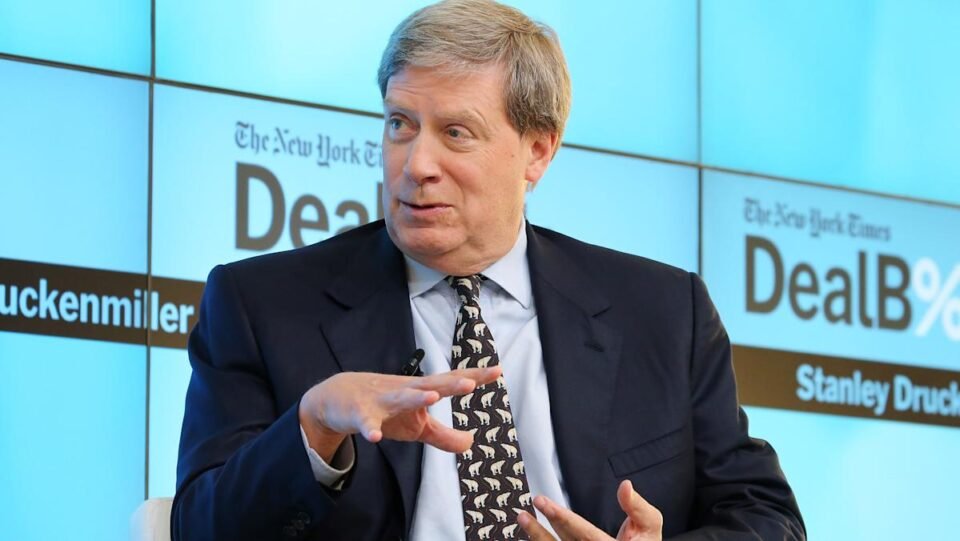
Stanley Druckenmiller, the billionaire investor who built one of Wall Street’s most successful hedge funds, says the future of money may not belong to banks or even Bitcoin.

“Blockchain and the use of stable coins — if you want to throw crypto into that, tokens — [are] incredibly useful in terms of productivity,” he said in an interview with Morgan Stanley (1). “I assume our whole payment systems will be stablecoins at 10 or 15 years — efficient, quicker, cheaper.”

But while he’s bullish on the technology behind crypto, Druckenmiller is far less convinced by the assets themselves.

“I said this a long time ago, and I’m going to say again — it’s a solution looking for a problem,” he said of crypto as a store of value.

In other words, the future of money may not be about what you invest in, but how money moves.

Stablecoins are digital tokens designed to maintain a stable value, typically by being tied to a traditional currency, such as the U.S. dollar (2). Unlike cryptocurrencies like Bitcoin, stablecoins are more practical for everyday financial use.

That stability gives them an edge in payments. By running on blockchain networks, stablecoins can move money faster and at a lower cost than traditional banking systems. This is especially true for cross-border transactions, which can otherwise take days to settle and come with steep fees (3).

That’s the “productivity” Druckenmiller is pointing to. In his view, the real breakthrough isn’t crypto as an investment, it’s the increased accessibility and flexibility of the money involved. If the technology continues to scale, it can reshape the financial system in ways most consumers never directly see.

Today’s financial infrastructure relies on a patchwork of intermediaries to process transactions (4).

Payments can take days to settle, with fees added at multiple points along the way. Stablecoins and blockchain networks aim to streamline that process by enabling near-instant settlement on a single, shared ledger.

The change is coming. According to data compiled by Bloomberg and Artemis Analytics Inc., global stablecoin transaction volume reached roughly $33 trillion in 2025 (5). That’s a 72% increase from the previous year.

Major payment firms and financial institutions are also exploring stablecoin-based settlement systems, as regulators begin to establish clearer frameworks for digital assets. For example, Visa, in partnership with Cross River Bank and Highnote, launched a pilot in December 2025 that would allow U.S. card issuers to settle network activity in USDC on the Solana blockchain (6).

“Stablecoin settlement matters when it delivers practical advantages in real payment settings that benefit customers,” said John MacIlwaine, CEO of Highnote, in a press release about the partnership. “The future of payment operations is faster, simpler, and always on.”

That kind of shift helps explain why Druckenmiller is separating the technology from the investment. While blockchain-based systems may be gaining real traction behind the scenes, that doesn’t necessarily mean every crypto asset tied to them will follow the same path.

For everyday investors, Druckenmiller’s outlook represents a growing divide between the infrastructure behind crypto and the assets themselves.

That creates a tricky dilemma.

If the biggest opportunity in blockchain lies at the system level rather than in individual tokens, how should investors position themselves?

Read More: I’m almost 50 years old and don’t have retirement savings. Is it too late?

Interest in crypto hasn’t disappeared, especially among retail investors looking for exposure to digital assets. According to data from TwinStrata, crypto has reached a 9.9% global adoption rate in 2026 with over 550 million investors (7).

If you’re looking to diversify beyond traditional stocks and ETFs, Robinhood Crypto lets you buy and sell cryptocurrencies with as little as $1.

With some of the lowest trading costs on average in the U.S., you could end up with up to 2.7% more crypto compared to other platforms.

Robinhood Crypto makes it easy to make investing a habit with recurring buys on a fixed schedule, while giving you access to all your favorite coins — from Bitcoin and Ethereum to Solana, Dogecoin, XRP and more.

You can also transfer crypto securely to other wallets, set custom price alerts, track market trends and manage your portfolio all in one place.

Robinhood ensures the security of your cryptocurrency is a top priority, with the majority of coins held in offline cold storage. Robinhood also carries crime insurance against theft and cyber breaches, and 24/7 customer support is available if you need help.

But as Druckenmiller’s comments suggest, not all parts of the crypto ecosystem may carry the same long-term potential. Instead of trying to pick winners in a volatile space, some investors are looking for more structured ways to build wealth.

The real opportunity may not lie in picking the right crypto, but in understanding where broader market trends are heading.

Moby offers expert research and recommendations to help you identify strong, long-term investments backed by advice from former hedge fund analysts. In four years, and across almost 400 stock picks, their recommendations have beaten the S&P 500 by almost 12% on average. Moby also offers a 30-day money-back guarantee.

Moby’s team spends hundreds of hours sifting through financial news and data to provide you with stock and crypto reports delivered straight to you. Their research keeps you up to the minute on market shifts and can help you reduce the guesswork behind choosing stocks and ETFs.

Plus, Moby’s reports are easy to understand for beginners, so that you can become a smarter investor in just five minutes.

Still, not every investor wants to spend time analyzing markets or following detailed research.

For those looking for a simpler, more hands-off approach, there are tools like Acorns, a popular app that automatically invests your spare change.

The beauty of ETF investing is its accessibility — anyone, regardless of wealth, can take advantage of it — and platforms like Acorns are designed to automate that process. The app helps you build wealth gradually, without having to time the market.

Signing up for Acorns takes just minutes: Link your cards, and Acorns will round up each purchase to the nearest dollar and invest the difference.

With Acorns, you can invest in a dividend ETF with as little as $5 — and, if you sign up today and set up a recurring investment, Acorns will add a $20 bonus to help you begin your investment journey.

Join 250,000+ readers and get Moneywise’s best stories and exclusive interviews first — clear insights curated and delivered weekly. Subscribe now.

We rely only on vetted sources and credible third-party reporting. For details, see our editorial ethics and guidelines.

Morgan Stanley/YouTube (1); Investopedia (2); Modern Treasury (3); LibreTexts (4); Bloomberg (5); Cross River (6); TwinStrata (7).

This article provides information only and should not be construed as advice. It is provided without warranty of any kind.


Source link

Related posts

Mesirow opens Tokyo office with two senior hires

D.William

Iran eyes crypto toll for oil tanker transits through Strait of Hormuz

D.William

Bill Ackman in talks to launch fund in bid to pounce on investor complacency

D.William

Leave a Comment