
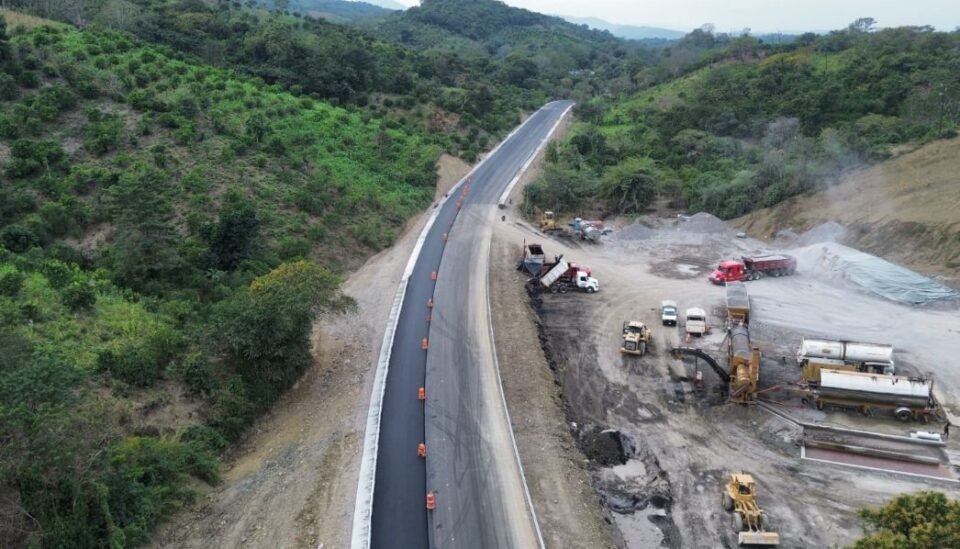
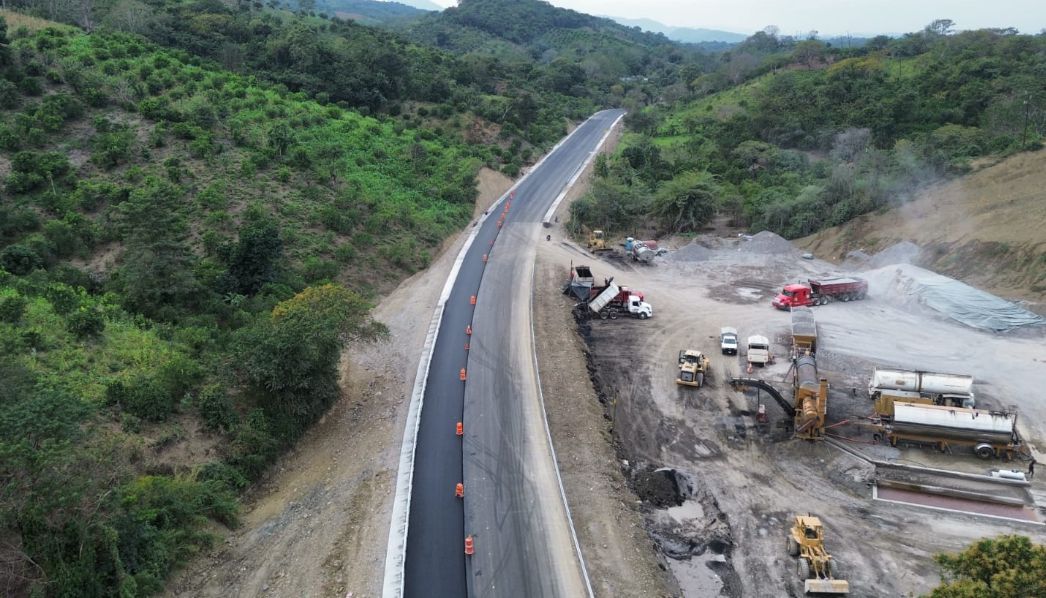
Mexico passed a law to promote investment in strategic infrastructure that seeks to increase the participation of the Afores (retirement fund administrators) in public projects, amid the debate over the use of these resources and their impact on economic development.
The regulations allow allocating up to 30% of the resources managed by the Afores to infrastructure projects through mixed investment schemes in sectors such as highways, ports, airports, and railways.
The recent approval of the Law for the Promotion of Investment in Strategic Infrastructure has reactivated the debate on the use of Afores resources, the private pension funds that manage workers’ savings, in the financing of public projects.
President Claudia Sheinbaum defended the initiative, assuring that the financing schemes will be “responsible” and aimed at promoting the country’s development.
The president rejected the criticism about a possible misuse of the funds and maintained that the objective is to improve quality of life, create jobs, and strengthen connectivity. She also recalled that these schemes were already implemented during the previous administration in projects such as the Puerto Escondido airport and the Compostela–Tepic highway.
Currently, the Afores manage close to 6 trillion (tn) pesos corresponding to more than 73 million workers, according to Expansión. In parallel, the federal government plans to invest 5.6tn pesos in strategic infrastructure through public and mixed schemes.
However, the legislation has generated concern among analysts and market participants. According to El CEO, some critics warn that the law could lead to pressure on the Afores to increase their exposure to government projects.
Mario Di Costanzo, former president of Condusef (National Commission for the Protection and Defense of Financial Services Users), pointed out that “with this measure the government can put pressure on Afores to allocate up to 30% to government projects,” as cited in this outlet.
Despite these concerns, the legal framework does not establish an investment obligation. The regulations allow the Afores to participate in strategic projects as long as they comply with their operating rules and the current legal framework, in line with the regime defined by Consar in 2024, which sets a maximum limit of 30%.
Currently, only between 8% and 9% of the resources are invested in infrastructure, according to data cited by El CEO.
The new law seeks to increase public investment in infrastructure and contribute up to 722 billion (bn) pesos in additional funds, mainly in sectors such as roads, water, and energy, as well as to strengthen collaboration with the private sector.
Amid market concerns, the Mexican Association of Retirement Fund Administrators (Amafore) assured that the key principles of the system have not been modified.
“The new law does not modify these principles or allow the discretionary use of retirement savings,” he told El CEO.
He also emphasized that “the Afores will invest in infrastructure when the projects are profitable, well structured, and pass the technical and risk filters required by their mandate,” stressing that investment decisions will continue to be technical and autonomous.
In this context, the focus of the debate is on the potential increase in the participation of pension funds in infrastructure, rather than on a change in the rules governing the protection of retirement savings.
(The original version of this content was written in Spanish)