
The article by Ronette Engela, acting head of the National Treasury’s Government Technical Advisory Centre, made for an interesting read but was directed at the wrong institution (“Rigid compliance trumps meaningful evaluation in auditing government departments”, April 1).
She argues “rigid compliance” has come to dominate public sector auditing at the expense of meaningful evaluation. This does not fully reflect the legal framework governing how public money must be managed in South Africa.
The constitution, which is the supreme law of the country, demands government departments and public institutions spend public money lawfully, responsibly and in the best interest of the citizens they are meant to serve.
Section 188 of the constitution requires the auditor-general to audit and report on the financial management of national and provincial departments, municipalities and other public institutions to promote accountability.
The auditor-general, established through the same supreme law, is an independent institution that operates without fear, favour or prejudice and is accountable to the National Assembly.
Section 20 of its establishing act, the Public Audit Act, requires the auditor-general to provide independent assurance that these institutions manage their finances using sound financial principles, comply with the laws that apply to them, and report credible information on the achievement of their financial and performance objectives.
In the public sector, compliance auditing is not an optional extra but a safeguard required by the constitution through laws such as the Public Audit Act, the Public Finance Management Act (PFMA) and the Municipal Finance Management Act. These include rules made by other roleplayers such as the National Treasury. This means where legislation governing the use of public funds is not followed, this must be identified and reported. This is not a matter of preference or interpretation but a function of the law.
Why public money needs stronger oversight
Public institutions spend public funds to deliver services to communities; therefore, accountability in government is broader than in the private sector. It includes transparency and compliance with rules to prevent abuse and protect public resources. Section 20(2) of the Public Audit Act also requires reporting on whether an institution has followed the laws and reported credibly on what it planned to achieve.
The auditor-general’s compliance work assesses whether auditees followed the applicable legislation and the rules that apply to their specific type of institution. If the rules are overly complex or unclear, the solution lies with the institutions responsible for setting and reforming the legal framework and not with the auditor-general.
Irregular expenditure: a compliance finding, not an automatic finding of corruption
The PFMA provides definitions for irregular, unauthorised and fruitless and wasteful expenditure. When any of these are identified, the responsible accounting officer must, in terms of the National Treasury’s compliance and reporting framework, assess what happened and ensure an investigation is done to establish the root causes, identify responsible officials and determine whether there was any loss, misconduct or criminal behaviour.
While it is correct that irregular expenditure does not automatically mean money was stolen or lost, it does mean the rules were not followed. A proper investigation can reveal whether there was financial loss, fraud or corruption and whether consequence management is needed. Many cases appear to drag on because investigations are slow or incomplete, and corrective action is not taken. This reality points to a need for stronger and faster follow-through after audit findings and for auditees to remain alert to the risk of fraud where the facts support it.
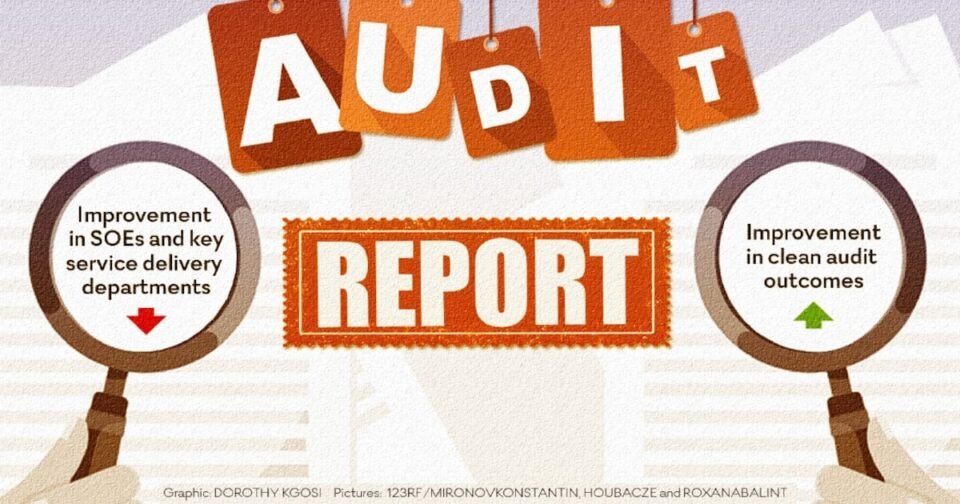
The auditor-general’s 2024-2025 general report on national and provincial government outcomes provides important context. It shows South Africa’s accountability challenges are not mainly caused by “too much compliance” but are driven by ongoing noncompliance together with weak or inconsistent consequences and accountability when rules are broken.
In response, the auditor-general’s enforcement powers were strengthened because year after year audit findings and recommendations did not lead to action. Many auditees did not comply with consequence management requirements, and investigations into irregular and fruitless and wasteful expenditure were often delayed or not done. The auditor-general’s enforcement powers over material irregularities (MIs) exist because of these challenges.
A matter qualifies as an MI only when it meets three strict conditions:
- there must be an irregularity or a reasonable suspicion of one, such as noncompliance with legislation, fraud, theft or a breach of fiduciary duty;
- that irregularity must be identified in the course of an audit conducted by the auditor-general; and
- the irregularity must have resulted in, or be likely to result in, material financial loss, the misuse or loss of a material public resource, or substantial harm to a public sector institution or the public. This elevates a matter beyond technical non-compliance and makes it material.
How the audit process works (in practice)
Audits are conducted in line with applicable laws and international auditing standards. The requirements by which all auditees must abide are not set by the auditor-general but are established by legislation, regulations and institution-specific policies that give effect to those requirements. Differences in interpretation are dealt with through structured engagement with the owners of the rules, such as the National Treasury or the department of planning, monitoring and evaluation. While this may take time, it helps ensure the process is fair, consistent and transparent.
In addition, auditors cannot test every transaction. Therefore, audits use a risk-based approach at the start of each audit cycle, the scope of which is set to focus on the areas that pose the greatest risk to public funds and financial management. This keeps audits targeted and relevant.
The Public Audit Act also requires the auditor-general to annually audit the performance report of auditees and report on their performance to provide users with some assurance the reported information is a true reflection of the auditee’s performance against its set objectives. It is the role of the executive and oversight bodies such as portfolio committees in the provincial legislatures and parliament to evaluate or conclude on the performance of auditees.
Dealing with differences during the audit process
Significant findings are discussed with management or those charged with governance so issues can be clarified and resolved early. Auditors consider management’s explanations and any additional evidence provided. If matters remain unresolved, the auditee can escalate the matter through the auditor-general’s formal dispute resolution process established in terms of section 13(1)(c) of the Public Audit Act and outlined in the audit dispute resolution policy. Audit disputes are decided by senior executives who are independent of the audit team and the auditee, ensuring an objective and impartial process.
The process is further overseen by a dedicated technical audit support function, which operates independently of audit engagements to ensure established policies and procedures are consistently applied.
The auditor-general audits to protect public funds and not to create obstacles to service delivery. Where institutions achieve clean audits, it shows strong governance and compliance are possible, and accountability and service delivery can improve as a result.
Compliance in government auditing is not “box-ticking” for its own sake. It is how the law ensures public money is spent properly. If we want fewer audits that repeat the same findings, the answer is not weaker rules; it is faster investigations, real consequences where wrongdoing is found, and simpler, clearer systems that still protect public funds.
• Maloka is the business unit leader: communication in the office of the auditor-general of South Africa.