
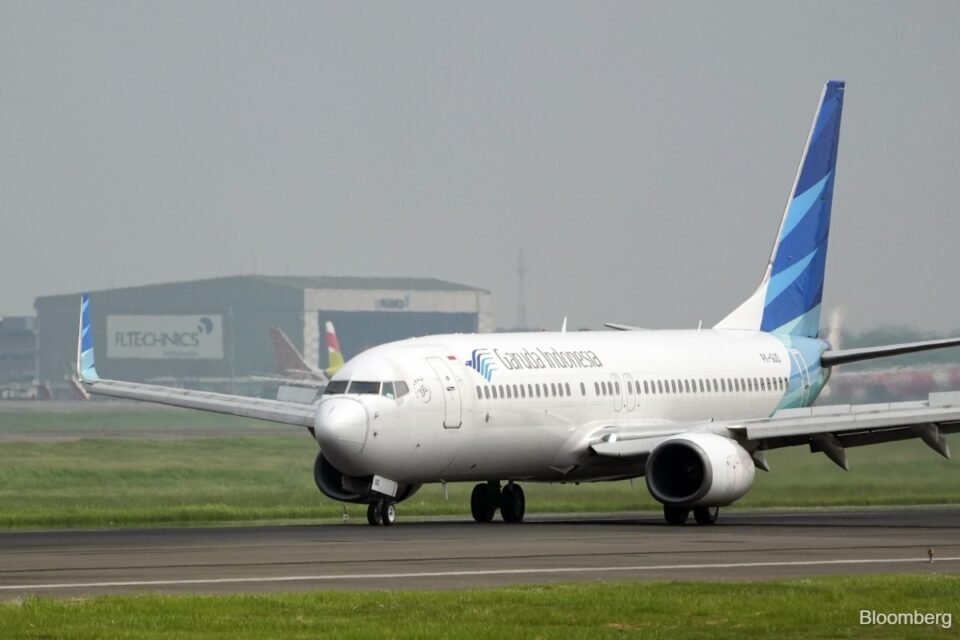
(April 23): Bonds of Asian airlines, led by PT Garuda Indonesia, are showing strain from the Iran war, as higher fuel burdens compared with global peers amplify their vulnerabilities.
A note of state-controlled Garuda has dropped about seven cents on the dollar since the start of the conflict to about 85.4, one of the biggest declines for any US-currency bond of an airline globally, according to data compiled by Bloomberg. The higher fuel costs are exacerbating the financial pressure on weaker borrowers that have smaller cash buffers and are grappling with rising funding costs too.
Jet fuel accounts for about 27% of operating expenses for Asia-Pacific carriers, at least five percentage points more than for North American and European peers, according to data compiled by Bloomberg, and that is also contributing to an underperformance in their share prices. Pressure on airlines is rising globally, with low-cost US carrier Spirit Aviation Holdings Inc floating an equity stake for the US government to help stave off potential liquidation, as peers cut earnings guidance and flight schedules to save on fuel costs.
“Elevated jet fuel prices are putting significant strain on weaker carriers, and the real test for the industry will come during the peak summer travel season,” said Shukor Yusof, founder of aviation consultancy Endau Analytics Pte Ltd.
Fundamentally, emerging-market Asian airlines, with about US$50 billion (RM197.97 billion) in combined short-term liabilities, are starting from a weaker position, on average. They could cover interest costs about five times from pretax earnings versus roughly nine times for peers in developed Asia and globally, data at the end of 2025 compiled by Bloomberg show.

Despite completing a sweeping US$9.6 billion debt restructuring in 2022, Indonesia’s Garuda still has an interest coverage ratio of just 1.6 times, the lowest among listed Southeast Asian flag carriers, while its debt-to-equity ratio is the highest among airlines globally, based on data compiled by Bloomberg.
PT AirAsia Indonesia and Vietjet Aviation JSC, both with interest coverage ratios a little above 1, have already begun cutting capacity and trimming lower-margin routes to offset rising fuel bills, similar to peers in other regions.

Elsewhere, Korean Air Lines Co’s US-currency note due in 2030 has fallen nearly two cents on the dollar since the start of the conflict, as fears of rekindled inflation have also weighed on bonds.
A key determinant of the future prospects for the region’s airlines will be government support.
“The conflict is sharpening the divide between investment-grade and non-investment-grade airlines,” said Endau Analytics’ Yusof. “Some national carriers should remain supported as long as sovereign backing holds.”
Uploaded by Chng Shear Lane