
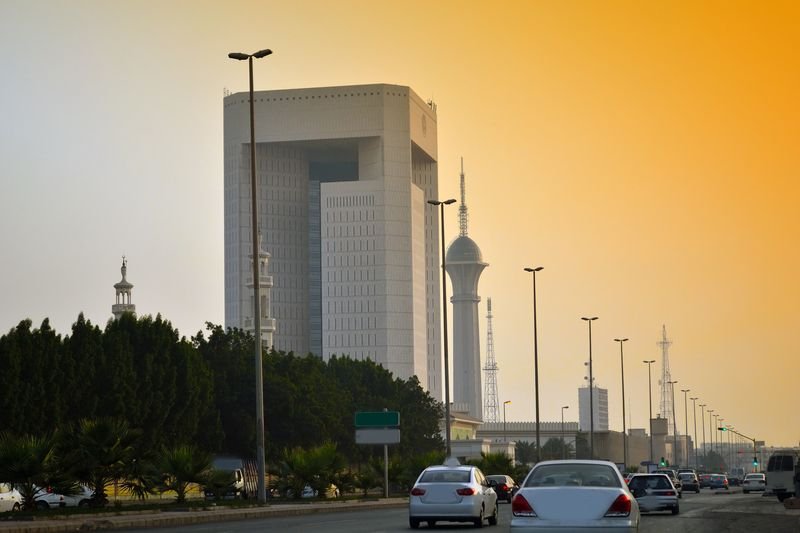
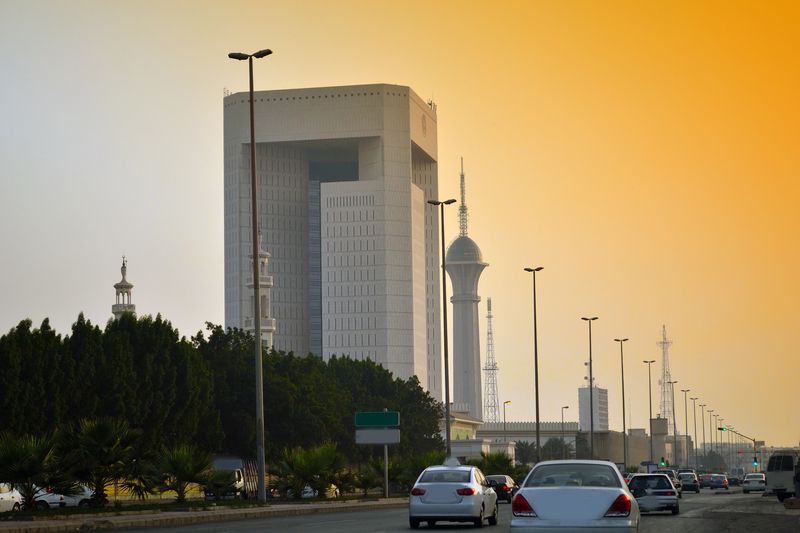
The Islamic Development Bank has taken the first steps to raise Islamic notes in China, which could see it issue the first Panda sukuk or print Dim Sum.
IsDB is just one of a number of foreign issuers that has recently been attracted to the Chinese capital market for the diversification, ample liquidity and low funding cost it offers. The Jeddah, Saudi Arabia, headquartered supranational is talking to Chinese investors and banks about its plans, and is restricted by its funding programme to only issue sukuk.
However market participants say it will take time and effort to develop a market for renminbi-denominated sukuk.
IsDB CFO Zamir Iqbal said there is “a great opportunity” for China to become “the next frontier for the sukuk market”.
“High demand for infrastructure financing, exemplified by the New Silk Road, and green energy generation initiatives for critical net-zero targets in China provide the perfect alignment for real economic assets to be funded through sukuk issuances,” he said.
IsDB does not have a set timeline for the new issues and it will take the development bank some time to conduct investor education. It plans to first issue Dim Sum and then Pandas, as the offshore renminbi instruments do not require regulatory approvals and Hong Kong-based investors are more knowledgeable about sukuk. The Hong Kong government amended tax laws to facilitate sukuk issuance and raised sukuk totalling US$3bn in 2014, 2015 and 2017.
“I understand the size of the market is much bigger in mainland China. They have quite a lot of liquidity available and they’re looking for extra yield and alternative avenues to deploy that liquidity,” said Iqbal, explaining that IsDB is meeting with investors onshore and offshore.
IsDB’s team has been to China twice in the past year. It co-hosted a sukuk seminar with the Hong Kong Monetary Authority on March 30 and also met some investors in Beijing the same week. Iqbal said the investors included bank treasuries, asset managers and SSAs.
“The main questions were largely around the structure and documentation of sukuk, which currently complies with English law,” he said. “Overall, there was positivity in their outlook for Islamic finance instruments such as sukuk making their mark in China through either Dim Sum or Panda format.”
Unfamiliar investors
However, many market participants said the sale of sukuk will be challenging due to the lack of familiarity among Chinese investors.
The government of Hong Kong’s US dollar sukuk deals aimed in part to promote Islamic financing in the city but no other issuers followed. A Hong Kong-based banker said sukuk provide an opportunity to draw Islamic investors for a few basis points of “sukuk premium”, but that most issuers think this is not worth going through the process of complying with sharia law when they are targeting non-Islamic investors as well.
Malaysian state investor Khazanah Nasional issued a Rmb500m (currently US$73m) three-year offshore sukuk as far back as 2011 via a Malaysian-incorporated special purpose vehicle. Mobile telecom operator Axiata, also from Malaysia, followed suit the following year, but there has been no Dim Sum sukuk issuance since then.
There were some early experiments in mainland China, too but the country has not established a legislative framework for Islamic finance. Bank of Ningxia set up an Islamic banking unit in 2009 but the business closed in 2013. Affin Holding and Bank of East Asia reportedly filed a joint application to the regulator in 2012 to set up an Islamic bank in China, and in 2015 Qatar International Islamic Bank and QNB Capital planned to cooperate with China’s Southwest Securities to set up an Islamic bank.
Chinese investors and bankers have shown interest in the Aaa/AAA/AAA rated IsDB, which has projects in Belt and Road countries and has a partnership with the Beijing-based Asian Infrastructure Investment Bank, but they also said they know little about sukuk.
A Beijing-based DCM banker said he had only heard the word “sukuk” once before and knows very little about it, while a Hong Kong-based investor at a Chinese asset manager said IsDB’s deal will be “interesting” but will take time to understand.
“We don’t know much about the product. The first question would be if an issuer fails to pay distribution, would it trigger default?” she asked.
A Hong Kong-based Chinese banker said extra work will be needed to study the structure and the underlying asset of a Dim Sum sukuk.
Panda sukuk will face even more challenges. A Shanghai-based banker said the instrument is in the “exploration” stage and there is still a lot of uncertainty.
“Does it comply with China’s legal system? Does it meet our risk controls? We need to do more study,” said the banker. “People will have their own concern for a new product. China is pushing for ‘high quality development’, but whether it’s Islamic financing or not, it needs more work.”
Different wordings between the terms of conventional bonds and sukuk will add challenges from a legal perspective, said a Beijing-based lawyer. China’s securities and corporate laws do not have terms like “sukuk” and “distribution”. IsDB said it has been in contact with Chinese regulators to help make sukuk an investable asset class.
“Does it mean we need to amend the law to make it happen?” asked the lawyer.
The lawyer also pointed out that there are questions on whether courts in China can seize the underlying assets if a sukuk defaults, or which law to follow to solve a dispute.
Beyond South-East Asia, where Islamic finance is very familiar to investors, Taiwan’s Formosa market has had a few sukuk in the past. Iqbal said IsDB has also reached out to Taiwanese investors, including pension funds and insurance companies, for a potential Formosa sukuk, but has not found enough appetite for a benchmark size.
“We continue to remain in touch with market players, and will tap into Formosa when there is opportunity,” he said.