
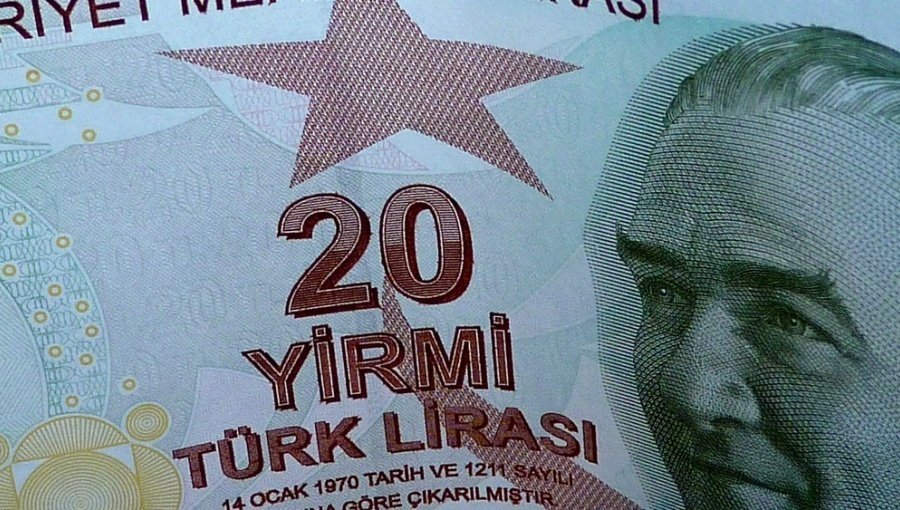
Fourteen companies defaulted on a total of 60 Turkish lira-denominated bond payments in the year to date (specifically to October 27), Turkey’s Aposto news service reported on October 29.
A cumulative Turkish lira (TRY) 12.7bn ($254mn) in overdue principal sums were not delivered to bondholders on time. Throughout 2025, just two companies delayed principal payments, totalling TRY 346mn.
What began early this year as isolated stress seen among a small handful of distressed borrowers in Turkey has metastasized across multiple sectors. By May, engineering firm Kontrolmatik (Istanbul/KONTR) had missed payments. By July, fuel retailer Fikret Petrol and pharmaceutical firm Turk Ilac (Istanbul/TRILC) had stumbled. By August, cable manufacturer Alves Kablo (Istanbul/ALVES) had joined the list.
The pace of recorded defaults accelerated rapidly heading into the autumn. August brought seven payment defaults. September saw eight and the first 27 days of October alone logged 16 incidents. Of the total principal left unpaid throughout the year, only a modest TRY 240mn has since been recovered by creditors.
The Tera collapse
The epicentre of the crisis landed in October with the failure of Tera Yatirim Bankasi following a broader fund industry freeze. The bank failed to meet principal and coupon obligations on TRY 5bn of commercial paper issuance, originally floated in April.
The fallout was swift and punitive. On October 27, the capital markets board, SPK, revoked all operating permits and licences of the bank’s affiliated brokerage, Tera Yatirim (Istanbul/TERA). Citing the need to protect market integrity, the regulator ordered the investor compensation mechanism into motion and initiated the gradual liquidation of the brokerage firm.
Intensifying nature of squeeze
Excluding Tera Yatirim Bank, the remaining 13 distressed corporate issuers account for TRY 7.7bn in delayed principal. Fleet leasing company Borlease (Istanbul/BORLS) tops this group with TRY 1.56bn in overdue debt, followed by Fikret Petrol (TRY 1.38bn), Turk Ilac (TRY 996mn), Kontrolmatik (TRY 950mn) and Alves Kablo (TRY 798m).
Borlease’s compounding debt troubles illustrate the intensifying nature of the squeeze. Across seven different debt instruments, the company has recorded 22 payment failures this year. A TRY-250mn paper originally due on March 25 and subsequently deferred remained unpaid by a revised October 27 deadline. Carrying initial unpaid coupons and default penalties, the liability on that single instrument has ballooned to TRY 358mn.
Zorlu’s eurobond default
The stress is no longer confined to local lira paper. Offshore USD-denominated eurobonds are also feeling the pinch. Electricity producer and grid operator Zorlu Enerji (Istanbul/ZOREN), a unit of Zorlu Holding, recently asked eurobond holders to postpone a $60.5mn coupon payment due October 23 on its $1.1bn international bond issue due April 2027.
The repercussions ripple directly through to local asset managers. Tacirler Portfoy disclosed on October 27 that a coupon payment was missed on the $400,000 nominal value of Zorlu Enerji bonds held within its discretionary FX fund. Tacirler subsequently provisioned for the entire $22,000 coupon shortfall alongside 25% of the bond’s principal.
Decline in new issuances
Turkish corporates, constrained by tight monetary policy and strict limits on commercial credit growth, relied heavily on issuing three-to-six-month commercial paper to meet short-term working capital needs.
That roll-over machinery broke down in September after the SPK ordered the liquidation of 131 funds managed by seven portfolio management firms. Investor confidence evaporated, triggering a sharp pullback in demand for corporate paper.
According to Borsa Istanbul listing announcements, weekly issuance volume fell 39% from an average of TRY 28bn between January 5 and September 11 to TRY 17bn between September 21 and October 23. The weekly number of deals dropped by 52% from 36 issues per week down to 17 issues per week over the same period.
Of the 15 defaulters, only WorqCompany has been able to issue new papers since the start of the fund crisis. It raised TRY 175mn.
On October 26, the central bank announced that commercial bank loans extended to non-financial corporations specifically to pay off lira corporate bonds maturing before year-end will be exempted from standard commercial loan growth caps.