
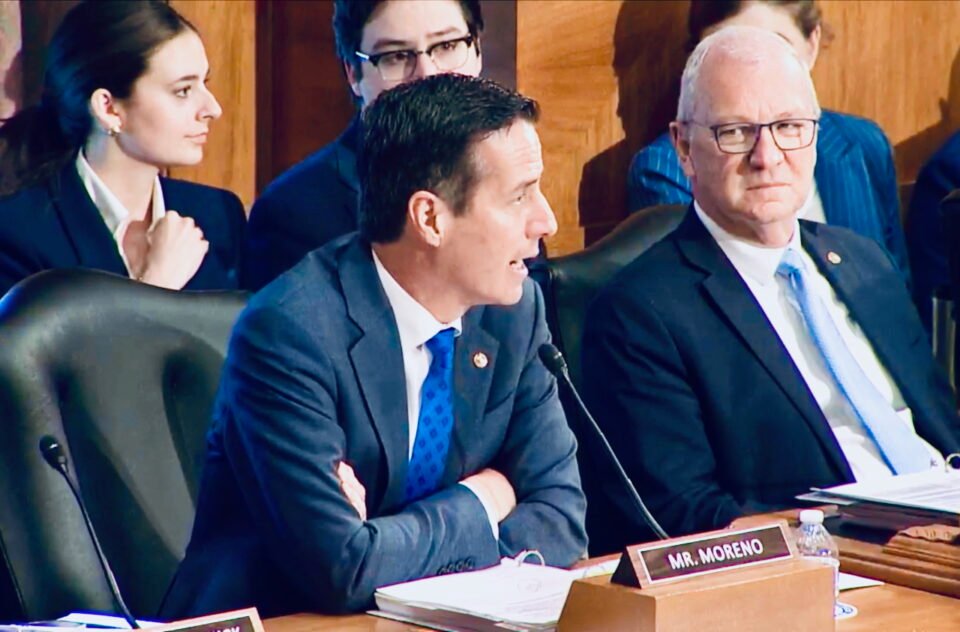

On Thursday, the Senate Banking Committee held a markup hearing on the CLARITY Act, crypto market infrastructure legislation that was passed in the House in 2025 and sat in limbo in the Senate until this past week. The legislation aims to protect consumers while enabling digital asset innovation, an ambitious yet profoundly needed objective. The Committee voted to approve the bil thus sending it toward a future full Senate floor vote.
While the legislation passed the Committee intact, it may undergo some adjustments before it is approved by the full Senate. After this, the House bill and the Senate version must be reconciled before moving to the White House for signing into law.
The legislation is expected to be approved, but risks remain as some elected officials are extremely anti-crypto and what it may bring to markets. Some traditional finance firms are fearful of competition, as digital finance offers superior services to consumers and businesses.
CI has received many comments on the CLARITY Act’s approval by the Senate Banking Committee. Below is a selection of the feedback we have received from digital asset industry insiders.
Avery Ching, CEO of Aptos Labs, says builder input is needed to create the best framework for digital assets. While the CLARITY Act moving forward is a critical step for crypto market infrastructure in the US.
“There is still work ahead to get the details right, but real momentum toward thoughtful, well-designed matters for our shared goal of keeping American blockchain innovation growing here at home,” said Ching. “I had the privilege of testifying before the House Agriculture Committee last June on the need for clear market structure rules, and I was honored to have that perspective included in the committee’s official report on the Clarity Act. Builder input is necessary to create the very best framework for digital assets, and I am grateful to the lawmakers engaged with our industry for the opportunity to keep contributing to this conversation.”
Ching said the next generation of financial infrastructure is already being build but the question remains whether the US creates the environment for it is scale here. She said she is committed to engaging with policymakers as the path forward is refined.
Bitfinex Securities Head of Operations Jesse Knutson said investors want access to markets that are not limited by legacy infrastructure. The passage of the CLARITY Act marks a shift for digital assets.
“For years, tokenization has been treated as a future promise, when in reality the market has already moved ahead of the policy framework. Regulated tokenized securities are no longer theoretical. Issuers want faster access to capital, investors want access to markets that are not limited by legacy infrastructure, and institutions have been waiting for rules clear enough to justify larger commitments,” said Knutson. “The importance of this legislation is not that it validates tokenization, the market has already done that. The importance is that it builds a regulatory framework around activity that is already happening globally.”
Kutson added that if regulators apply a framework in a practical way it will have investor protection while enabling tokenized securities to become part of modern capital markets.
“If implementation is too narrow or slow, the activity will continue moving to jurisdictions that give compliant platforms room to build.”
Alvin Kan, COO of Bitget Wallet, said the bigger implication is infrastructure growth. Kansas said the CLARITY Act is a major step forward for the digital asset industry and a clear signal regulation is moving from uncertainty to a structured framework.
“Clearer distinctions between digital commodities and securities, alongside a more defined CFTC-led approach, are likely to improve market confidence immediately and support stronger institutional participation across Bitcoin, Ethereum, and broader digital asset markets,” Kan said. “Beyond short-term price action, the bigger implication is infrastructure growth: banks, asset managers, and financial platforms now have greater confidence to accelerate custody, payments, tokenization, and compliant crypto products, helping move digital assets further into mainstream finance.”
Blockaid co-founder and CEO Ido Ben-Natan said it is encouraging to see things moving toward clearer expectations around consumer protection, market transparency and illicit finance protection. The Committee vote on the CLARITY Act is a constructive step forward yet there is more work ahead before it becomes law.
“The future of digital assets will depend not only on innovation, but also on the industry’s ability to build more proactive security and compliance infrastructure that helps stop harm before it occurs.”
Mari Tomunen, General Counsel at DoubleZero, said the legislation clarifies the regulatory environment. Both the SEC and CFTC guidance and the CLARITY Act address open questions for compliant token launches.
“The biggest missing piece in the SEC guidance was the disclosure framework. Without clear standards, projects are often incentivized to disclose less to avoid creating additional securities risk. Clarity will close this gap,” said Tomunen. “The second major issue is developer liability. Existing guidance suggests non-custodial activity generally should not create money transmission exposure, yet some litigation theories and court decisions have pointed in the opposite direction. The Clarity Act helps create clearer statutory boundaries for decentralized and non-custodial activity.”
ECO CEO Ryne Saxe, said the passage of the Clarity Act out of committee is a major moment for digital assets after years of watching stablecoins move from promise to market adoption. Saxe said the US was late to provide a workable framework but has not put itself back in a position to define the market structure. He said this matters because stablecoins are no longer just for crypto, they are becoming a money movement infrastructure.
“Clarity does not change that core technology overnight, but it will have a meaningful impact on the companies building on top of it,” said Saxe. “Upon full passage, the next phase is going to be about implementation. Regulated stablecoin issuers, fintechs, banks and payment companies will need compliance data, audit trails and infrastructure that can support onchain money movement at scale. That is where the market is heading. The more clarity those participants have, the faster this technology can become part of the broader financial system.”
Fireblocks CEO Michael Shaulov said the battle for customers has officially begun, and Wall Street has a new industry that will challenge traditional finance. Shaulov said the bill’s passage out of the committee means the industry is on track to remove regulatory ambiguity.
“The rules have come down in favor of the crypto industry, greenlighting yield distribution to clients, which is going to have an enormous impact on the competitive landscape in finance. The battle for customers has officially begun and Wall Street has a whole new industry challenging the traditional models. This legislation is a balanced compromise that will allow innovation to continue as banks and financial services become more comfortable with DeFi and adopting the technology,” said Shaulov, who added they are deeply encouraged by the US moving toward official adoption of blockchain technology.
” it’s poised to become the global hub for crypto.”
Cathy Yoon, General Counsel at Harmonic, explained that moving from markup to a full senate vote means a growing recognition that not every crypto industry participant is a financial intermediary.
Zerostack CEO Daniel Reis-Faria noted the bipartisan support garnered by the bill.
“Thoughtful legislation can create rules for custodians and centralized actors while still preserving space for permissionless infrastructure (such as validators and sequencers), open networks, and software developers to continue innovating responsibly in the US,” stated Reis-Faria.
He said for years the crypto industry has operated with uncertainty and an enforcement first regulation. The CLARITY Act signals that Washington knows that decentralized networks cannot be treated like traditional securities. Clear rules create confidence said Reis-Faria. It also attracts capital and innovation. He described legislative progress as an important step not just for crypto for the future of decentralized AI and the future of internet infrastructure.
Orest Gavryliak, Chief Legal Officer at 1inch said the passage gave the industry reason to celebrate but cautiously. The US lawmakers appear to agree on a path to formally incorporate crypto into the existing financial regulatory framework.
“Just a few years ago, banks were reluctant to work with crypto firms. The industry was either dismissed as a failed venture or viewed as potentially dangerous,” said Gavryliak. “However, this attitude has shifted rapidly. Cryptocurrency and its underlying technologies have grown too large and become too integral to the capital markets ecosystem to ignore any longer.”
Gavryliak said the policymakers are more willing to take a nuanced stance on regulation, pointing to the distinction of decentralized blockchain and centralized financial intermediaries.
“Regulatory clarity is not just welcome, it is essential. It creates an opportunity to continue building with greater certainty in a way that satisfies both users and regulators,” said Gavryliak. “Going forward, regulatory frameworks such as the CLARITY Act will play a key role in enabling the emergence of the next generation of digital economies. AI agents will play a key role in commercial operations, executing trades, handling investments and engaging with networks. To achieve their maximum utility, these agents will need systems that allow for programmability, global connectivity, and instant settlement. The DeFi rails will serve this purpose perfectly.”
Gavryliak declared that the US is moving toward recognition that crypto is a permanent part of the financial system.
Para CEO Nitya Subramanian, said the legislation is a meaningful step toward reducing uncyertaining with has slowed digital asset adoption in the US. The legislation breaks down some of the biggest barriers confronting stablecoins and tokenized assets.
“However, the scope of this goes so much wider than crypto; it opens the door for platforms with massive user bases to integrate financial services more directly into the products that consumers already use every day,” Subramanian stated. “Suddenly, incumbents like JPMorgan are no longer just competing with fintechs or crypto exchanges, they’re competing with platforms like X Money or TikTok for ownership of the customer relationship.”
CEO of First Digital, issuer of the FDUSD stablecoin, Vincent Chok said approval in the Senate Banking Committee provided a big step toward giving the digital asset industry the regulatory foundation is has long needed.
“This development shows that legislators are engaging with the nuances of how stablecoins actually function, rather than applying blanket restrictions. That level of understanding from a legislative body will be important for future regulatory updates to support the mainstream adoption of stablecoins.”
The full Senate vote will define how the global stablecoin landscape looks, explained Chok. The standards set will become the new benchmark not just in the US but in the EMEA and APAC countries.
Shiv Shankar, CEO of Boundless, said that one of the more important implications of the bill is that it reduces uncertainty that has slowed institutional participation in digital assets. The rules will create a stronger foundation for institutions to seriously explore blockchain based financial activity.
“But regulatory clarity alone is unlikely to be enough. The Act defines what compliance looks like: which agency you answer to, what AML obligations apply, and what standards stablecoin issuers must meet. What it doesn’t resolve is the infrastructure gap that comes with operating on networks that are transparent by design. As more financial activity moves onto public blockchain infrastructure, institutions increasingly need tools that allow them to meet those obligations while maintaining the confidentiality that regulated financial activity requires. Broader institutional participation will depend not just on clearer rules, but on infrastructure that makes those rules practical to operate within,” stated Shankar
David Reising, founder & CEO of Lotus, a decentralized credit protocol, said the DeFi is closer than ever. Yes, the bill still needs to go through a full Senate vote but the bill offers something the industry has long needed: regulatory clarity the next time a hostile regulator takes over.
The [Paul] Atkins SEC is a welcome change in tone, but [Gary] Gensler proved how quickly that can reverse. The CFTC, which has approached DeFi with more consistency and less antagonism, is the more reliable long-term home. The CLARITY Act would cement that jurisdiction rather than leaving it perpetually contested,” Raising said. The bill would also permit institutions to migrate onchain. Deep-pocketed firms that have sat on the sidelines, deterred by the threat of regulatory backlash, would finally have the legal cover to engage. That influx of institutional capital would accelerate the broader shift toward an onchain financial system. Even without every wishlist item like stablecoin yields, this bill can make DeFi mainstream, forever changing the structure of traditional finance.”
Mercuryo Chief Business Officer Arthur Firstov said the Senate Banking Committee debate on the CLARITY Act brought the core issue to the service. The crypto industry has moved beyond just being about assets and is now recognized as critical infrastructure.
“The real question, especially as we see traditional banking groups mount a last-minute stand to narrow the bill, is whether this infrastructure is allowed to thrive as a competitive, real-time alternative to legacy systems, or if it is stifled by frameworks built for a different era.”
Firstov added that the Committee process highlighted a policy divide. While some are focused on protecting legacy deposit models, digital asset platforms are focused on ensuring digital settlement can scale in a way that is both compliant and viable.
“We are actively building the connective layer between systems. The broader signal will be whether the U.S. chooses to lead in defining the next generation of financial infrastructure or risks ceding that role to other jurisdictions,” said Firstov.
Firstov added that it is very important that DeFi developer protections are maintained under the BRCA framework. Keeping open source software development distinct from financial intermediation is essential for the ecosystem to function correctly.
“A workable federal framework is the only way to bring global capital into regulated U.S. rails and ensure the digital dollar remains central to how value moves globally.”