
August 9, 2026 – ATHENS / NEW YORK – A severe livestock health crisis unfolding across rural Greece is sending shockwaves across the Atlantic, threatening to drive up prices and create spot shortages of authentic feta cheese on U.S. supermarket shelves and restaurant menus.
At the center of the emergency is a virulent outbreak of sheep and goat pox, a highly contagious viral disease that has forced Greek authorities to enact strict biosecurity protocols and cull hundreds of thousands of animals across agricultural heartlands like Thessaly.Because European Union rules mandate that an entire herd must be destroyed if a single positive case is detected, the cull has wiped out approximately 5% of Greece’s national flock—closing over 1,000 family farms and creating a massive deficit in the national sheep’s milk supply.
Roughly 80% of Greece’s sheep and goat milk goes directly into making feta.With local milk yields plummeting, global dairy analysts warn that 2026 could see a drop of tens of thousands of tonnes in authentic feta exports.
The Trademark Trap: Why Greece Can’t Just Import More Milk
Under European Union law, feta is a legally protected trademark registered as a Protected Designation of Origin (PDO).To legally bear the label “Feta” within the EU and across major trading partners, the cheese must be produced in specific geographic regions of Greece using milk exclusively from native breeds of sheep and goats raised on local flora.
While this strict designation safeguards Greece’s “white gold” industry—worth nearly $1 billion in annual exports—it also leaves the supply chain extraordinarily rigid.
“Under PDO rules, production is geographically concentrated. Processors cannot legally import milk from neighboring countries or switch to cow’s milk to make up for the shortfall,” industry analysts note.“It creates a structural fragility: when local herds collapse, output drops immediately.”
What It Means for the U.S. Market
The United States represents one of Greece’s largest export destinations for authentic feta, with demand soaring in recent years alongside the popularity of Mediterranean diets. As Greek exporters triage limited supplies to cover home markets, American buyers are bracing for impact:
- Spiking Retail Prices:Wholesale prices for imported Greek feta are projected to rise significantly, pushing specialty store prices up for American consumers.
- Supply Allocations for Restaurants:Foodservice buyers and Mediterranean dining chains in the U.S. face tight supply allocations and potential spot shortages.
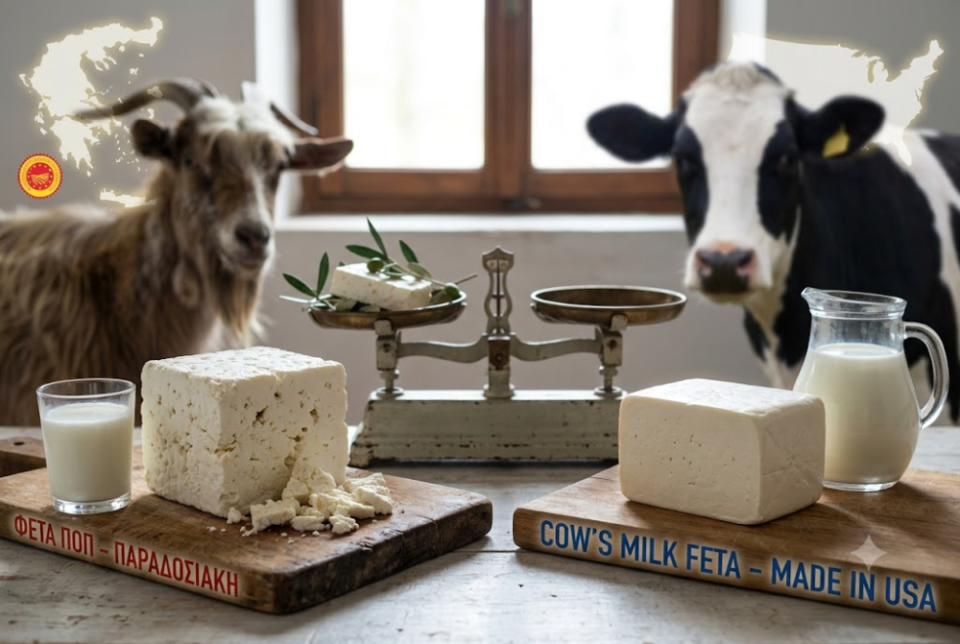
- Rekindling the Global Trademark Feud:In the U.S., where dairy manufacturers produce domestic cow’s-milk “feta” without facing PDO restrictions, the Greek supply squeeze is opening the door for American producers to capture market share. U.S. dairy associations have long contested Greece’s exclusive trademark claim, arguing that “feta” has become a generic term for crumbly white cheese.
As Greek farmers work to contain the pox epidemic and slowly rebuild their herds—a process expected to take years—American grocery shoppers will likely see fewer blocks of authentic PDO Greek feta on store shelves, replaced increasingly by domestic alternatives or higher price tags on the original “white gold.”
In the United States, where European Protected Designation of Origin (PDO) laws do not apply, “feta” is treated as a generic term rather than an exclusive geographical trademark. As a result, the vast majority of American-produced feta—notably centered in dairy hubs like Wisconsin—is made from pasteurized cow’s milk rather than traditional Greek sheep and goat’s milk. This cow’s milk version is cheaper and faster to produce at scale, yielding a brighter white, firmer, and milder cheese that lacks the distinct tang, crumbly complexity, and natural fat content of genuine Greek feta. While U.S. dairy organizations vigorously defend their right to label these domestic products as feta, the distinction between cow’s milk imitations and traditional Mediterranean sheep’s milk cheese remains a primary battleground in ongoing international trade and intellectual property disputes.
