
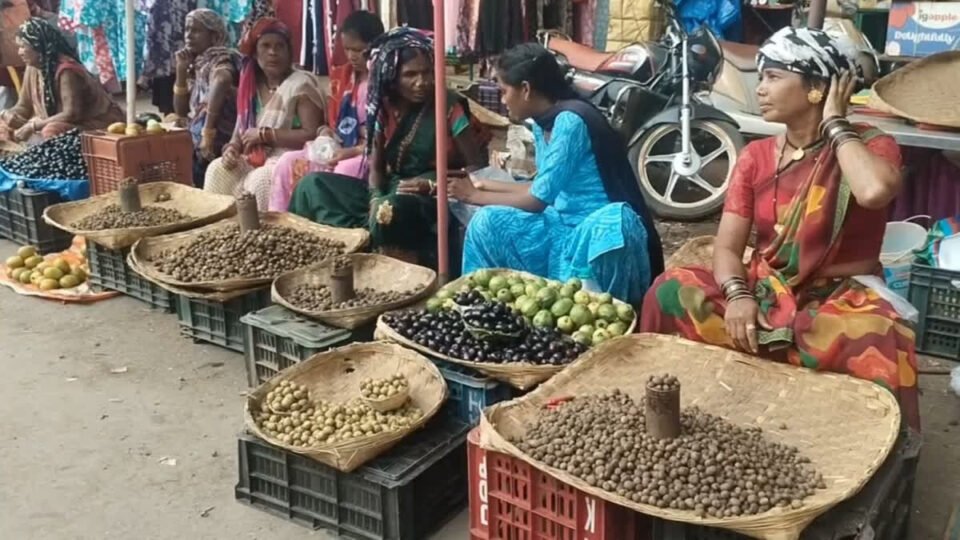
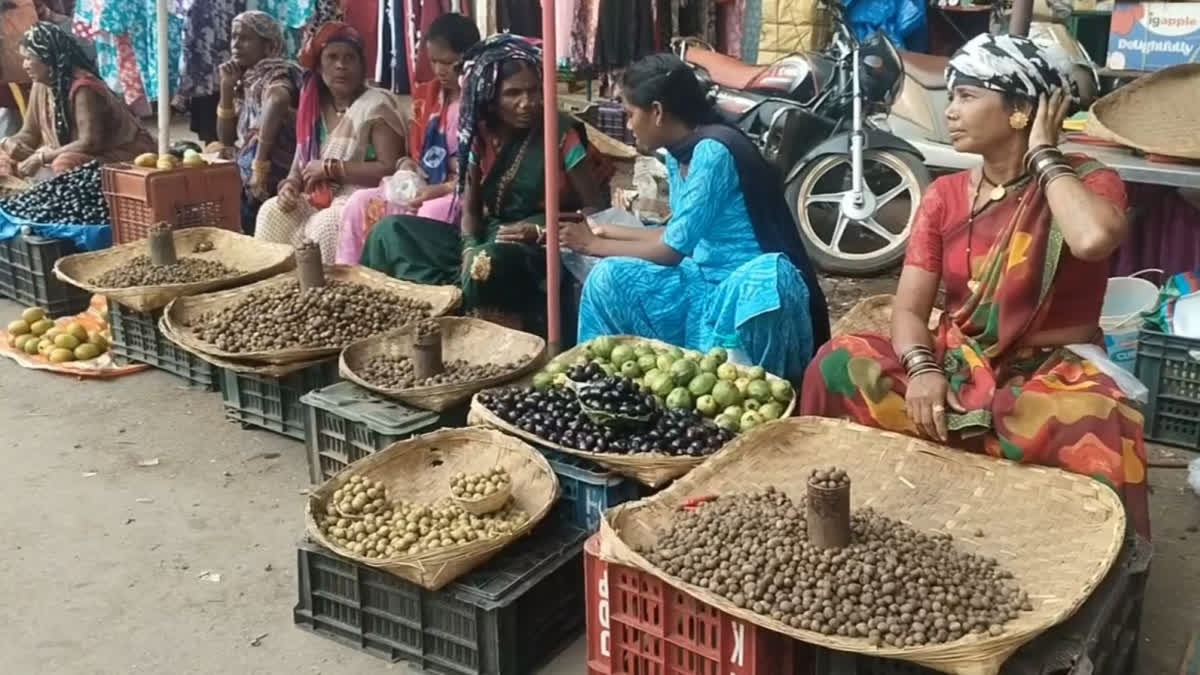
Boda Mushroom being sold at a market in Bastar (Etv Bharat)
Dantewada: As the first showers of monsoon drench the earth in the dense Sal forests of Bastar, nature comes up with the precious natural gift of Boda mushrooms. For centuries, the tribals and local communities of Bastar have considered it an integral part of their traditional food culture. Due to its taste, nutrition, rarity and deep connection to the forest, Boda is also known as the ‘white gold’ of Bastar.
It is essentially a small, underground fruiting body of a fungus that is hard on the outside but soft and pulpy inside. Since it cannot be cultivated and only emerges beneath the roots of the Sal trees following the first monsoon rains, it is rare and sought after. It is said to have immense nutritional value, having high levels of protein, vitamins and fibre while remaining low in calories.
During the early monsoon, the search for Boda becomes a major activity in the rural areas. Early in the morning, villagers venture into the Sal forests and carefully collect this rare edible fungus that emerges from the ground. Due to its limited availability, its demand in the market is always high, with the prices often touching Rs 3,000 to Rs 4,000 per kg.
Selling it in the local weekly markets provides rural families with a substantial additional income.
One of the villagers selling Boda in the weekly market, Tale Nag, said, “Boda is found in Barsoor, Kondagaon, Jagdalpur and the surrounding Sal forests of Bastar. We collect it from the forests and transport it to the markets where it is in great demand. Boda is not only a tasty and nutritious food but has also become an important source of seasonal income for many families.”
The fungus food is full of an earthy smell and becomes extremely delicious after cooking. The locals prepare it in the form of a spicy vegetable. Among many families of Bastar, making Boda during the rainy season is a tradition.
Known to provide energy to the body, its advantage lies in being free of any chemical influences. It is a pure and healthy food.
According to medical expert Dr Sanjay Baghel, “Boda is a unique fungus, scientifically known as Astraeus hygrometricus. It primarily grows in the sandy soil around the roots of Sal trees. It lacks chlorophyll, and hence it cannot produce its own food. It instead receives its nutrition from the roots of Sal trees.”
“This fungus also helps provide nitrogen, phosphorus and other nutrients to the trees in a symbiotic relationship. For this reason, it is classified as ectomycorrhizal fungi. This relationship plays a vital role in maintaining the health of the entire forest ecosystem,” he added.
The life cycle of Boda is quite interesting as it initially develops as a small, round-shaped fungus underground and emerges on the surface on receiving sufficient moisture. Over time, its outer covering expands to form a star-like structure. The pulpy part within it is the spore ball, which, after drying, expands into a powdery form and forms the basis for the development of new Boda.
Bastar’s Boda is not just a food item but a wonderful confluence of nature, tradition and livelihood. It underlines that the richness of forests is not limited to trees but also lies in the priceless treasures hidden within them, which are the foundation of local culture, health and life. Hence, it is all the more important to conserve the forest resources.
Read More: