
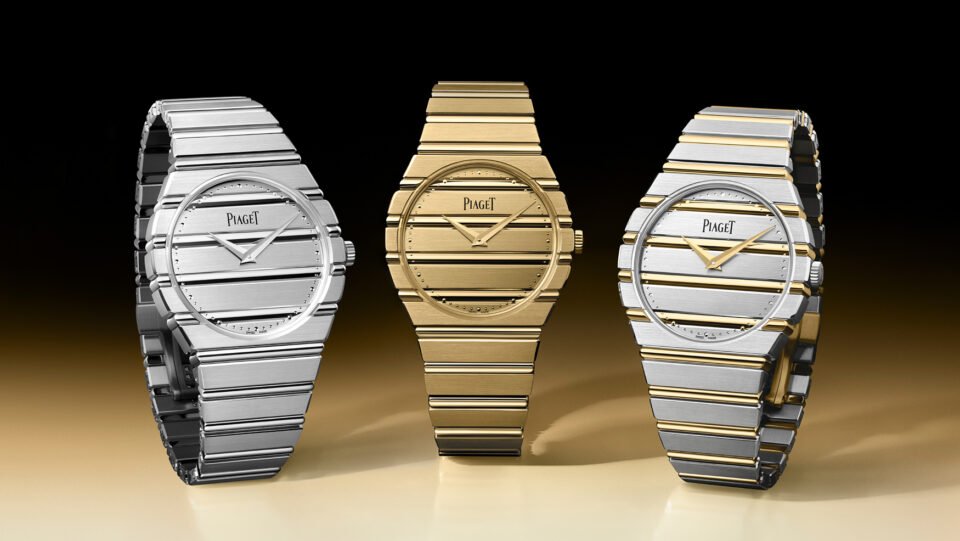
- Piaget unveils the Polo 79 Two-Tone, introducing a fresh yet familiar interpretation of the Maison’s iconic integrated-bracelet design.
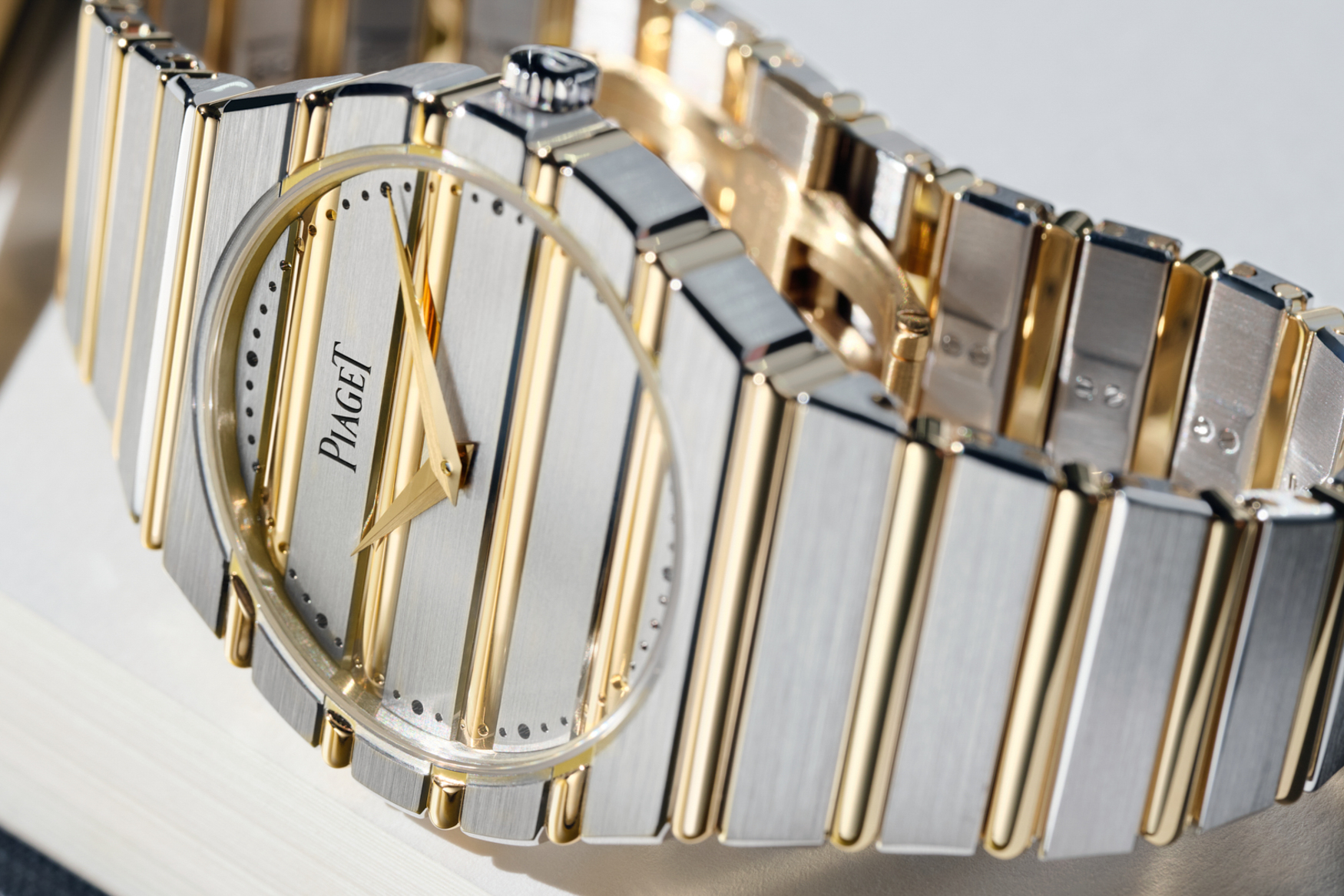
- Instead of leaning on stainless steel, Piaget stays true to its “House of Gold” philosophy, combining 18k white and yellow gold to achieve the two-tone effect.
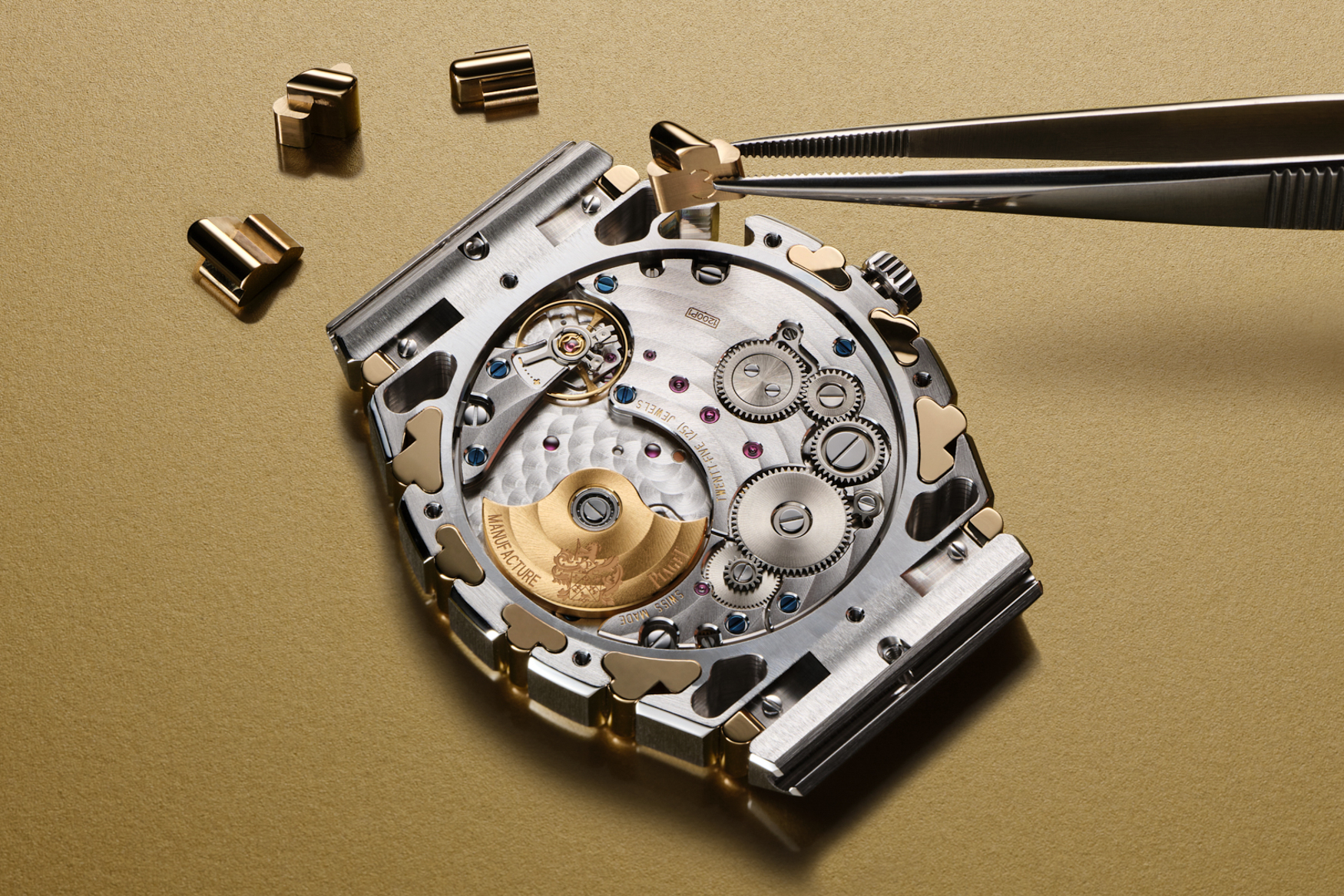
- Powering the watch is Piaget’s calibre 1200P1, an ultra-thin automatic movement with a micro-rotor, measuring just 2.35mm in thickness.
Piaget’s modern identity makes more sense if you start far away from the usual “sports watch” conversation. The jeweller/watchmaker began in 1874 in the Jura village of La Côte-aux-Fées as a maker of movements and components, and it grew into a brand that tends to judge a watch by how it sits and wears — not only by how far it can be pushed. In a market where “sports” can be shorthand for familiar silhouettes, Piaget approaches the category from a different direction.
That difference comes from how naturally Piaget moves between watchmaking and jewellery. The brand speaks about gold as a creative material — a “canvas” that can be melted in-house at its Geneva foundry and then transformed into bracelets, cases, and dials with as much attention as the movement inside. Long before colourful dials and decorative materials became a mainstream trend again, Piaget was already leaning into precious metal craft and expressive design; the 21st Century Collection in 1969 is one of the clearest signposts of that mindset.
All of which explains why the Piaget Polo has always felt like an outlier. When the original Polo arrived in 1979, the decade’s most influential luxury sports watches were increasingly defined by steel. Piaget’s answer was a sports-elegant watch fully cast in gold, built around a simple thesis: the watch and bracelet should be inseparable. Yves Piaget summed it up neatly as “a bracelet watch and a watch bracelet”, and that phrase still captures the Polo’s personality.
Piaget’s recent return to the idea has been a reminder that the integrated-bracelet template doesn’t have to default to steel minimalism. The Polo 79 revival began in 2024 as part of the Maison’s 150th anniversary, first in yellow gold, followed by a white gold iteration in 2025 that pushed the “everyday” side of the concept. Now, Piaget adds a third chapter with the Piaget Polo 79 Two‑Tone, and it does so in a way that’s less about novelty and more about continuity — a nod to a two-tone configuration that existed from the beginning, but is rarely seen today.
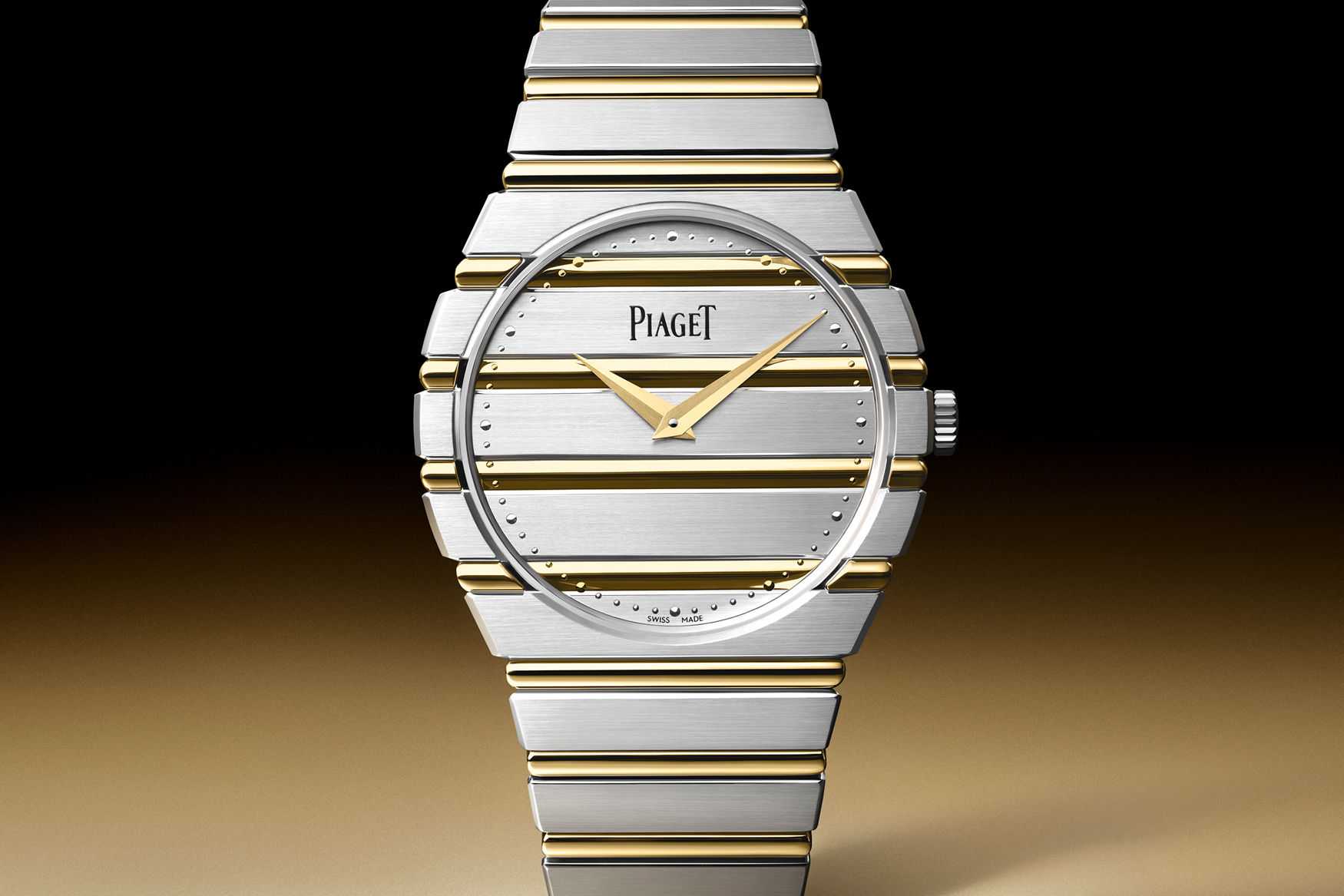
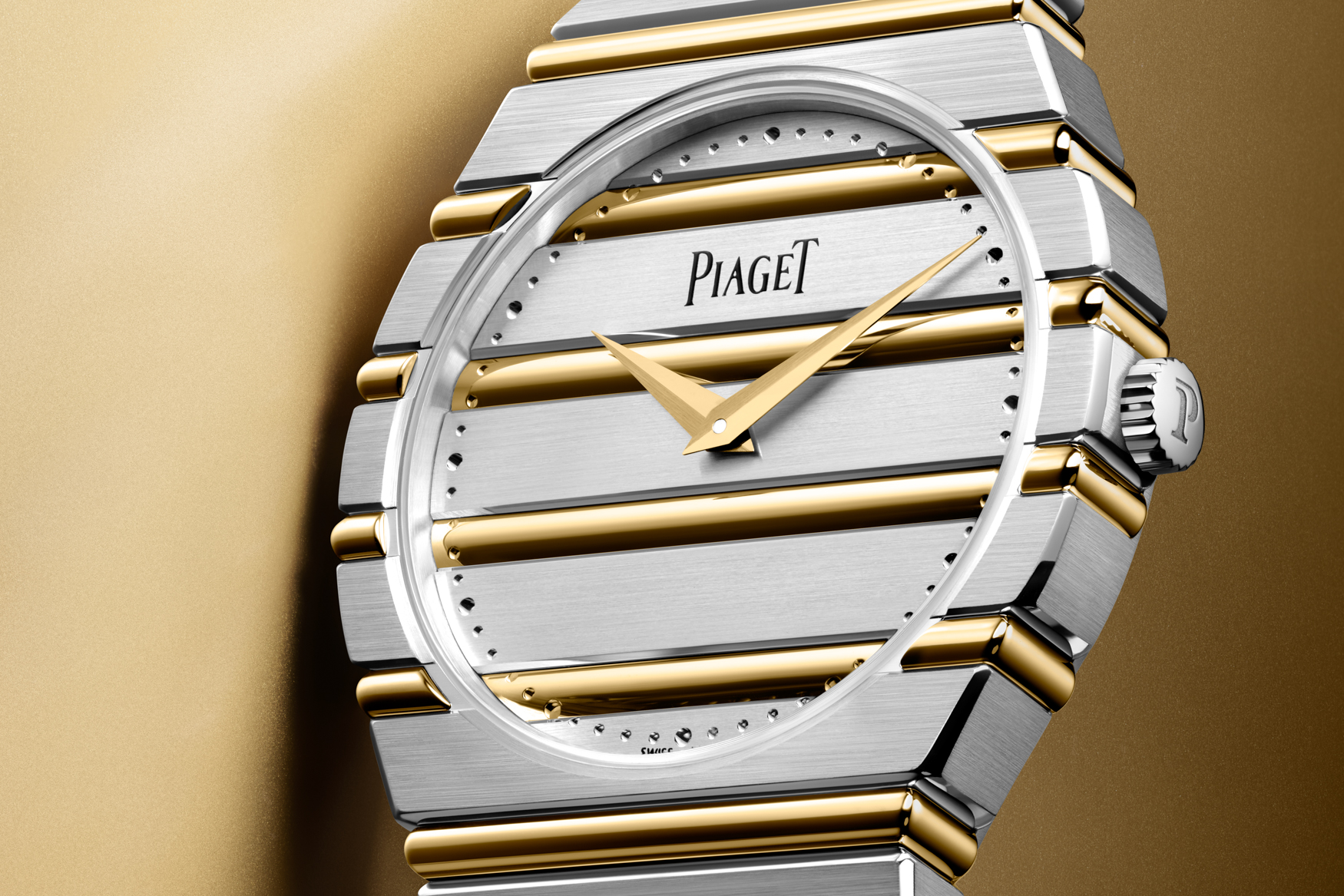
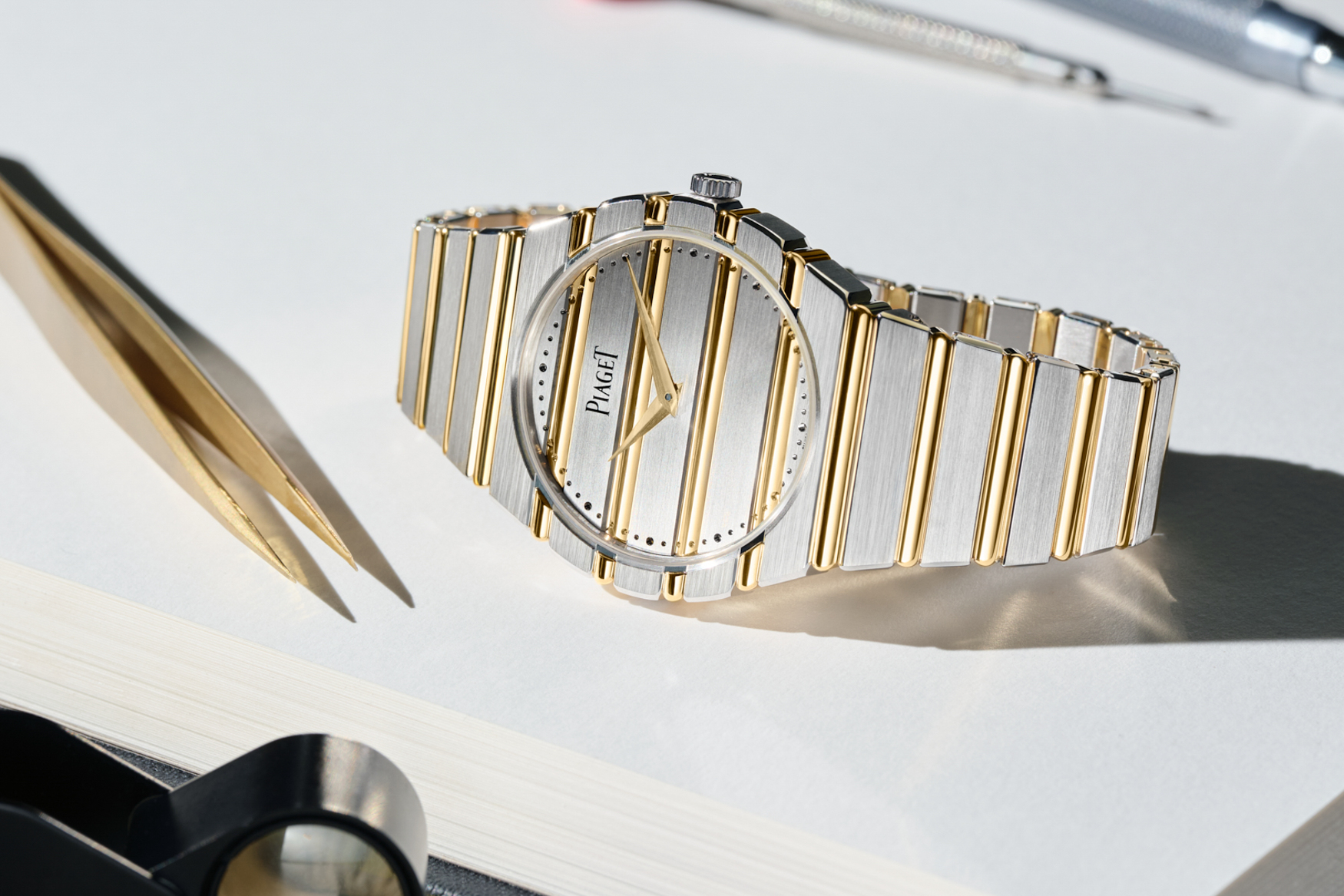
The headline is two-tone without the usual steel-and-gold shorthand. The Polo 79 Two‑Tone pairs white gold and yellow gold in a way that leans on contrast rather than complication. A 38mm brushed white gold case and integrated bracelet form the base, while the Polo’s defining horizontal gadroons — the ribbed elements that run across the case and continue through the bracelet — are rendered in polished yellow gold. The result isn’t just “two colours”; it’s two finishes, and that matters because the Polo’s entire design language is about how light travels across those horizontal planes. Piaget even notes that, to a casual observer, the interplay could be mistaken for stainless steel. The misread only underlines Piaget’s mantra that it “only measures time in gold”.
Crafted from solid gold, the dial follows the same logic of restraint, so the bracelet-first silhouette remains the star. Brushed yellow-gold hands echo the yellow accents, keeping the colour story coherent without adding visual noise.
Inside, Piaget backs up the jewellery-like impression with one of its most credible technical through-lines: thinness. Unlike the original Polo, which utilised a quartz movement (a sign of the times), the Polo 79 Two‑Tone uses the calibre 1200P1, an ultra‑thin automatic with a micro‑rotor, quoted at 2.35mm thick. That dimension isn’t trivia; it’s the mechanism behind the wear. Here, the slim calibre helps preserve a “silky” profile on the wrist, supporting the Polo’s original promise of elegance with a sporting spirit rather than outright sportiness.
Closing thoughts
The Piaget Polo 79 Two‑Tone reads less like a new colourway and more like a restatement of what Piaget does differently. It taps into the broader appetite for watches that can move between dress and casual without changing your personality, but it does so by doubling down on precious metal craft and that unmistakable, horizontally structured Polo silhouette. In a market where integrated-bracelet “sports watches” can sometimes feel like variations on a theme, Piaget’s latest reminder is simple: there has always been another path — one where sport is an attitude, elegance is the baseline, and the bracelet is the main character.
Piaget Polo 79 Two-Tone price and availability
The new Piaget Polo 79 Two-Tone is available now for purchase from Piaget boutiques and retailers. Price: €96,000, A$154,000
| Brand | Piaget |
| Model | Polo 79 |
| Case Dimensions | 38mm (D) |
| Case Material | 18k white and yellow gold |
| Crystal(s) | Sapphire front and back |
| Dial | Solid two-tone gold |
| Strap | Integrated 18k white and yellow gold bracelet |
| Movement | Calibre 1200P1, in-house, micro-rotor automatic |
| Power Reserve | 44 hours |
| Functions | Hours and minutes |
| Availability | Now |
| Price | €96,000 A$154,000 |