
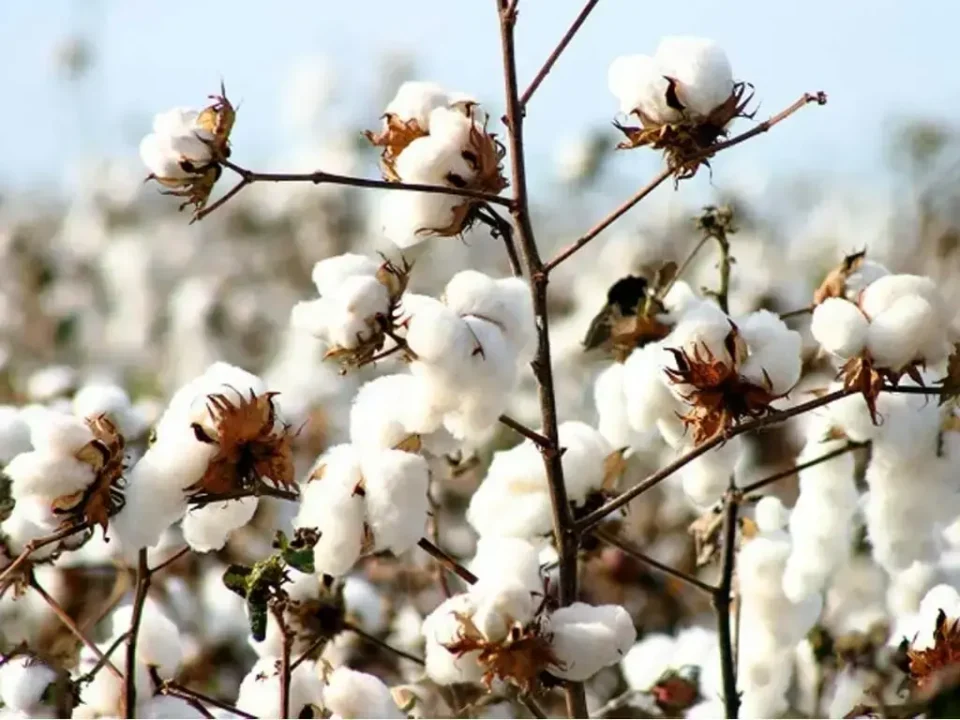
EDITORIAL: Punjab’s cotton acreage has fallen to its lowest level in nearly six decades, while national production has collapsed from almost 15 million bales in 2011-12 to barely 5.3 million bales today. For a country whose largest export industry is built upon cotton, these figures represent far more than an agricultural setback.
They reflect one of the most consequential economic failures in Pakistan’s recent history. Cotton was once among the country’s greatest comparative advantages. Allowing it to deteriorate to this extent has imposed enormous costs on farmers, exporters and the national economy alike.
The scale of the decline is staggering. Punjab, historically the backbone of Pakistan’s cotton sector, has seen cultivation shrink dramatically. Production in the province has fallen from over 12 million bales in 2011-12 to just 2.54 million bales in 2025-26. Yields have deteriorated sharply as well. Meanwhile, Pakistan has become increasingly dependent on imports to satisfy the needs of its textile industry, importing billions of dollars worth of cotton that was once produced domestically.
The consequences extend far beyond agriculture. Cotton is not simply another crop. It sits at the foundation of the textile sector, which remains Pakistan’s flagship export industry and one of its most important sources of employment and foreign exchange earnings. Every bale that must be imported adds pressure on foreign exchange reserves, increases production costs and weakens the competitiveness of exporters operating in already challenging international markets.
The question that naturally follows is how a country with suitable land, a long history of cotton cultivation and a textile sector dependent upon local supply allowed such a decline to unfold. The explanations offered by growers are familiar: poor-quality seeds, inconsistent policies, water shortages, rising input costs and uncertainty over prices. None of these problems emerged suddenly. Most have been identified repeatedly over many years.
That is what makes the current situation so troubling. This crisis was not caused by an unforeseeable shock. It developed gradually while warning signs accumulated across successive seasons. Farmers shifted away from cotton because alternative crops offered more predictable returns. Research institutions weakened. Seed quality became a recurring complaint. Productivity stagnated while competitors invested in technology, improved genetics and modern farming practices.
The comparison with international producers is particularly revealing. While Pakistan’s yields have fallen to barely above 500 kilograms per hectare, countries such as China have achieved yields exceeding 2,200 kilograms per hectare. Such disparities cannot be explained by climate alone. They point to differences in research, technology adoption, seed development and policy execution.
The government’s newly announced revival strategy therefore deserves support in principle. Efforts to strengthen the seed system, encourage biotechnology, import hybrid seeds and improve research coordination all address genuine weaknesses. The problem is that these measures are arriving after years of decline rather than before it. Pakistan has rarely suffered from a shortage of plans, committees or policy announcements. Implementation has historically been the missing ingredient.
That concern is reinforced by reports that progress on previous revival initiatives remains slow. The Cabinet Committee on Special Crops and Cotton approved a revival plan months ago, yet the sector continues to contract. Farmers cannot be expected to respond to strategies that remain largely confined to official documents while conditions on the ground continue deteriorating.
The broader lesson should be impossible to ignore. Comparative advantages are not permanent assets. They require protection, investment and competent management. Countries lose them when policymakers become complacent or fail to adapt to changing realities. Pakistan’s cotton sector offers a textbook example of how neglect can transform strength into vulnerability.
The tragedy is that the damage was avoidable. A country that once produced enough cotton to support its textile industry now spends billions of dollars importing a commodity it should be exporting. The costs are borne through weaker exports, greater pressure on foreign exchange reserves and reduced incomes for farming communities.
Pakistan can still reverse the decline, but the margin for error is narrowing. The latest figures should be treated as a national alarm bell. Allowing white gold to lose its shine was a serious mistake. Allowing the decline to continue would be far worse.
Copyright Business Recorder, 2026