
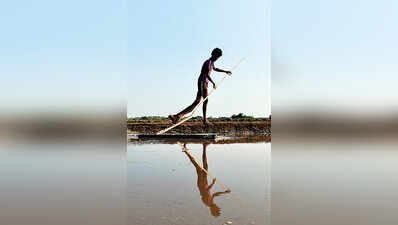
Goa’s traditional salt industry is on the brink. The sun that once turned Goa’s estuaries into sheets of white gold now sets on empty pans. From over hundreds of active salt pans, merely 50 survive today. A trade that fed Goa kitchens for centuries is dying — quietly under a burning sunFor over 1,500 years, Goa’s salt pans glittered along the Mandovi and the Zuari estuaries. Salcete, Tiswadi, Bardez and Pernem talukas lived by the sun, wind, and tide. Each summer, salt workers channelled brackish estuary water into earthen pans, raked it for a few hours, and harvested coarse crystals that fed Goan kitchens, fish curers, and prawn farms. This was ‘Goa salt’ — unrefined, mineral-rich, sharp on the tongue.But today, it is slowly fading into memory. Once exported globally to Asian, Arabian and African countries, Goan salt is dying a slow death.
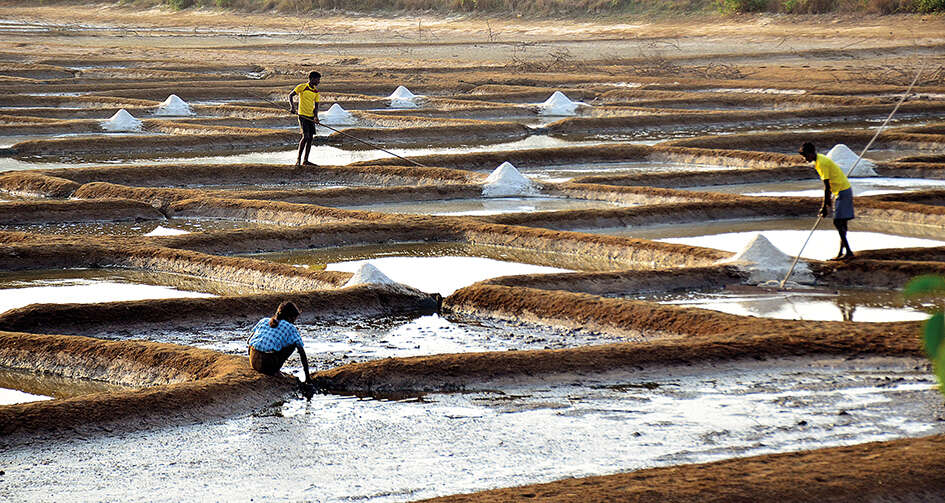
“Hundreds of salt pans existed in Goa but just 100 survive and only about 50 are operational now,” says Pradip Sarmokadam, member-secretary of the Goa State Biodiversity Board (GSBB), whose office carved out a map of old salt pans in association with directorate of survey and land records.The ChallengesReal estate pressure, labour shortage, climate chaos, cheap competition and policy neglect have seen these traditional salt pans even being turned into villas. Scarce labour and unseasonal rain have only compounded the woes, while iodised salt from Gujarat, Tamil Nadu and Rajasthan has flooded the markets.
With no brand or GI tag and no govt support, Goa’s salt makers have been trying to make ends meet. The math is brutal: 1kg sells for Rs 15-20. A good season makes Rs 1-2 lakh.Batim-based salt pan owner Salvador Fernandes, who had continued the tradition, knows it best. “Our families have been doing it since hoary times, learning by observation and working with our elders. Many doubted our capacity for long hours of hard work. Salt production is arduous, labour-intensive and requires dedication,” he says.Batim is part of an extensive khazan belt in North Goa’s Tiswadi taluka. At one time, it had scores of salt pans, prompting local MLA Viresh Borkar to pursue with govt the revival of 30-odd surviving salterns in the area.
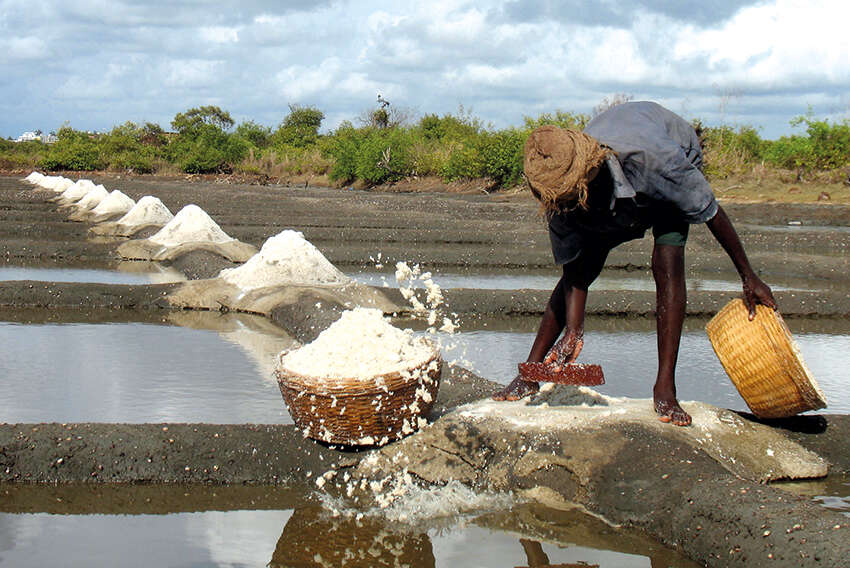
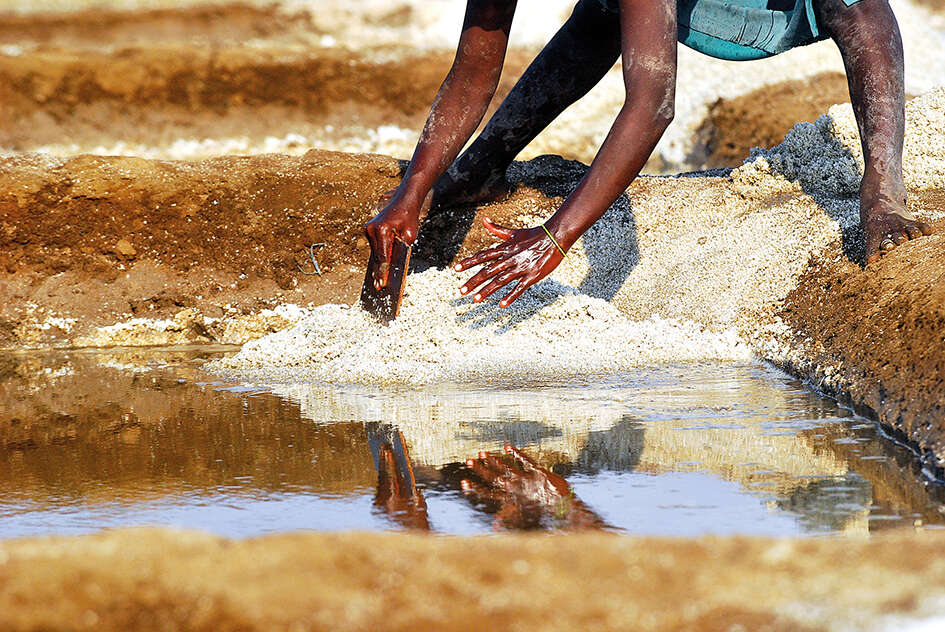
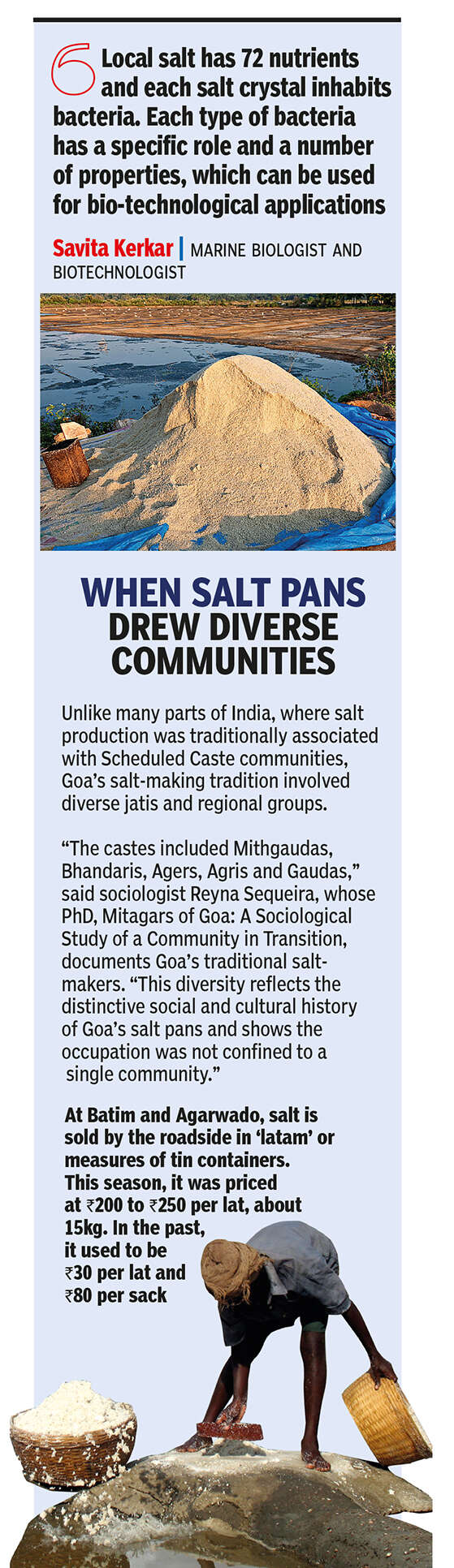
The GSBB recently handed incentives of Rs 1 lakh each to nearly 50 salt makers. Among those who received the aid were more than 30 families from Batim, 12 from Agarwado — the present salt production hotspots — besides a few from Merces and Nerul.“The preservation of Goa’s traditional salt pans is not merely an economic concern. It is also a matter of safeguarding a unique cultural landscape, indigenous knowledge system, and centuries-old heritage that forms an integral part of Goa’s identity,” says Reyna Sequeira, associate professor of sociology, whose PhD thesis is titled, ‘Mitagars of Goa’.Salt-Making ArtSalt production is no easy job. It is backbreaking and very few youths have shown willingness to pick it up. A typical day in the life of a salt maker starts at 5am.During the high tide, water flows from the estuaries through the sluice gates into the salt pans, and is routed through primary, secondary and tertiary ponds, all interconnected through small pa sages in the bunds.“Evaporation then takes place at all stages, increasing the density of water,” explains Savita Kerkar, marine biologist and biotechnologist. “Primarily, seeding is done by sprinkling local salt into the crystalliser ponds in the morning, before evaporation starts in sunlight. Newly produced salt or old stock used for seeding provides a nucleus for the crystallisation process and the salt crystals form faster subsequent to seeding.”The crystallisation occurs in bright conditions with salt being harvested daily by 3pm.“Climate change is a major problem for salt production. If there is some rain, black soil and impurities flow into the salt pan, requiring a time-consuming cleaning effort,” says Ankush Bagli, a salt farmer whose family entirely manages the production.MisinformationThe introduction of refined salt in the early nineties and with it the spread of misinformation that traditional salt lacks adequate iodine content hit the Goan salt makers.“Some may have stopped consuming it due to this reason, but iodine in natural form is in substantial concentration in local salt. When natural salt is added to the food being cooked, iodine in it remains stable even after 20 minutes of boiling,” says Kerkar, under whose guidance 15 PhD students have individually established the role of different hypersaline bacteria from Goan salterns.Concerns have also been raised of microplastics and pollution of water sources for local salt. But Kerkar dismisses it. “Our local salt in most of the salt pans is still pure and safe as it is not affected by pollution,” she says.A study by Kerkar and M S Fernandes published in International Food Research Journal showed that iodine content and the stability of natural salt from samples taken from North Goa’s five solar salterns was comparable to the commercial refined salt brands.Sequeira says research at Goa University, including postgraduate and doctoral studies, has highlighted the value of traditional sea salt. “Studies indicate that naturally occurring trace minerals and elements present in locally produced sea salt may have beneficial properties.”
The Slow DeathYet the loss isn’t just economic. Salt pans are wetlands. They buffer floods, host migratory birds, and keep estuarine ecosystems alive. When they die, mangroves choke the channels, and a piece of Goa’s khazan landscape vanishes.Some hope remains. Self-help groups in Batim are packaging it for tourism. Chefs are rediscovering its flavour. But without land protection, fair pricing, and youth incentives, the last salt maker may soon rake his final harvest.And with him, over 1,500 years of white gold may turn to dust.