
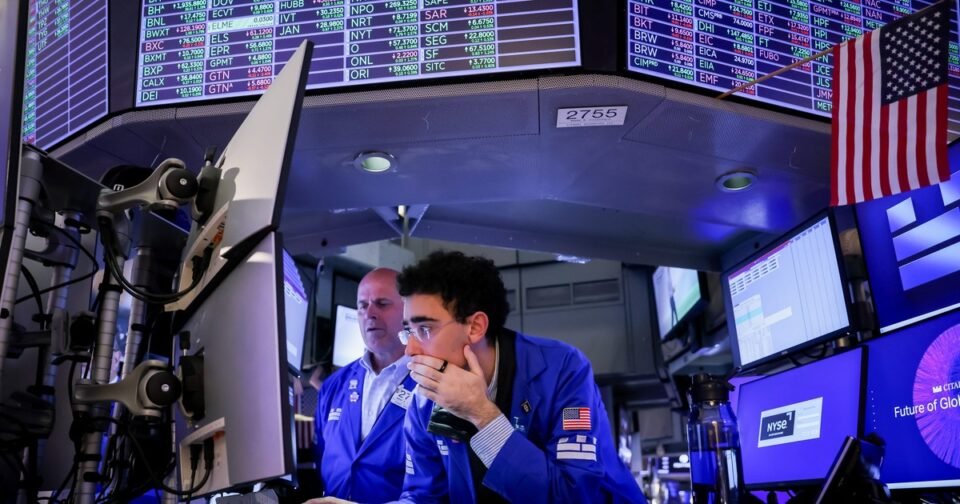
With some of the market’s reliable tech winners slowing down, hedge funds are digging deeper into company fundamentals and leaning into the “hedge” part of their name.
An October report from Goldman Sachs’ prime brokerage desk found that hedge funds were close to a five-year high in short bets. At Robin Hood’s closed-door investor conference in New York in October, Bayberry Capital founder Angela Aldrich revealed that she was launching a short-only strategy to complement her flagship long-short fund, according to two attendees who heard her presentation.
Aldrich, an alum of billionaire John Griffin’s Blue Ridge Capital, pitched a short position in a publicly traded North Carolina-based Coca-Cola bottler, the people said. Coca-Cola Consolidated declined to comment, and Aldrich did not respond to requests for comment.
It’s not just about finding stocks to short. Even for funds that are staying long, the trade is not about a broad macro theme but instead about identifying the winners and losers.
Maverick Capital, for example, is betting on Intel being the next big winner in the AI trade, the firm’s co-chief investment officer said at the Robin Hood conference. David Tykocinski’s rationale for why Intel would surge to a market cap of $1 trillion was not based on his expectations for AI use cases or his view on interest rates, but rather on the type of chip Intel specializes in manufacturing.
In other words, it’s time for the old-school, deep-dive analysis stock-pickers made their names on to return. Allocator sentiment about the industry is sky-high right now, in part because of funds’ ability to generate returns regardless of the markets.
On a JPMorgan Chase podcast released earlier in October, the bank’s head of positioning intelligence, John Schlegel, said hedge funds generally make more alpha when markets are down.
“Maybe on a net basis, if they’re running that long, they don’t actually make positive money, but they tend to protect capital decently well,” Schlegel said.
Momentum sell-off
Sometimes the market doesn’t let you miss.
From the start of 2025 through the second quarter of this year, betting on stocks that had already been ripping up known as the momentum trade was a great bet. BlackRock’s ETF tracking the trade was up more than 55% over that time. Many of the companies that made up the index were in the white-hot artificial intelligence trade, and it helped fuel outlandish gains at hedge funds like Leopold Aschenbrenner’s Situational Awareness.
It’s been a different story since the third quarter started. Betting on these companies the biggest holdings in BlackRock’s ETF are semiconductor manufacturers AMD and Micron has lost investors more than 7% since the start of July. Interest rates have risen. Fixed-income markets are shaky due to an unprecedented surge in issuance by big-name tech companies and fiscal crises in countries like France.
Now is the time for hedge funds to prove their worth, find the market-beating opportunities, and justify their fees.
“Hedge funds don’t necessarily need markets to go up. Or down. Ideally, we need things to move differently,” wrote Raffaele Savi, BlackRock’s systematic investing head, in a recent report published by the $15.5 trillion firm.
Hedge funds also need to be constantly looking for an edge, he wrote.
“There is no permanent source of alpha. There is only the discipline to keep searching for something different,” the report reads.