
JOHANNESBURG (miningweekly.com) – Results from metallurgical test work at the Bengwenyama platinum group metals (PGM) project in South Africa’s Limpopo province indicate that up to a fifth of Southern Palladium’s future revenues could come from chrome.
In an announcement on the ASX and JSE on Friday Southern Palladium reported that the results from its latest metallurgical test work not only confirm the high-grade nature of the Bengwenyama upper group two (UG2) mineral resource but also suggest that chromite concentrate recoveries of more than double initial estimates are achievable.
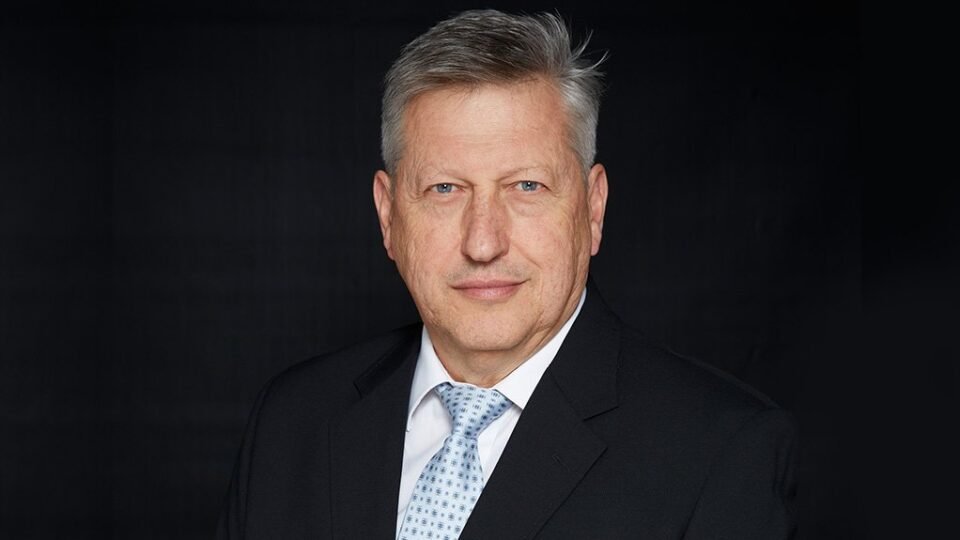
“Metallurgical test work has once again confirmed the grade and robust nature of the UG2 Mineral Resource, but the doubling of chrome recoveries is potentially company-changing; it elevates chrome from a by-product to a parallel output,” Southern Palladium CEO Johan Odendaal highlighted in a media release to Mining Weekly.
On a three-element basis, the metallurgical sample indicates an average combined platinum, palladium and gold grade of 7.35 g/t and a prill split of 49.9% platinum, 48.6% palladium and 1.5% gold with a chromium oxide grade of 29.71%.
These mineral resource grades confirm that the metallurgical sample is representative of the first 10 years of the planned development and could add about 350 000 t of chrome concentrate to production.
Recoveries of 65% were achieved in the test work compared with 30% assumed in the optimised prefeasibility study (OPFS) released in July last year.
Improvements in the high-grade chrome concentrate recoveries have a materially positive impact on project revenues, with chrome comprising 12% of revenue in the original OPFS.
As part of the test work, composite samples that included the footwall were put through dense media separation (DMS) and gravity test work. DMS was not part of the processing circuit outlined in the OPFS circuit, but the positive results of the test work have encouraged Southern Palladium to include it in its definitive feasibility study (DFS).
“DMS as a waste rejection stage in UG2 beneficiation is a well-established industry practice for removing barren footwall and hanging wall material included in the mining cut. The key benefits of this approach are a substantial reduction in the milling and flotation circuit load, together with a marked increase in both PGM and chromite head grades to the concentrator,” Odendaal explained.
The higher mass yield of chromite concentrate, and DMS waste removal, will materially reduce the quantity of feed to the PGM mill/flotation circuit and also lessen the risk of PGM concentrate penalties.
This allows Southern Palladium to introduce a smaller PGM mill/flotation circuit, reducing upfront capital and accelerating project development.
Southern Palladium reports that it is continuing to make strong progress at advancing DFS workstreams and early mine development planning and the latest results are being refined into the final DFS-level work on plant design and metrics.
Located on the eastern limb of South Africa’s Bushveld Complex, the Bengwenyama PGM project is one of the world’s largest remaining undeveloped PGM resources.
The project encompasses the UG2 and Merensky reefs, spanning from surface to a depth of 1 100 m over a downdip extent of 10 km. These reefs represent primary economic deposits exploited by other platinum mining companies in the region.
Southern Palladium is focused on the UG2 reef, which is the predominantly mined reef in the area.
The project benefits from proximity to existing mining operations and established infrastructure, enhancing its strategic value and development potential.