
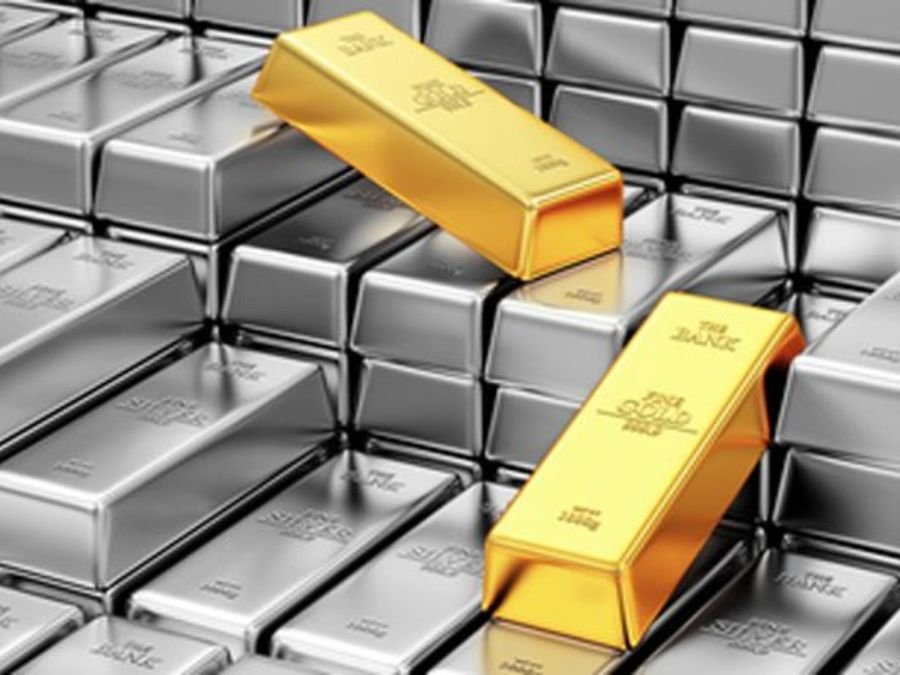
Global precious metals markets have entered November on a tentative recovery path after a turbulent end to October, with gold and silver gaining during Asian trading on Monday, November 2, as declining crude oil prices provided some relief from inflationary pressures.
According to market commentary shared by Vikram Subburaj, CEO of Giottus.com, spot gold advanced 0.6% to approximately $3,899.39 per ounce, while silver gained 1.3% to $49.76 per ounce in the early Asian session.
The recovery followed an exceptionally difficult trading session on Friday, October 30, when gold declined approximately 3.7% and silver lost nearly 6%.
The renewed buying interest comes against a complex international economic backdrop characterised by elevated energy prices, persistent inflation concerns, uncertainty surrounding US monetary policy and a broader reassessment of risk across equity markets.
Although the latest recovery offers short-term encouragement, analysts remain cautious about declaring a lasting turnaround in precious metals.
Falling Crude Oil Prices Provide Relief to Precious Metals
One of the most significant developments supporting gold and silver on Monday has been the retreat in international crude oil prices.
Brent crude futures declined approximately 2% to $111.15 per barrel as diplomatic developments provided some relief from concerns about sustained disruptions to energy supplies.
The reduction in crude prices matters because energy costs influence inflation throughout the global economy.
Expensive crude oil increases transportation expenses, manufacturing costs, electricity-generation costs and the prices of a wide range of industrial inputs.
For major economies, persistent energy inflation can complicate central-bank decisions by making it more difficult to bring overall inflation under control.
Consequently, falling oil prices can reduce immediate pressure on inflation expectations and potentially ease concerns about aggressive interest-rate increases.
However, with Brent crude still above $110 per barrel, energy remains expensive in absolute terms. A single session of declining prices is insufficient to establish that the inflationary threat has disappeared.
For gold and silver investors, the key question is whether the decline in crude oil becomes sustained enough to alter expectations about future monetary policy.
Why Gold Declined Despite Global Economic Uncertainty
Gold has traditionally been regarded as a safe-haven asset during periods of geopolitical instability, financial-market stress and economic uncertainty.
Nevertheless, recent market developments demonstrate that gold does not always rise when investors become nervous.
The sharp decline witnessed during the previous trading session occurred alongside substantial pressure on technology stocks and broader concerns about investment valuations.
Some market participants reportedly liquidated bullion holdings to meet margin requirements or cover losses elsewhere in their investment portfolios.
Such situations can temporarily weaken the relationship between gold and its traditional safe-haven characteristics.
When investors urgently require liquidity, they may sell assets that remain relatively easy to trade, regardless of their longer-term investment outlook.
This creates an important distinction between gold’s role as a long-term portfolio diversifier and its behaviour during periods of immediate financial stress.
The same phenomenon can affect silver more severely because silver is influenced by both investment demand and industrial consumption.
The latest recovery therefore needs to be evaluated in the broader context of global liquidity conditions rather than viewed solely as renewed safe-haven buying.
US Federal Reserve Policy Remains the Biggest Challenge
A major factor influencing precious metals is the direction of US interest rates.
Market expectations continue to indicate a substantial probability of further tightening by the US Federal Reserve.
According to the November 2 market commentary, US interest-rate futures imply approximately a 72% probability of a quarter-percentage-point increase in December.
This is particularly relevant to gold because the metal does not generate interest income.
When interest rates rise, government bonds and other interest-bearing financial instruments become relatively more attractive, increasing the opportunity cost of holding bullion.
Higher US Treasury yields can therefore weigh on gold prices, even when economic or geopolitical uncertainty remains elevated.
A stronger US dollar may create additional pressure because internationally traded gold and silver are predominantly priced in dollars.
Conversely, easing inflation expectations, declining yields or reduced expectations of additional rate increases could help precious metals regain investor interest.
Importantly, market-implied probabilities are not guarantees of future central-bank decisions. They can change substantially following new economic data or policy statements.
November 6 US Employment Report Could Trigger the Next Major Move
The next important event for global precious metals markets is the US employment report scheduled for Friday, November 6, 2026.
Market expectations cited in the commentary point to approximately 65,000 additional jobs.
However, the headline employment number will not be the only figure attracting investor attention.
Wage growth, unemployment and revisions to earlier employment estimates could also influence market expectations.
If the employment report indicates unexpectedly strong hiring and persistent wage pressures, financial markets could interpret the data as supporting additional interest-rate increases.
That could strengthen the dollar, lift bond yields and renew selling pressure on gold and silver.
On the other hand, weaker employment growth accompanied by moderating wage inflation could reduce expectations of further monetary tightening.
Such an outcome may provide an opportunity for bullion prices to stabilise.
The market reaction will depend not just on whether employment rises or falls, but on how the figures compare with expectations and what they imply for inflation and monetary policy.
Implications for Indian MSMEs and the Jewellery Industry
The international movements in gold and silver prices have important implications for India’s jewellery manufacturers, bullion traders, exporters and other small businesses exposed to precious metals.
India’s jewellery manufacturing ecosystem includes numerous MSMEs involved in design, casting, refining, polishing, wholesale trading and retail distribution.
Rapid changes in gold prices can directly influence inventory valuations and procurement decisions.
For jewellery businesses holding significant inventories, a steep decline in metal prices can reduce the market value of existing stocks and compress trading margins.
At the same time, lower prices can create opportunities for businesses planning fresh procurement, provided demand and cash-flow conditions remain supportive.
The situation becomes more complex when prices fluctuate sharply within short periods.
A manufacturer quoting a fixed price to a customer may face a different replacement cost when sourcing the metal required to fulfil that order.
This makes inventory management and disciplined pricing policies especially important. For MSMEs dealing in silver, the implications extend beyond jewellery.
Silver is used in electrical contacts, electronics, solar photovoltaic equipment and various specialised industrial applications.
Consequently, silver-price volatility can influence raw-material costs for certain manufacturing businesses, although the final impact depends on the quantity of silver used and contractual arrangements.
Rupee Movements Could Influence Domestic Gold and Silver Prices
Indian businesses must also account for currency fluctuations.
International precious metals prices are predominantly quoted in US dollars, while Indian businesses generally purchase and sell their inventories in rupees.
As a result, the domestic price of gold and silver reflects both global metal prices and the movement of the rupee against the dollar, together with applicable duties, taxes and local premiums.
A weaker rupee can partly offset the benefit of falling international bullion prices.
Similarly, a strengthening rupee can amplify the impact of a global price decline on domestic purchasing costs.
This creates another reason for jewellery manufacturers and trading businesses to monitor international commodity markets alongside domestic economic indicators.
MSMEs with substantial precious-metal exposure may benefit from reviewing procurement cycles, working-capital requirements, inventory controls and appropriate hedging mechanisms.
However, derivative hedging should be undertaken only with a clear understanding of contract obligations, liquidity requirements and associated risks.
Silver’s Nearly 6% Decline Highlights the Danger of Excessive Leverage
The sharp decline in silver prices during the previous trading session provides a reminder of the risks associated with leveraged commodity trading.
Vikram Subburaj has urged investors to keep fresh futures positions small ahead of the November 6 US employment report.
As his commentary explains, at an illustrative leverage level of 10 times, a 1% adverse price movement can consume approximately 10% of the initial margin before fees.
A substantial market movement can therefore create disproportionate losses relative to the capital initially committed as margin.
Silver’s tendency towards larger percentage fluctuations makes risk management particularly important.
The implications extend beyond individual traders.
Small businesses participating in commodity markets for genuine hedging requirements must distinguish between managing commercial price exposure and taking speculative directional positions.
Excessive leverage can transform a price-management exercise into a serious liquidity risk.
What Indian Investors and Businesses Should Monitor
The immediate outlook for gold and silver will depend on several interconnected developments.
The direction of crude oil prices will remain important because of its relationship with inflation expectations.
The US dollar and Treasury bond yields will continue to influence international precious metals valuations.
The November 6 employment data could significantly affect expectations for the Federal Reserve’s December policy decision.
In India, movements in the rupee and changes in domestic demand will also shape local bullion prices.
For MSMEs, the immediate priority should be maintaining adequate working capital, avoiding excessive inventory concentration and ensuring procurement strategies remain resilient to further price fluctuations.
For investors, the latest rebound should be treated as an encouraging but preliminary development rather than proof that recent market weakness has ended.
Outlook: A Recovery Under Examination
Gold and silver have started November with renewed strength, supported by lower crude oil prices and some easing of immediate inflation concerns.
However, the factors that contributed to October’s difficult performance have not disappeared.
The combination of restrictive monetary-policy expectations, equity-market volatility and uncertain global liquidity conditions suggests that precious metals may experience further substantial fluctuations.
For Indian businesses and investors, the coming days represent an important period for monitoring risk rather than making decisions based on a single trading session.
The November 6 US employment report could provide greater clarity about the next phase of the gold and silver markets.
Disclaimer: This article is published for general information, market analysis and financial awareness. It does not constitute investment advice or a recommendation to buy, sell or hold gold, silver, commodity futures or other financial instruments. The opinions attributed to Vikram Subburaj are based on the market commentary dated November 2, 2026. Financial-market prices and expectations may change without notice. Investors should consult qualified financial advisers before making investment decisions.