
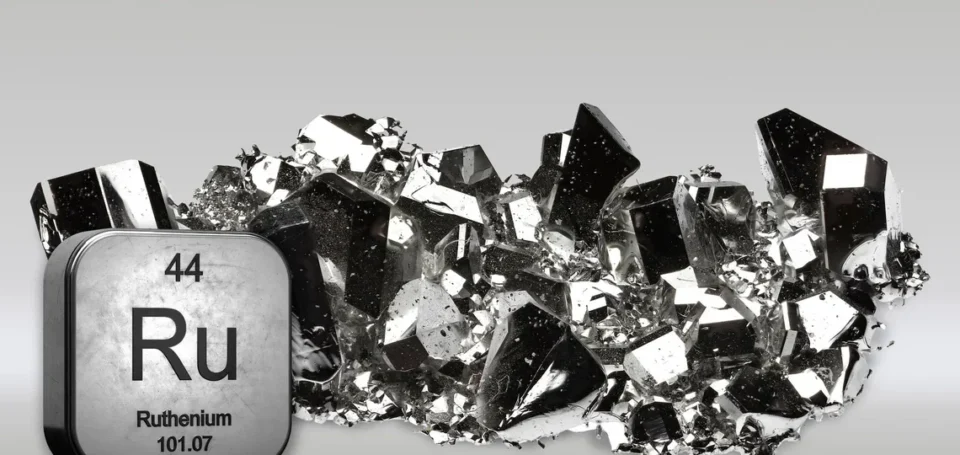
KAIST, the South Korean science institute, has announced a ruthenium catalyst deposited on a tungsten carbide support for the cathode of an anion-exchange membrane (AEM) electrolyser. The announcement is based on a paper published in Nature Communications. While Stiesdal Hydrogen’s 6.5 MW electrolyser has entered commercial operation in Denmark and China holds over 70% of global electrolysis capacity, the Korean work belongs to early-stage research. According to KAIST, performance would be comparable to that of commercial platinum, with markedly less precious metal. The tests were carried out only in laboratory cells.
Your tailored newsletter
Follow all the news on Hydrogen Energy worldwide
By continuing, you agree to receive our communications and advertising, which funds the newsroom. Your data is never sold.
The cathode as the weak point
Anion-exchange membrane water electrolysis is presented as a lower-cost route to green hydrogen than proton-exchange membrane electrolysis. The anode of an AEM electrolyser can indeed do without precious metals. The cathode remains the weak point: the hydrogen evolution reaction is slow in alkaline conditions, which has led to heavy loadings of platinum on carbon (Pt/C), the commercial reference.
Reducing the amount of precious metal at the cathode without losing current density is the economic lever targeted by the study. The cell used is a laboratory set-up, with a nickel-iron alloy anode and a membrane made by the researchers themselves.
Ruthenium clusters on a single atomic layer
Precious-metal nanoparticles waste the atoms buried inside each particle. Single-atom catalysts use every atom, but that isolation prevents the atoms from cooperating in reactions that require several neighbouring sites. The authors propose an intermediate: small groups of ruthenium atoms spread one atom thick on the surface of tungsten carbide (WCx).
During fabrication, the chemical affinity between the ruthenium precursor and a block copolymer, brought into play during a self-assembly step, limits agglomeration of the metal. A very high-temperature heat treatment then converts the tungsten precursor into carbide and anchors the ruthenium through a strong metal-support interaction. The authors’ simulations indicate that beyond a critical size, ruthenium forms three-dimensional particles, whereas below it the one-atom-thick layer remains stable. Cluster size is tuned by the amount of ruthenium precursor introduced.
Cluster size inferred, not observed
The number of atoms per cluster is not observed directly. Electron imaging cannot distinguish the ruthenium atoms from the much heavier tungsten carbide support. The authors infer the size from quantum chemistry calculations, which identify the chosen size as optimal for hydrogen binding, and from X-ray absorption spectroscopy measurements, which give an average coordination across the whole sample. The existence of a cluster of a few atoms therefore remains a conclusion of the researchers, supported by a body of evidence.
The name of the optimal sample, “aRu3/WCx”, contains a number that refers to a ruthenium precursor ratio, not to a number of atoms. The support does more than anchor the metal: spectroscopic measurements taken during operation show that its surface becomes enriched in hydroxyl species during the reaction.
The team is led by Jinwoo Lee, professor of chemical and biomolecular engineering at KAIST and a corresponding author. Hyungjun Kim, professor of chemistry at KAIST, Jang Yong Lee, professor at Konkuk University, and Joonhee Moon, a doctor at the Korea Basic Science Institute, are also corresponding authors. Seongbeen Kim, Hyunwoo Jun, Jihye Park and Sungjun Kim, of the Korea Research Institute of Chemical Technology, are co-first authors of the paper.