
Recorded a waste recycling rate of 99.7% this year
Reaffirmed its resource-circulation capabilities at specialty steel manufacturing sites
SeAH Besteel said on Nov. 27 that it had become the first company in South Korea’s steel industry to receive the platinum rating, the highest level of the Zero Waste to Landfill (ZWTL) certification, from global safety certification organization UL Solutions for the second consecutive year.

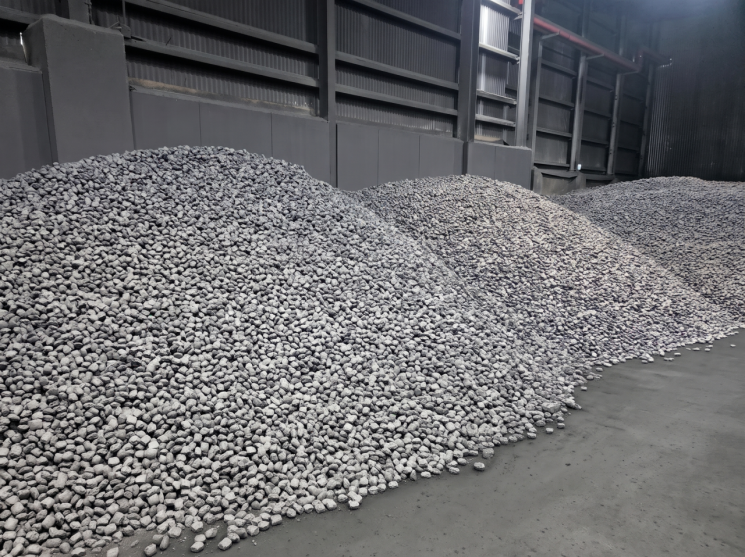
“Iron-source briquettes,” made by solidifying waste byproducts for use as steelmaking raw materials, are stacked at SeAH Besteel’s loading yard. SeAH Group
The Zero Waste to Landfill certification is a leading international environmental certification that evaluates the rate at which waste generated at a business site is recycled or reused rather than sent to landfill. Ratings are awarded according to the recycling rate: Silver for 90-94%, Gold for 95-99%, and Platinum for 100%. In this year’s renewal review, SeAH Besteel recorded a waste recycling rate of 99.7% and retained the highest rating, earning recognition for the continued operation of its resource-circulation system at its specialty steel manufacturing sites.
Specialty steel manufacturing uses various ferroalloys to give products durability and heat resistance, generating large quantities of byproducts with different compositions, including slag and dust. SeAH Besteel has therefore continued to invest in facilities and develop technologies to separate, process and recycle byproducts according to their characteristics.
One notable example is a high-value upcycling model that turns slag, a byproduct of steelmaking, into an industrial resource. In the past, slag was used in limited applications, such as filling and covering land. However, through its byproduct resource recovery center, newly established last year, SeAH Besteel systematically sorts the material according to its production process and reprocesses it into customized industrial raw materials optimized for each component. Electric arc furnace slag is used to make concrete aggregate that has received environmental labeling certification, while aluminum refining slag powder has been used as a raw material for rapid-hardening cement since the first half of this year, increasing its added value.
Hot Picks Today

The company has also further strengthened its in-house recycling system for iron-bearing byproducts, returning them to the production process. Scale, dust, sludge and other waste byproducts generated during steelmaking and processing, which were previously sent to outside contractors for treatment, are now solidified into “Iron-source briquettes (BRM, Briquette for Reduced Metal)” for reuse on site and fed back into electric arc furnaces as a substitute for steel scrap. This has reduced the amount of waste sent to outside contractors and established a circular resource system that recovers iron from byproducts and reuses it as a raw material.
This content was produced with the assistance of AI translation services.
© The Asia Business Daily. All rights reserved. Unauthorized AI training and use prohibited.