
A Sunday Times investigation found that jewelry sold online as “925 sterling silver” through Amazon and TikTok Shop contained cadmium at levels far above the legal limit in the United Kingdom. The findings raise concerns that some consumers may have unknowingly purchased jewelry made largely from a toxic heavy metal rather than genuine sterling silver.
A ring advertised as 925 sterling silver was independently tested and found to contain 92.3% cadmium. A bracelet charm sold through TikTok Shop contained approximately 33% cadmium. According to The Sunday Times, both products were tested by the Birmingham Assay Office. In the UK, cadmium in jewelry is restricted to 0.01% by weight, meaning the reported levels were thousands of times above the permitted threshold.These were not minor differences in composition. One of the products marketed as silver was reportedly made almost entirely from cadmium.
The investigation raises a broader consumer-safety question: when jewelry is sold as fake sterling silver or misleadingly marked as “925,” what does that description mean, and what does it actually prove?
What Does “925 Sterling Silver” Mean?
Sterling silver is an alloy containing 92.5% silver. The remaining 7.5% is usually made up of other metals, commonly copper, to improve strength and durability. The number 925 is intended to indicate that proportion of silver. Consumers often view the mark as a sign that a product is genuine sterling silver. However, a 925 stamp or product description is not proof by itself that an item has been independently verified, correctly labeled, or manufactured in compliance with safety regulations. Counterfeit or misleading markings can still appear on products made from entirely different materials.
That is what made the reported findings especially concerning. The Amazon ring sold as “925 silver” reportedly contained 92.3% cadmium, while the TikTok Shop charm contained approximately 33% cadmium.
Why Is Cadmium a Health Concern?
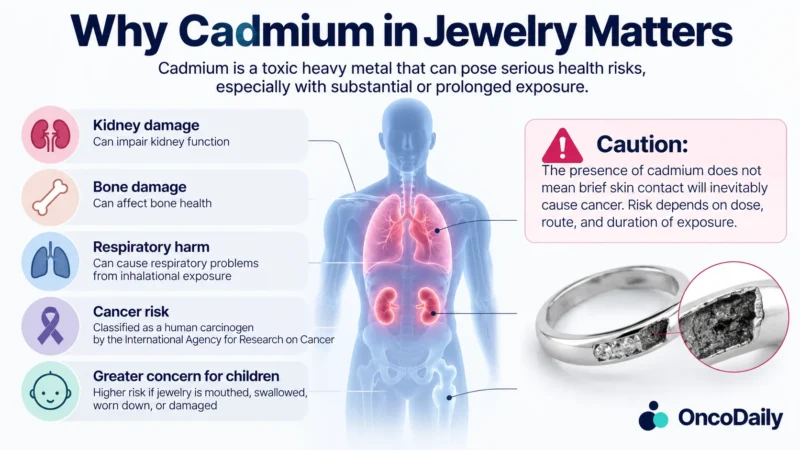
Cadmium is a toxic heavy metal associated with serious health effects. Long-term exposure has been linked to kidney damage, bone disease, and increased cancer risk. The International Agency for Research on Cancer classifies cadmium and cadmium compounds as carcinogenic to humans. The level of risk depends on the form of exposure, dose, frequency, and duration.
Jewelry is not usually the main source of cadmium exposure for adults. However, regulators restrict cadmium in jewelry because exposure can occur through prolonged skin contact, mouthing, accidental ingestion, or contact with damaged and worn surfaces. Children may face particular risk because they are more likely to place jewelry or charms in their mouths. Consumers buying an item described as sterling silver would not reasonably expect it to contain high concentrations of cadmium.
What Does Research Show About Cadmium in Jewelry?
Scientific studies have documented substantial cadmium content in some inexpensive jewelry products. A 2021 study titled Buyer Beware: Inexpensive, High Cadmium Jewelry Can Pose Severe Health Risks evaluated 80 items purchased from a discount jewelry retailer. Researchers found cadmium in several pieces and examined how much could be released under conditions designed to simulate mouthing or accidental ingestion.
The study also indicated that damaged jewelry could release more cadmium. This matters because rings, charms, bracelets, and pendants can become scratched, chipped, or worn through repeated use.
Another paper, The Health Risk of Cd Released from Low-Cost Jewelry, examined 13 low-cost jewelry samples with high cadmium content using X-ray fluorescence analysis. The researchers found that cadmium could be present in substantial concentrations, including near the surface of some products. These studies do not mean that all inexpensive jewelry is dangerous. They do, however, support concerns that weak quality control and inaccurate labeling can allow hazardous metals to reach consumers.
What Did The Sunday Times Investigation Find?
According to The Sunday Times, investigators purchased inexpensive jewelry from Amazon and TikTok Shop and submitted it to the Birmingham Assay Office for laboratory analysis. One Amazon ring, priced at £2.99 and advertised as “925 silver,” reportedly contained 92.3% cadmium. The newspaper described that concentration as more than 9,000 times the UK legal limit. A bracelet charm sold through TikTok Shop reportedly contained approximately 33% cadmium, or about 3,300 times the permitted level.
These figures are significant because they were based on independent laboratory testing rather than appearance, consumer suspicion, or assumptions about the seller. The findings demonstrated how a product can look like silver, be marketed as silver, and carry silver-related wording while having a fundamentally different composition.
Why Are Online Marketplaces Vulnerable?
The problem is not that all jewelry sold on Amazon, TikTok Shop, or other online platforms is unsafe. The concern is that large marketplaces often host thousands of third-party sellers, with products moving through complex and sometimes difficult-to-trace supply chains. This can make it challenging to verify every claim about composition, manufacturing standards, and regulatory compliance before an item reaches the buyer.
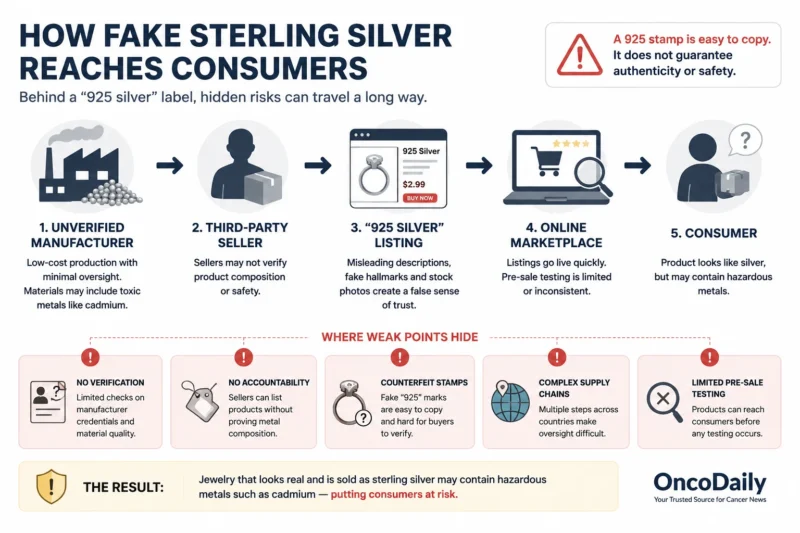
A listing may include terms such as “925 silver,” “sterling,” or “hypoallergenic,” but shoppers usually have no practical way to confirm those claims at the point of purchase. Low prices can also increase risk when they reflect poor-quality materials, limited testing, or misleading product descriptions. However, price alone cannot determine whether a product is safe or genuine. The wider issue is one of oversight: products can be distributed at scale before regulators, journalists, platforms, or consumers discover what they actually contain.
What Does UK Law Say About Cadmium in Jewelry?
In the United Kingdom, cadmium in jewelry is restricted to 0.01% by weight. The levels reported in the investigation were therefore not marginally above the threshold. They were dramatically beyond the permitted concentration. The restriction exists because cadmium is toxic and can pose health risks under certain exposure conditions. Products exceeding the legal limit should not be sold in that form. The findings also show why a stamp alone is insufficient. A 925 mark is intended to indicate sterling silver, but it does not independently prove that the product is authentic, accurately labeled, or legally compliant.
Can Wearing Cadmium Jewelry Cause Cancer?
The presence of cadmium in jewelry does not mean that wearing a single item will inevitably cause cancer. Cancer risk depends on the level, route, and duration of exposure. Much of the strongest evidence linking cadmium to cancer comes from occupational, environmental, dietary, or inhalational exposure rather than ordinary use of one jewelry item. However, the reported concentrations remain concerning because cadmium is a known human carcinogen and because consumers were not informed that the products contained it.
Risk may become more relevant when jewelry is worn frequently, damaged, mouthed, swallowed, or used by children. The issue is therefore not that brief contact guarantees harm, but that consumers may be exposed to a hazardous material without their knowledge or consent.
How Can Shoppers Reduce the Risk?
Consumers cannot reliably determine metal composition by appearance alone. A silver color, polished finish, product listing, or 925 stamp does not confirm what the item contains. Safer purchasing practices include choosing established jewelers or retailers with traceable product information, checking whether hallmarking or independent testing is documented, reviewing seller history, and being cautious about prices that appear unusually low for genuine sterling silver.
People should stop wearing jewelry that causes persistent skin irritation, changes color rapidly, leaves unusual residue, breaks easily, or appears poorly manufactured. These signs do not prove cadmium is present, but they can justify discontinuing use and contacting the seller. Parents should be particularly careful with low-cost charms and jewelry that children might place in their mouths. Independent laboratory testing remains the only reliable way to confirm the precise metal composition of a product.
What Should Consumers Remember?
Sterling silver itself is not the problem. Genuine sterling silver contains 92.5% silver and is widely used in jewelry. The concern involves products advertised as sterling silver that may be counterfeit, inaccurately labeled, or made with hazardous metals. A 925 stamp is intended to indicate sterling silver, but it does not by itself guarantee authenticity or compliance. The Sunday Times investigation and prior scientific studies show that some low-cost jewelry marketed as silver can contain high levels of cadmium. For consumers, checking the seller, price, hallmarking information, and testing claims matters particularly when purchasing jewelry through online marketplaces.
Conclusion
This is not a story about genuine sterling silver being unsafe. It is a story about products sold as sterling silver that may not contain sterling silver at all. The Sunday Times investigation found that an Amazon ring advertised as 925 silver reportedly contained 92.3% cadmium, while a TikTok Shop charm contained approximately 33% cadmium. Both levels were thousands of times above the UK legal limit. Previous studies have also documented cadmium in inexpensive jewelry, supporting concerns that weak oversight and misleading descriptions can expose consumers to hazardous metals. The central lesson is clear: a 925 stamp is intended to indicate sterling silver, but it is not proof by itself that an item is genuine, safe, or compliant.
You Can Also Read Do Electric Cars Cause Cancer? The Truth Behind the Myths and Facts About EV EMFs by OncoDaily

Written by Aharon Tsaturyan, MD, Editor at OncoDaily Intelligence Unit
FAQ
Does 925 mean real sterling silver?
A genuine 925 mark is intended to indicate that an item contains 92.5% silver. However, the stamp can be copied, so it does not independently prove that the jewelry is genuine, tested, or legally compliant.
How can you tell if 925 silver is fake?
Signs such as an unusually low price, rapid discoloration, poor workmanship, or an untraceable seller can raise concern, but appearance alone cannot confirm composition. Professional assay or laboratory testing is the most reliable method.
Can fake sterling silver cause cancer?
Fake silver does not automatically cause cancer. However, some counterfeit jewelry has contained cadmium, a carcinogenic heavy metal. Risk depends on the metal concentration, exposure route, frequency, and duration—not simply wearing an item briefly.
Is cadmium in jewelry dangerous?
Yes. Cadmium is toxic and chronic exposure can damage the kidneys and bones. Ingestion is especially concerning, particularly for young children who may mouth or swallow jewelry.
Can cadmium be absorbed through the skin?
Skin contact is generally a less significant exposure route than swallowing or inhaling cadmium. Concern may increase when jewelry is damaged, worn against broken or pierced skin, or used over a prolonged period.
What metals are commonly found in fake jewelry?
Counterfeit or low-cost jewelry can contain nickel, lead, cadmium, copper, zinc, or mixed base-metal alloys. The exact composition cannot be determined reliably from color or markings alone.
Why does fake jewelry turn skin green?
Green discoloration usually results from copper in the metal reacting with moisture, sweat, lotions, or air. It does not by itself prove that the jewelry contains cadmium or that it is dangerous.
Is sterling silver safe to wear every day?
Genuine sterling silver is generally considered suitable for regular wear. Problems are more likely when an item is counterfeit, contains allergenic metals, or has been inaccurately labeled.
Is cheap jewelry toxic?
Not all inexpensive jewelry is toxic, but low-cost products from poorly traceable sellers may face weaker material verification. Testing has found some “925” jewelry made largely from cadmium rather than silver.
What should I do if I think my jewelry contains cadmium?
Stop wearing it, keep it away from children, and contact the retailer or marketplace. For confirmation, ask a reputable jeweler, assay office, or accredited laboratory about metal-composition testing.