
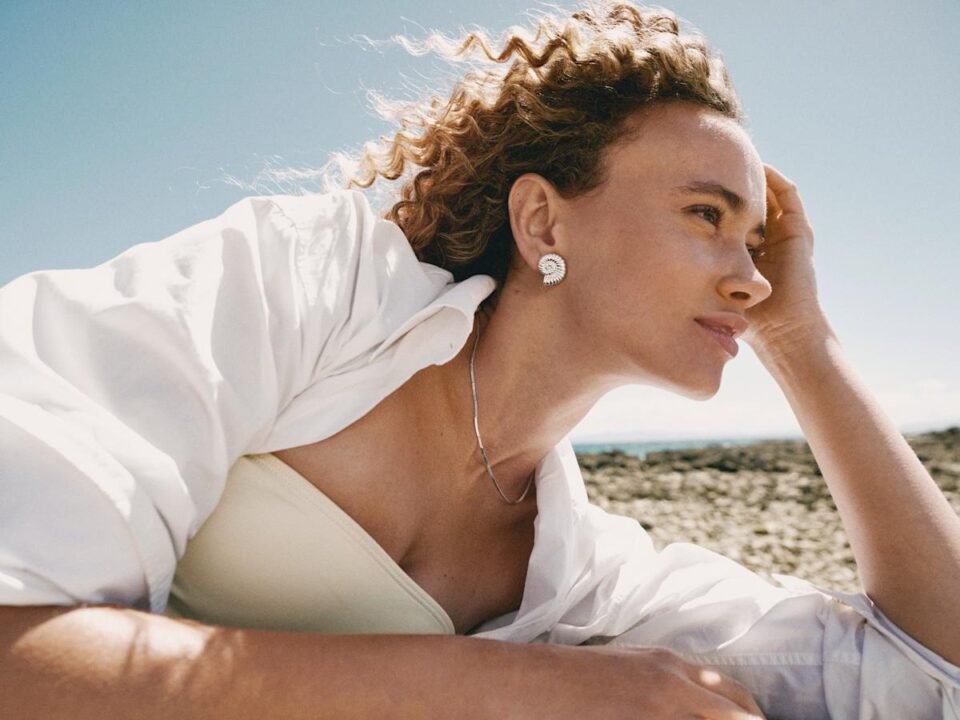
LONDON — When the going gets tough, opt for sterling silver.
That’s what Mejuri’s customers have been doing, snapping up pieces from the new Puzzle collection, which is made from sterling silver, gold vermeil and a mix of lab-grown and mined diamonds and colored rocks.
More from WWD
Puzzle features architectural stacking rings, and small sliding birthstone charms to add to necklaces. All the rings fit together, allowing customers to create their own stacks, and even wear them all at once. There are 14 styles of rings with prices starting at $158, while the 12 charms cost $168 each.
If there was ever a collection that mirrored these straitened times for demi-fine jewelers, Puzzle is it. It launched last year with a series of 18-karat gold vermeil rings and a few months ago Mejuri added sterling silver rings and slider charms.
“The rings are all at an accessible price point, and they are modular. Each piece looks amazing on its own, but you’re able to come back and collect the remainder of them, and create an amazing look,” said Noura Sakkijha, cofounder and chief executive officer of Mejuri, and a third-generation jeweler.
The strategy has struck a chord among consumers, she added, with Puzzle becoming Mejuri’s fastest-selling collection to date. Some 60 percent of shoppers have been purchasing three or more rings from the collection.

Puzzle’s offer is part of Mejuri’s wider diversification strategy. Over the past two years, the brand has ramped up its overall silver and gold vermeil offer. Sakkijha said the team, which is based in Toronto, is already working on introducing “new categories and materials” in response to declining consumer sentiment, especially in North America.
“The world is shaky. In North America, consumers are really worried about spending, and consumer sentiment is low. Retail, in general, is having a [challenging] moment and gold prices are high. I tell everybody that in the past two years I’ve gained 15 years of experience,” she said.
Since Mejuri launched 11 years ago as a direct-to-consumer brand, the gold price has quadrupled to around $4,500 per troy ounce. Silver has also become more expensive.
It’s not just the raw material prices that are hurting jewelers. The impact of U.S. tariffs coupled with the cancellation of de minimis exemptions meant that Mejuri and its peers, even the ones that sell at lower price points, have had to find solutions to support the top and bottom lines of the business.
