
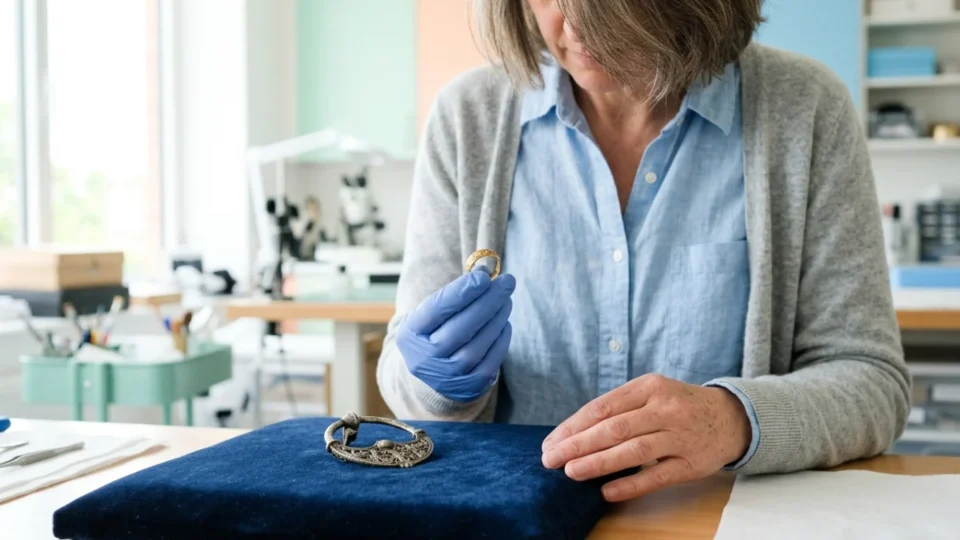
Two historical artefacts over 300 years old, including a post-medieval gold posy ring inscribed with a romantic hidden message and a medieval silver brooch, have been officially gifted to the Museum of Liverpool following their discovery on building land in the North West. Unearthed by authorised metal detectorists on property owned by housebuilder Persimmon Homes North West, both items legally qualify as national treasure due to their age and precious metal content.
Instead of claiming a statutory cash payout, the finders and the housing developer chose to waive all financial compensation. Their decision allowed the objects to enter the permanent public collection without draining regional museum acquisition funds.
The discovery offers an intimate glimpse into centuries of personal relationships in the region, bringing forgotten voices back to life through delicate metalwork.
The 400-Year-Old Love Message Hidden in Gold
The highlight of the recovery is an enamelled gold “posy” ring dating from the post-medieval period, approximately AD 1550 to 1650. The exterior displays decorative floral motifs, while the interior band conceals a poignant phrase: “+ FAVER AS I FINDE”. Experts translate this sentiment roughly to “I love you just as I find you.”
Posy rings derived their name from the French word poésie (poetry) and were commonly traded as intimate tokens of affection, courtship, or marriage across Britain between the 15th and 17th centuries.
Alongside the ring, detectorists retrieved an older piece of personal adornment: a medieval silver annular brooch dating to approximately AD 1250 to 1350. The piece features a distinct rope-like ornamentation around one face, though its fastening pin has been lost to time.
“Objects like this ring and brooch can tell us more about people who were living in Merseyside in the past. It is brilliant to be able to care for this Treasure in the Regional Archaeology collection.”
How the Treasure Act 1996 Guided the Discovery
A widespread misconception is that historical finds automatically belong entirely to whoever uncovers them. Under British law, strict legal protocols govern how ancient items are handled, assessed, and conserved.
The Statutory Route from Soil to Display
The journey from an active construction property to a museum gallery follows a rigid legal framework set by Parliament:

- Precious Metal Verification: Under the Treasure Act 1996, any found metallic item at least 300 years old containing at least 10% precious metal (such as gold or silver) officially constitutes treasure.
- Mandatory Notification: The discovery must be reported promptly to the local Portable Antiquities Scheme Finds Liaison Officer.
- Valuation Process: Finds are typically assessed, with an independent valuation split equally between the landowner and the finder if a museum purchases the items.
- Public Transfer: Finders and landowners retain the legal right to waive the cash reward, allowing items to pass as gifts directly into public hands.
Because both the detectorists and Persimmon Homes North West declined monetary rewards, the Museum of Liverpool took immediate stewardship of the historical pieces.
| Artefact | Estimated Period |
|---|---|
| Silver Annular Brooch | Medieval (AD 1250–1350) |
| Gold Posy Ring | Post-Medieval (AD 1550–1650) |
Preserving Regional Heritage for the Public
The ring and brooch have been placed on public view as part of the Museum of Liverpool’s major exhibition, Treasure: History Unearthed, running until March 29, 2026. The display tracks centuries of lost items uncovered throughout the regional landscape.
“We are delighted to have donated these artefacts to the specialists at the Museum of Liverpool so their stories can be told, and people can enjoy an interesting piece of local history.”
Their preservation ensures that early craftsmanship and expressions of domestic affection remain accessible to thousands of visitors exploring regional history.
🔍 The delicate inscription inside the gold band proves that personal sentiments have changed very little across four centuries of British history.
💡 Responsible metal detecting and prompt reporting under the Portable Antiquities Scheme remain essential tools for saving vulnerable heritage from being lost forever.
📌 Have you ever visited the Treasure exhibition or discovered an unusual historical piece? Share your thoughts in the comments below.