
TL;DR: Silver has returned above $60 as growing optimism over a Strait of Hormuz reopening pulls oil lower, reshapes Fed rate expectations, and drags Treasury yields down — with silver carrying an extra industrial-demand tailwind gold doesn’t have.
A Broad Precious Metals Rally, With a Deeper Driver
Silver has returned above $60, joining gold in a broad precious metals rally as investors increasingly bet the inflation shock from the Middle East may prove less severe than feared just a week ago. The immediate catalyst has been growing optimism that the Strait of Hormuz could reopen in the near future, easing concerns over global energy supplies. But the real driver behind silver’s renewed strength lies one step further down the chain: falling oil prices are rapidly reshaping Federal Reserve expectations, pulling Treasury yields lower and giving precious metals fresh room to advance.
This move is unfolding alongside record highs in US equities and improving risk sentiment — a combination that’s particularly constructive for silver, which benefits not only from monetary easing expectations but also from the prospect of stronger industrial demand if global trade disruptions begin to ease.
Markets Are Pricing Probability, Not Confirmation
Investor optimism has steadily grown following comments from US Treasury Secretary Scott Bessent that an agreement to reopen the Strait of Hormuz could be reached as early as this week. Since then, reports have suggested negotiations are progressing. A senior Middle East diplomat indicated the United States and European countries are pressing Oman to help finalize a temporary arrangement with Iran, while a senior Pakistani official said a reopening document is close to completion. Separately, US Central Command emphasized that commercial traffic through the southern shipping lane has remained operational despite Iranian harassment.
None of these developments confirms the Strait is about to reopen permanently. Iran has yet to publicly endorse such an agreement, and previous episodes have shown how quickly optimistic headlines can unravel. Nevertheless, financial markets rarely wait for certainty — they price changing probabilities, and those probabilities have shifted enough to trigger a broad reassessment across asset classes.
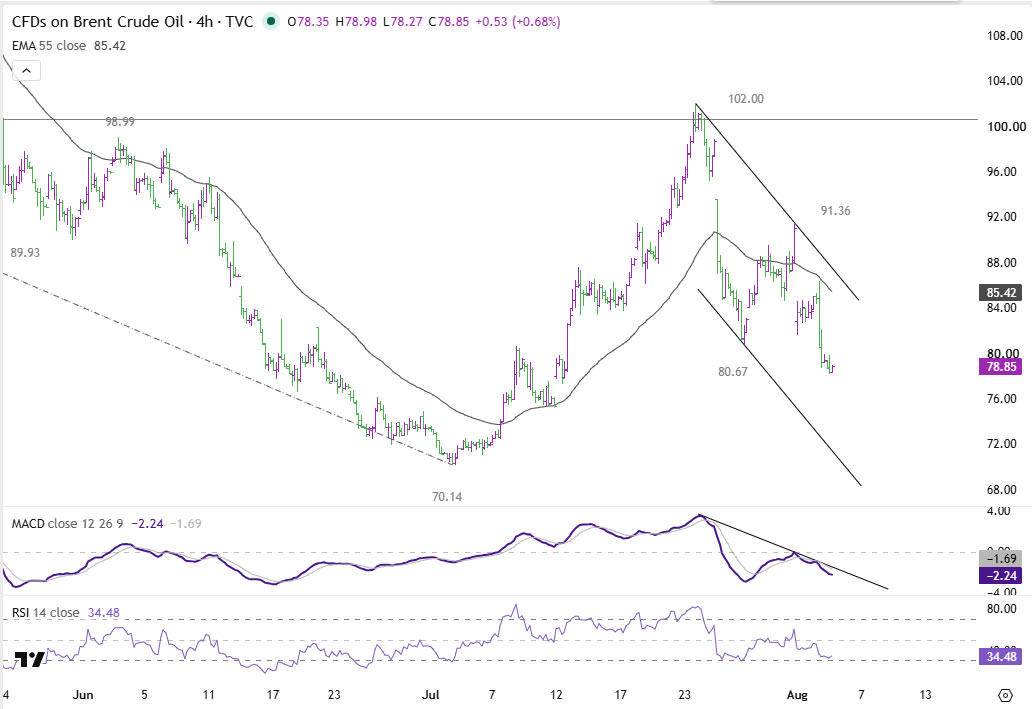
That reassessment is evident in oil markets. Brent has broken below $80 after trading above $100 in late July, although the decline has slowed around the $78 area, suggesting traders still see meaningful geopolitical risk. Equity markets have been quicker to embrace the improving outlook, with the Dow Jones Industrial Average climbing to fresh record highs as investors look beyond the immediate conflict toward a normalization of global trade flows.
From Oil to the Fed: The Transmission Mechanism
For silver, the decline in oil prices matters less because of cheaper energy itself and more because of what it implies for inflation and monetary policy.
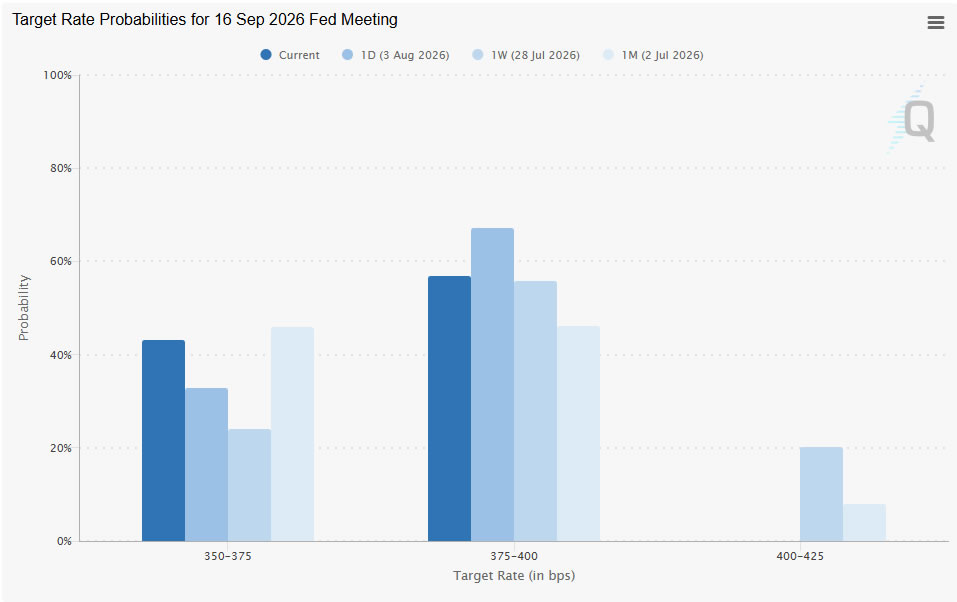
Only a week ago, markets were still assigning around a 20% probability that the Fed could deliver two additional rate hikes this year as surging oil prices threatened to reignite inflation. That tail risk has now disappeared completely. Even over the past 24 hours, expectations have shifted noticeably, with the probability of the Fed holding rates unchanged in September rising from roughly 33% to 43%, while expectations for one hike have moved lower.
Comparing four snapshots for the September 16 meeting shows the shift clearly:
- 1 month ago (Jul 2): ~46% hold, ~46% one hike, ~8% two hikes.
- 1 week ago (Jul 28): ~24% hold, ~56% one hike, ~20% two hikes.
- 1 day ago (Aug 3): ~33% hold, ~67% one hike, 0% two hikes.
- Right now: ~43% hold, ~57% one hike, 0% two hikes.
Treasury markets have responded in kind. The US 10-year yield has retreated from around 4.75% to 4.63% this week, easing one of the most important headwinds for precious metals. If the Hormuz situation continues to improve and energy prices remain contained, markets are likely to see less need for additional Fed tightening, providing further support for gold and silver through lower real yields.
Why Silver Has an Extra Tailwind Gold Doesn’t
Gold and silver share the same monetary drivers — both tend to benefit when yields fall and the Dollar softens. But silver enjoys an additional advantage that could become increasingly important if the current geopolitical narrative continues to improve.
A credible reopening of the Strait of Hormuz would not only reduce inflation fears but could also improve expectations for global manufacturing, trade, and industrial production. That matters far more for silver than for gold, because roughly half of silver demand comes from industrial applications. In other words, the same development that encourages investors to buy precious metals through lower yields could simultaneously strengthen silver’s underlying physical demand outlook.
That helps explain why silver has recovered so quickly from its recent consolidation, and why its technical picture now appears increasingly constructive.
ActionForex’s Technical View on Silver
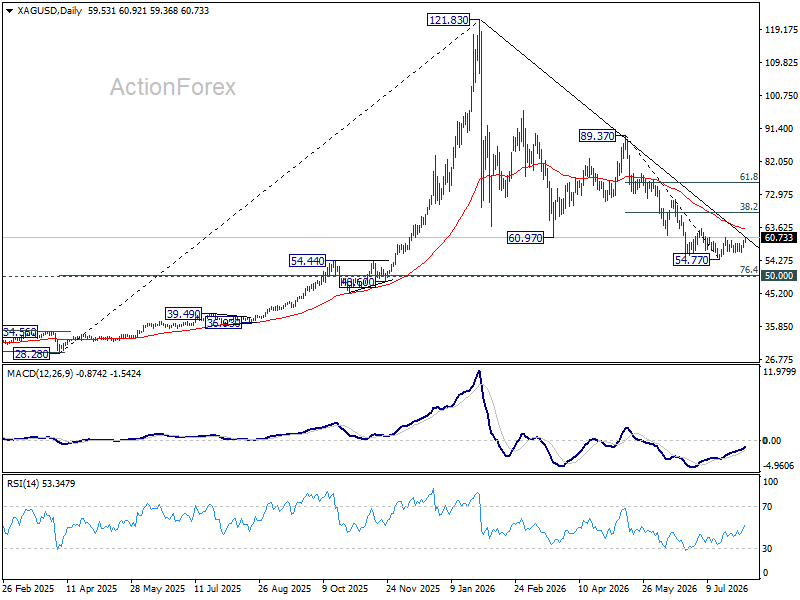
Technically, price action suggests the consolidation from 60.92 likely ended at 56.54, keeping the rebound from 54.77 intact. The immediate hurdle is a decisive break above 60.92. Such a move would target the 100% projection of 54.77 to 60.92 from 56.54, at 62.69, and strengthen the case that buyers have regained control.
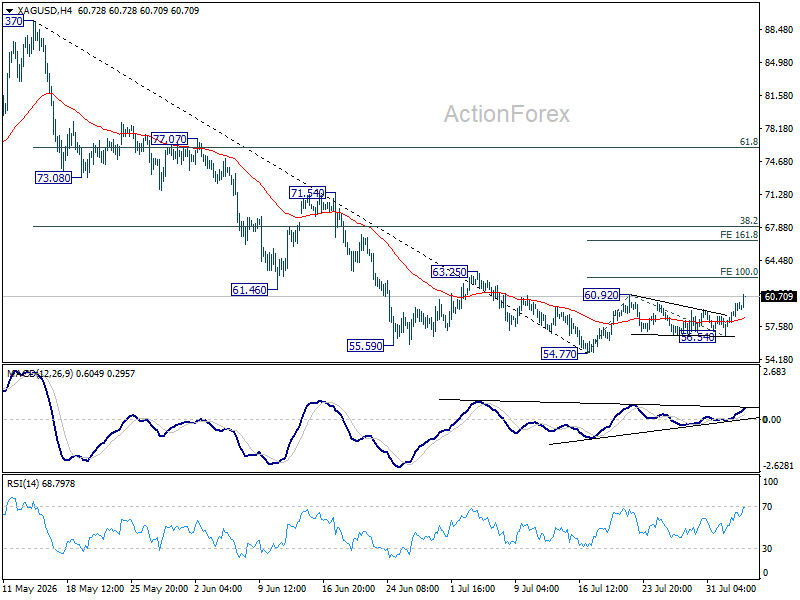
Momentum indicators also deserve close attention — a clean break in the four-hour MACD above its trend line would reinforce the near-term bullish outlook. If 62.69 gives way, the rally could extend toward the 161.8% projection at 66.49, signaling the advance from 54.77 is evolving into an impulsive move.
Even then, the bigger picture argues for patience. As long as 67.98 — the 38.2% retracement of the decline from 89.37 to 54.77 — remains intact, the current rally is still best viewed as part of a medium-term corrective structure rather than confirmation of a new secular uptrend. The macro backdrop has turned more supportive, but silver bulls still need both geopolitical progress and technical confirmation before declaring a decisive reversal.
Key Takeaways
- Silver’s rally above $60 is driven less by Hormuz optimism itself and more by what falling oil implies for Fed policy and Treasury yields.
- The probability of two Fed hikes this year has dropped from 20% a week ago to 0% currently, with hold probability for September rising from 33% to 43% in just 24 hours.
- The 10-year Treasury yield has fallen from 4.75% to 4.63% this week, removing one of the key headwinds for precious metals.
- Silver carries an added tailwind over gold: roughly half its demand is industrial, so easing trade disruption fears supports both investment and physical demand.
- A decisive break above 60.92 targets 62.69 and then 66.49, but the rally remains a corrective structure, not a confirmed secular uptrend, as long as 67.98 resistance holds.