
Quick overview
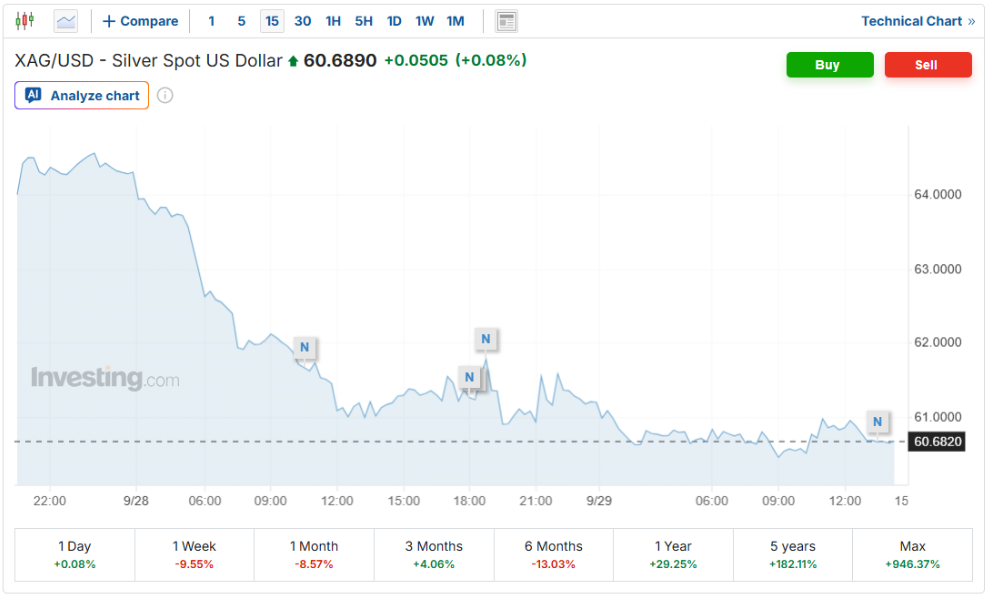
- Silver prices fell to $60.30, marking the lowest level since August 5, with a bearish trend indicated by technical reports.
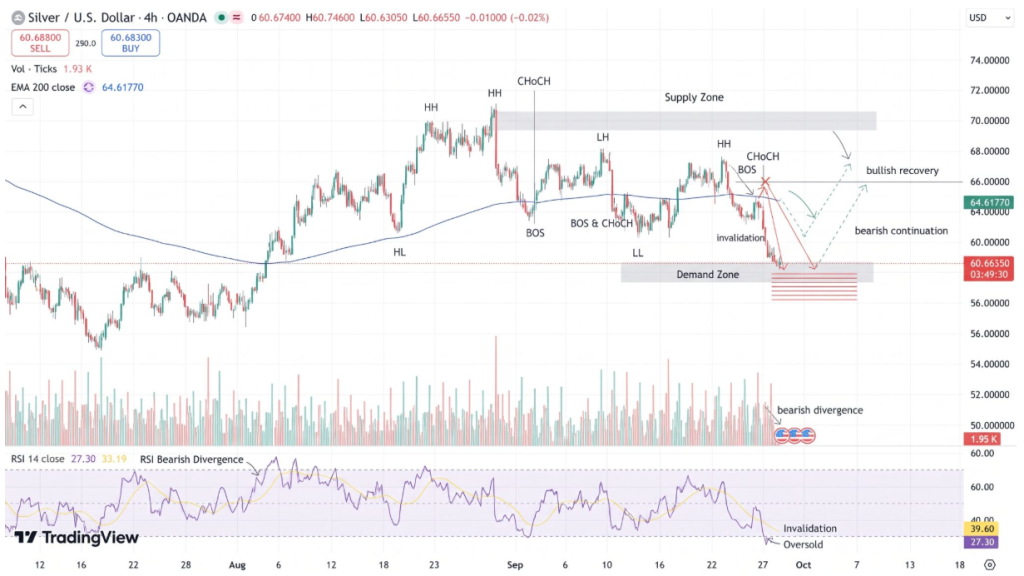
- Resistance levels for silver are identified at $61, $61.80-85, and $62.40-45, while support levels are at $60, $59.35-40, and $56.55-60.
- The Relative Strength Index (RSI) is at 28, suggesting oversold conditions, but this does not guarantee a buying opportunity.
- Silver demand is influenced by factors such as interest rates and the strength of the US dollar, with a need for sustained buying to overcome resistance.
Silver fell to $60.30 on Tuesday, its lowest level since August 5. Prices were trading just above $61 on Tuesday. According to various technical reports, the Relative Strength Index was at around 28, and the MACD was negative. All of this means that the selling pressure has eased, but the trend remains bearish.
Silver Support and Resistance Levels
The reported technical analysis sets various price levels:
- First resistance at $61
- Further resistance at $61.80-85
- Higher resistance at $62.40-45
- First support at $60
- Further support at $59.35-40
- Lower support at $56.55-60
Buying and selling at these levels is not certain. Traders should look for price congestion at these levels. Support and resistance levels also apply to other assets. Currently, traders should focus on the spot price. Futures prices are also influenced by these levels, but the price at which the contract is delivered will differ from the spot price. The delivery months for futures contracts also vary. It is important for investors to understand the terms of the contracts they are trading.
Oversold RSI Does Not Confirm a Bottom
The RSI calculates the speed and direction of a move, and sets a reading between 0 and 100. A reading below 30 is generally considered oversold. Being oversold, however, does not mean a security is undervalued and therefore, not a buy-signal.
RSI can stay in oversold territory for long periods of time in a trend. The strength of the most recent price move is easier to decipher by examing the RSI.
A move in the opposite direction can be caused by short sellers covering their positions. That buying, however, will not sustain an improving trend if there is not also new, and larger, buying by other market participants.
Useful confirmation would include:
- A move to a new high
- Closing prices above the previous resistance levels.
- The trend improving along with the RSI.
Dollar and Rates Shape Silver Demand
Silver can be considered an investment and an industry metal. Changes in interest rates, currency rates, the state of the global economy, and manufacturing can affect the price of Silver.
A high US dollar index makes Silver more expensive for countries that deal in other currencies. Also, as real rates increase, so does the opportunity cost of holding a non-yielding metal like Silver.
I see Silver having a high capacity to absorb industrial and commercial demand including electrical and electronics. However, the metal is still prone to supply and demand conditions in the financial market.
Conclusion
Silver’s recent appreciation is positive but a lot more is needed before we can declare an uptrend. Buyers need to sustain the price to overcome the resistance level and defend the gained level from sellers. Until Silver’s price and the trend are positively aligned, sellers should be assumed dominant.

Arslan Ali Butt
Lead Markets Analyst – Multi-Asset (FX, Commodities, Crypto)
Arslan Ali Butt serves as the Lead Commodities and Indices Analyst, bringing a wealth of expertise to the field. With an MBA in Behavioral Finance and active progress towards a Ph.D., Arslan possesses a deep understanding of market dynamics.
His professional journey includes a significant role as a senior analyst at a leading brokerage firm, complementing his extensive experience as a market analyst and day trader. Adept in educating others, Arslan has a commendable track record as an instructor and public speaker.
His incisive analyses, particularly within the realms of cryptocurrency and forex markets, are showcased across esteemed financial publications such as ForexCrunch, InsideBitcoins, and EconomyWatch, solidifying his reputation in the financial community.