
I lost my beloved mother a year ago. In some ways, I am grateful she is not alive to see what has become of the country she loved so deeply.
My mother was a patriot in the most earnest and unfashionable sense of the word. She stood for O Canada at every hockey game, every figure skating event, every Olympic broadcast. She would sing O Canada loudly in public, often much to my embarrassment. When I moved to the United States for school, she warned me that I had to return, basically on pain of death. She believed in public education, universal healthcare, civility, pluralism, and the quiet decency that Canadians liked to imagine set us apart. She believed Canada was, fundamentally, a good country. Particularly in comparison to our neighbours to the South.
Today, I am not so sure.
Or perhaps the problem is that she (and perhaps we) mistook our collective mythology for history.
Canada’s 21st century self-image has always rested on a comforting narrative: that we are kinder than others, more tolerant than others, less susceptible to the uglier currents of nationalism and prejudice. When I was last there, the war museum in Ottawa proudly displayed a picture of the liberation of Buchenwald in its World War Two section, with a quote about this being “why we fought the war.” Revisionist history at its finest. Not only was the plight of the Jews irrelevant to Canadian involvement in the war, when Jews were desperately attempting to flee Europe, Canada famously proclaimed that “None is too many.” The collective mythology of long-held kindness is just that — a myth. Particularly when it comes to Jews. Indeed, a poll held in 1948 revealed that Canadians preferred former SS officers to Holocaust survivors as immigrants – under the guise of survivors being “too traumatized” to be economically and socially productive. We tell ourselves that was a different country, a darker chapter long since closed.
But history has a way of resurfacing when it is forgotten.
For decades, Canadians debated what it meant to be Canadian. Politicians, academics, and educators celebrated the idea of the “cultural mosaic”—a nation of many peoples, faiths, and traditions living side by side. It was an appealing vision. But a mosaic cannot hold together on diversity alone. It requires a shared commitment to certain values and a willingness to defend them.
Today, it is increasingly difficult to identify what those values are.
Perhaps our leadership’s insistence on refusing to define some sense of national identity has led to the erosion of the social norms and shared social contract that once tenuously held us together. Or perhaps this is just a return to form, an end of the temporary aberration of social tolerance and respect.
A fourteen-year-old Jewish girl is currently missing in Toronto, and posters with her face and requests for information are being ripped down. Because she is Jewish. The justification is always ready at hand: it is not antisemitism, merely opposition to Israel. As though a fourteen-year-old autistic child bears responsibility for the policies of a foreign government.
Day school enrollment in Toronto has never been higher (okay, I might be speaking anecdotally about ‘never’) as parents deal with the rampant antisemitism present in the TDSB. This antisemitism is hardly new, even before October 7th; in 2021, a Jewish TDSB trustee identified antisemitic materials in the TDSB curriculum and found herself potentially out of a job. The TDSB has now adopted a resolution against ‘anti-Palestinian racism’ which allows – at its broadest interpretation – even claims for the rightful existence of the State of Israel to be reinterpreted as APR. Federation here in Toronto is desperately pushing schools to build more space, take more students. There is simply not enough places in Jewish education, Jewish space, to be found here anymore. Such is the fear.
We Canadian Jews, who once marveled (in a negative way) at the required police presence at French synagogues, now live behind a wall of armed officers ourselves.
In Montreal this weekend, a life-sized doll dressed as a Jew was burned in effigy.
Canada’s intelligence service has warned of the growing possibility of a mass-casualty attack targeting Jews.
These are not isolated incidents. They are symptoms.
A few weeks ago, I was sitting quietly at work when flashing police lights appeared outside the window to my immediate left. Seconds later, twenty officers in body armor, carrying rifles and wearing tactical gear, came running toward the building. For one terrible moment, every communal fear felt real. My stomach dropped. My pulse raced. I couldn’t help but think: this is it.
It was only a training exercise.
The relief was immediate. The realization lingered longer: my first assumption of attack or crisis had not been irrational or internalized paranoia. It had been entirely plausible.
That, perhaps, is the most damning indictment of all.
A country should not leave its Jewish citizens wondering whether the next siren, the next police deployment, or the next emergency alert concerns them. A country should not tolerate the normalization of rhetoric and imagery that would be instantly condemned if directed at almost any other minority. A country should not allow hatred of one of its minorities to be reframed as morality. A country should not ask its Jews to accept fear as the price of participation in public life.
And at the very least, the Jewish community of a country should expect better from its leader: while protestors in Montreal burned a ‘Jew’ in effigy, our PM tweeted about Israel. That is some cold comfort to the Jewish community that represents less than 1% of the Canadian population but is the target of over 70% of its hate crimes.
My mother believed Canada was better than this.
I wish I could still say she was right.
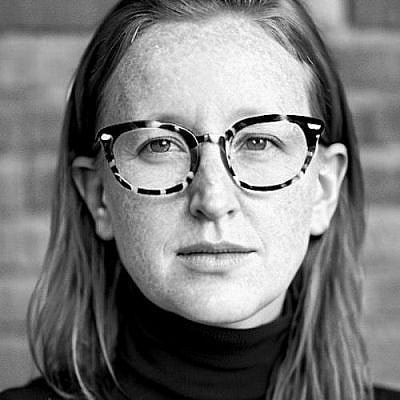
Dr. Alexandria Fanjoy Silver has a B.A. from Queen’s University, an MA/ MA from Brandeis and a PhD from the University of Toronto (all in history and education). She lives in Toronto with her husband and three children, and works as a Jewish history teacher. She writes about Jewish food history on Substack @bitesizedhistory and talks about Israeli history on Insta @historywithAFS.