
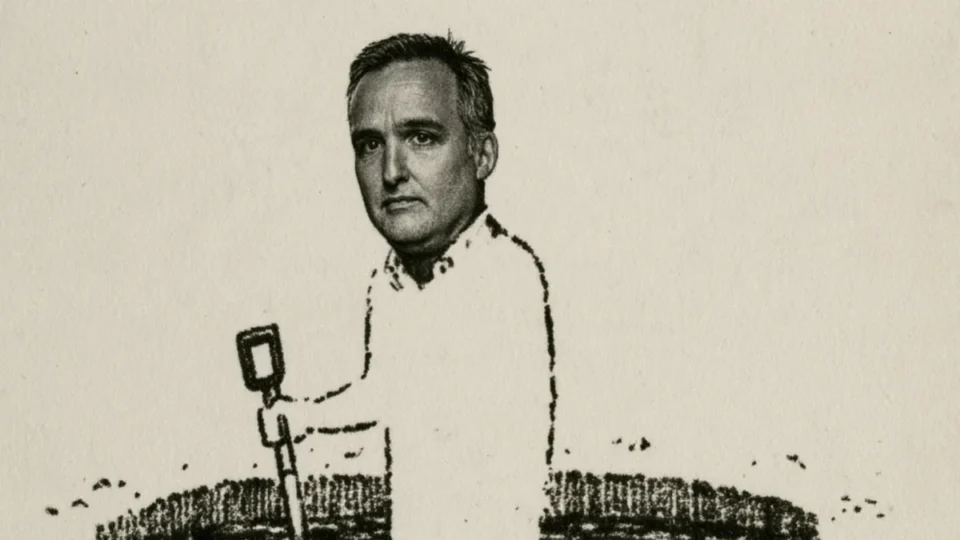
People who run hedge funds can be intense and sometimes volatile. They can also be exceptional humans. The two things are not mutually exclusive, but in the London hedge fund universe, no one has a bad word to say about Diego Megia, whose niceness is renowned.
💥Follow us on WhatsApp for news alerts.💥
“He’s lovely,” says one headhunter. “He is a legend,” says one portfolio manager. Megia is widely held to combine talent, humility and approachability. He is a “good person.”
It’s unfortunate, then, that Megia is having a difficult year. His fund, Taula Capital Management, reportedly fell 9.6% between March 1st and 20th following the outbreak of the Iran war. In early August, Taula had recovered some ground and was down only 5% or so. More recently, there are unconfirmed rumours that it’s down more again.
This has not been confirmed by Taula itself, which declined to comment for this article. But given that Taula was founded with $3bn in capital from Millennium, there is speculation that Millennium could at some point impose a stop-loss on its share of Taula’s circa $8.5bn of assets under management (AUM). Millennium declined to comment for this article. It’s not clear how Millennium treats losses at the external managers it’s invested in, but the fund has a reputation for imposing strict conditions on its own portfolio managers, who are thought to have their capital allocations cut in half if they lose 5% and removed entirely if they lose 7.5% or more. One source with knowledge of Millennium’s operations said these risk limits are applied to external managers too.
Millennium’s strict approach to losses almost certainly explains why Taula raised an additional $1.75bn in April, at which point its AUM were reported to be $8.5bn+. Five months ago, therefore, 65% of Taula’s assets were from investors other than the Millennium mother ship. At launch in 2024, 60% of Taula’s $5bn in assets came from Millennium.
Megia himself also came from Millennium, where he was a senior portfolio manager for five and a half years, having previously worked for Citadel and Barclays. He founded Taula with 25 other ex-Millennium people, including deputy CIO Stefan Ericsson, whom Millennium allegedly lured from Citadel with a $50m package.
Since then, Taula has made additional hires. They include Mehdi Belhachmi, a Morgan Stanley volatility trader who was expected to join Goldman Sachs and was being pursued by multiple other funds, but who chose Taula last year. Lewis Morton, the former star trader at ill-fated Eisler Capital, also joined Taula last year. Both he and Ericsson are based in Jersey.
Some of Taula’s woes in 2026 are externally imposed. The fund is focused on macro trading, and macro traders have had a challenging year versus funds focused on equities and commodities. Taula has been adding portfolio managers in the broader macro space, but it’s also been labouring against the long non-competes that elongate the portfolio manager hiring process. Alex McCaffrey, another ex-Barclays trader, for example, joined Taula only in late July 2026 after leaving Citadel in April 2025.
McCaffrey was a senior portfolio manager at Citadel. When new hires get up to speed, Taula’s performance may be expected to improve. The latest performance figures are expected to be released at the end of this month.
In the meantime, there is some whispering in the market that some of Taula’s PMs might be exploring other options. This is unconfirmed, but it’s not difficult to see why this might be the case. Two years ago, Millennium explained what happens there when portfolio managers lose money: “Generally the losses are carried forward and past losses must be made up before performance-based compensation becomes payable in subsequent years…” There are no bonuses until losses are covered.
Some Taula PMs have left already. Mike Jun Xu left for Jupiter Research Capital in New York in late 2025. Samuele Grosso went to Bank of America in June ’26. Matteo Sardo went to Point72 around the same time.
Taula may yet rebound. Megia’s supporters are certain that it will. Other macro hedge funds, like Rokos Capital Management, are also known for their volatility, although Rokos rose during the chaos of March. Megia himself didn’t respond to a request to comment for this article, but is said to be running a steady ship.
Megia has funded a foundation he set up with his wife to research a cure for cancer after she was diagnosed with multiple myeloma aged 37 in 2008. “Good things happen to good people,” says one portfolio manager who knows him. “Diego always comes out on top.”
Follow me on X. Follow me on LinkedIn.
Have a confidential story, tip, or comment you’d like to share? Contact: +44 7537 182250 (SMS, Whatsapp or voicemail). Telegram: @SarahButcher. Signal: sarahbutcher.22 Click here to fill in our anonymous form, or email editortips@efinancialcareers.com.
Bear with us if you leave a comment at the bottom of this article: comments are moderated intermittently by human beings. Sometimes these humans might be asleep, or away from their desks, so it may take a while for your comment to appear. You must take sole responsibility for comments you post on this site. We will take reasonable steps to weed out anything that we consider to be offensive or inappropriate.