
.jpg)
Why systematic access is becoming critical for finding tomorrow’s winners in investment. The following article is aimed at family offices and comes from Investigate VC.
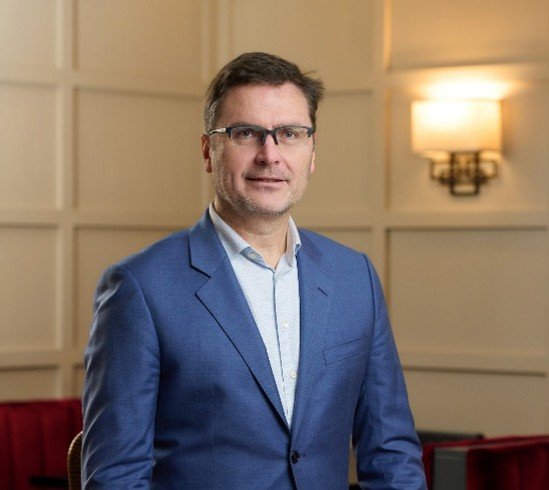
The following article is from Mikael Krogh (pictured),
founder of Investigate VC. (To
see previous articles from the firm, click,
here,
here and
here.) The customary editorial disclaimers apply. To comment,
email tom.burroughes@wealthbriefing.com
and amanda.cheesley@clearviewpublishing.com
Family offices have capital. They have networks. They have
relationships, experience, and the ability to invest with a
long-term perspective.
But none of that guarantees that they will see tomorrow’s
winners. That is the uncomfortable reality facing investors
today.
Innovation is increasingly global. New companies are emerging
from universities, accelerators, founder communities, and
technology ecosystems around the world. Industries are
converging, technologies developed in one sector are transforming
another, and some of tomorrow’s most important companies will
emerge far outside the networks where investors traditionally
look for opportunities.
If your investment process starts with the companies and
opportunities already within your network, you are starting too
late. The biggest risk is not choosing the wrong company from the
opportunities you see. It is never seeing the right company in
the first place.
Capital gets you into the game. Access determines what
you see.
In our Future Wealth Creation Study, we introduced the
Value Migration Framework to describe five structural shifts
changing where future wealth will be created.
One of those shifts is from Capital to
Access.
But access needs to be redefined.
It is not about belonging to the right club, attending the right
conference, or knowing the right people. Family offices are
already exceptionally good at building relationships and
networks.
The challenge is building systematic access to the intelligence,
expertise, ecosystems, and investment opportunities required to
find tomorrow’s winners.
Traditional investment networks are relationship-driven. Someone
knows a founder. A trusted advisor introduces a fund. A
co-investor shares an opportunity. A company appears through an
existing sector or geographic network.
Those relationships remain valuable. But they also define what
you see. And tomorrow’s winners will not necessarily emerge
inside those boundaries. A transformative logistics company may
emerge from technology developed for aerospace. Computer vision
developed in one industry may unlock an entirely new opportunity
in agriculture. A company solving an important European
industrial problem may come from a founder ecosystem in
Singapore, India, or the US.
If your investment process starts with the companies already
within reach, your network is defining your opportunity universe.
That is no longer enough.
Stop measuring deal flow. Start measuring what you are
missing. Venture capital has traditionally celebrated deal
flow, particularly proprietary deal flow. I think we need to
challenge that idea.
The important question is not: How many deals are you
seeing?
It is: How much of the relevant opportunity universe are
you seeing?
There is a fundamental difference.
A manager can see hundreds or thousands of companies and still
miss the opportunities that matter. More deal flow does not
necessarily create better investment decisions if it is
concentrated within the same industries, geographies,
relationships, and assumptions.
The investment process should work in the opposite direction.
First determine where industries are transforming and where value
is moving. Then identify the opportunity spaces emerging from
that transformation. Only then should you systematically search
for the companies positioned to capture that value.
At Investigate VC, we developed Sector Twin to help us understand
the DNA of an industry, analyse the forces transforming it,
identify where value could migrate, and define the opportunity
spaces that transformation creates.
We are not simply using AI to find more companies. We are using
AI to develop a better understanding of which companies we should
be looking for in the first place.
But knowing what to look for only solves half the problem. You
still have to find them.
Intelligence tells you where to look. Access gets you
there.
Take logistics. Saying that “AI will transform logistics” is not
an investment thesis. It is a trend.
The investment questions start one level deeper. Which parts of
the industry will actually change? Which bottlenecks could
disappear? Where will costs fall? What new capabilities become
possible? Where will new value be created? And what kind of
company is positioned to capture it?
Once you have answered those questions, the investment process
changes. You no longer wait for an AI logistics company to enter
your network. You go looking for it. That search should extend
across industries, technologies, geographies, universities,
accelerators, venture ecosystems, and founder communities.
This is where technology fundamentally changes what is
possible.
AI gives investment teams the ability to analyse information at a
scale that was previously impossible. But breadth alone is not
enough. The search has to be focused on the opportunities that
matter. That is why systematic access needs three things:
breadth, relevance, and continuity.
Breadth means looking beyond existing relationships and
geographies. Relevance means directing that search towards the
opportunity spaces where you believe future value will be
created. Continuity means turning access into a repeatable
investment capability rather than depending on occasional
introductions and individual relationships.
When that happens, access stops being another word for
networking. It becomes investment infrastructure.
Tomorrow’s winners are global
This is particularly important in venture capital because the
opportunity universe is enormous and fragmented. Tomorrow’s
winners are being created across universities, accelerators,
founder communities, research institutions, and innovation
ecosystems globally. Some will sit outside established investment
networks. Others will emerge from industries, technologies, or
geographies far removed from where an investor would
traditionally look.
No family office, no venture fund can build personal
relationships across that entire universe. It needs a system.
At Investigate VC, our approach starts with intelligence. Sector
Twin helps us understand where industries are transforming and
identify the opportunity spaces we want to investigate.
We then combine that intelligence with systematic global
sourcing, including access to Antler’s global startup ecosystem,
to search for companies positioned within those spaces. Sector
expertise and human investment judgment determine which
opportunities deserve deeper investigation and ultimately which
companies we back.
The sequence matters.
Intelligence tells us where to look. Access allows us to
find the relevant companies. Human judgment determines what we
back.
That is very different from waiting for the next interesting
company to arrive through the network.
Ask your VC manager a different question
This has implications for family offices investing through
venture managers. Track record matters. Sector expertise matters.
Networks matter. Access to founders matters.
But family offices should demand more.
Do not only ask a VC manager what deals they have access to. Ask
them how they decide where to look before those deals arrive.
Ask how they identify industries undergoing structural
transformation. Ask how they determine where value is moving. Ask
how far beyond their existing network they can search. And ask
what system they have for finding companies that are not already
part of their traditional deal flow.
Because having access to a company is valuable only if it is a
company worth finding in the first place. A strong network
can give you access to excellent companies. A strong investment
system should also help you find the companies your network does
not yet know exist.
The opportunity you never saw
Capital remains an enormous advantage for family offices. So do
relationships, entrepreneurial experience, sector knowledge, and
the ability to think across generations.
The answer is not to replace those advantages. It is to make them
more powerful.
AI can expand the intelligence available to investors. Technology
can dramatically increase the universe they can analyse. Global
ecosystems can expand the companies they can reach. Human
judgment can then focus that expanded opportunity universe on the
companies with the greatest potential to participate in future
value creation.
This changes what access means.
Access is no longer simply about whether you can get into a
particular deal. It is about whether your investment process
gives you a systematic way of finding the right
opportunities before they become obvious.
Money determines whether you can invest. Access
determines what you get the opportunity to invest
in.
And for family offices looking for tomorrow’s winners, the
greatest missed opportunity may be the company that never entered
their network in the first place.
________________________________________
About the Study
This article draws on findings from The Future Wealth
Creation Study 2026, a global research initiative conducted
by Investigate VC exploring how Family Office CIOs think about
future wealth creation. (To view the report,
see here.)
The study was conducted using a panel of 1,000 AI-generated
family office CIO profiles designed to reflect the diversity of
the global family office ecosystem across geographies, investment
styles, sizes, and wealth origins. This approach, often referred
to as synthetic research, uses advanced AI models to simulate how
specific groups of decision-makers may evaluate opportunities,
risks, and future scenarios.
The research reflects how Investigate VC approaches investing.
The firm combines proprietary AI research with access to global
startup ecosystems, including Antler, to identify where value is
moving before it becomes obvious. Investigate VC is currently
raising a $150 million venture fund focused on backing founders
at the intersection of industry transformation and future value
creation.