
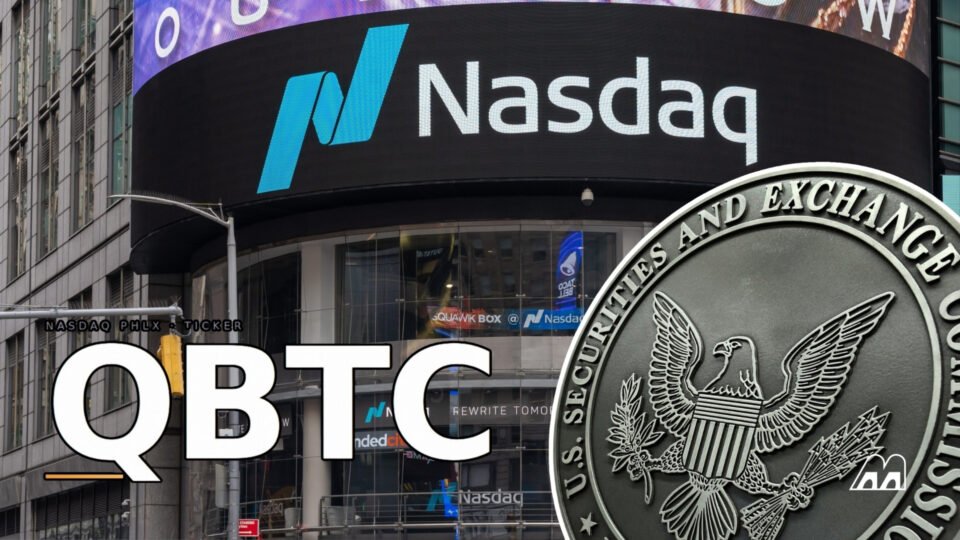
The SEC just handed Nasdaq a milestone approval. Bitcoin index options are coming to a mainstream US exchange for the first time. On May 22, 2026, the SEC cleared Nasdaq PHLX — the Philadelphia Stock Exchange arm of Nasdaq — to list options on the Nasdaq Bitcoin Index. The contract trades under the ticker QBTC. If you’ve never bought crypto but follow financial markets, this one is worth understanding. Here’s what got approved, why it differs from Bitcoin ETFs, and what hurdles remain before trading starts.
What Are These Options?
An options contract lets you bet on whether an asset’s price goes up or down. You don’t need to own the asset to do it. Think of it like buying the right to sell your house at a fixed price — even if the market crashes.
QBTC works the same way, but the underlying asset is Bitcoin’s price. Each contract tracks one-hundredth of the CME CF Bitcoin Real Time Index, or BRTI. That benchmark pulls pricing data from eight regulated crypto exchanges and updates every 200 milliseconds. The contracts are also cash-settled. When you close a position, you get paid — or you pay — the difference in US dollars. No Bitcoin wallets, no custody accounts, no seed phrases required.

That’s what makes QBTC structurally different. It brings Bitcoin volatility trading inside the standard equity options infrastructure. That’s the same system where hedge funds, pension managers, and retail traders already operate every day. The SEC’s full approval order — Release No. 34-105549, filed under SR-PHLX-2025-50 — is publicly available if you want the exact contract mechanics.
Why This Is Different from Bitcoin ETFs
The SEC approved spot Bitcoin ETFs (exchange-traded funds) in January 2024. They quickly pulled in billions. But ETFs only solved part of the problem. They made it easier to own Bitcoin. They didn’t give sophisticated investors the tools to hedge that exposure or trade volatility directly.
That’s the gap QBTC fills. If you already hold ETFs like BlackRock’s IBIT, you can now hold QBTC contracts in the same brokerage account. The margin framework is identical to what you’d use for Apple stock or S&P 500 options. Industry analysts describe QBTC as the final piece of the institutional Bitcoin toolkit. Spot ETFs, ETF options, and now index derivatives are all approved. Large funds now have almost every tool traditionally available for gold or equity indices.

There’s also a size difference worth noting. CME’s Bitcoin options have existed since 2020. They’re futures-style contracts representing five Bitcoins each — and they require a separate derivatives account. QBTC contracts represent exposure to just one Bitcoin. They trade through standard brokerage accounts with a $100 multiplier. That keeps the notional value within reach of retail investors already familiar with SPX or NDX index options.
Nasdaq built this infrastructure in partnership with CF Benchmarks. Their index methodology underpins the product. It’s a deliberate, multi-year effort. And Nasdaq’s role in crypto markets extends beyond this single approval. Earlier this year, Polymarket — the prediction market platform — partnered with Nasdaq on data infrastructure. It’s a signal of how broadly the exchange is positioning itself between traditional finance and crypto-native platforms.
The One Catch: CFTC Still Has to Say Yes
Here’s the important caveat: the SEC approval does not mean QBTC starts trading tomorrow.
Bitcoin is classified as a commodity in the US — not a security. That means the Commodity Futures Trading Commission (CFTC) also holds oversight authority over Bitcoin derivatives. The CFTC must grant what’s called exemptive relief before QBTC can go live.
The Options Clearing Corporation (OCC) must also act. It’s the clearinghouse that processed 15.2 billion options contracts in 2025 — including 1.45 billion in April 2026 alone. The OCC must update its Options Disclosure Document before QBTC trading can begin.
The CFTC hasn’t announced a timeline yet. Historical precedents range from 30 days to nine months. It depends on whether the agency fast-tracks the exemption or opens its own comment period. The SEC cited Dodd-Frank Section 717 in its order. That provision confirms both agencies share jurisdiction over Bitcoin derivatives — the legal groundwork for coordinated clearance.
A Faster Clock Under Atkins
The filing moved from submission to approval in nine months. That’s unusually fast for a novel derivative product. For comparison, spot Bitcoin ETF approval took roughly four years from first filing to green light.
That speed reflects a different regulatory posture. SEC Chairman Paul Atkins has been explicit about the direction. In a May 8, 2026, address, Atkins stated: “The experience of the offshore growth and implosion of FTX demonstrates the folly of pretending that Americans will not be harmed if we do not address innovative technologies.” QBTC’s timeline is consistent with that stance. The Bloomberg report on the May 22 approval confirmed the regulatory structure and context.
A realistic trading start date is the second half of 2026, assuming standard CFTC processing.
What It Means for Regular Investors
If you’re not a hedge fund manager, you might wonder why this affects you. Here’s the short answer: each new regulated layer around Bitcoin attracts more institutional capital. Options markets, index products, and clearing houses all build that layer.
More institutional capital generally means deeper liquidity and lower volatility over time. Bitcoin’s product landscape in 2026 looks almost nothing like 2020. QBTC is the next step in that normalization.

Once CFTC relief arrives, QBTC opens strategies that retail investors have never had for Bitcoin. We’re talking about things like buying downside protection, selling covered calls for income, or expressing a view on volatility without betting on direction. Sophisticated equity traders have used these tools for decades. Bitcoin traders haven’t had access to them — until now.
This approval covers only Bitcoin. No Ethereum index options, no crypto basket products — yet. But the precedent now exists. A multi-venue crypto index can support cash-settled options on a national securities exchange. That makes Ethereum, Solana, and basket products structurally easier for the next wave of filings.
FAQs
What are Nasdaq Bitcoin index options (QBTC)?
QBTC is a cash-settled, European-style options contract tied to the Nasdaq Bitcoin Index. It tracks a real-time BTC price benchmark built on the CME CF Bitcoin Real Time Index. It trades on Nasdaq PHLX through a standard brokerage account — no crypto wallet or custody setup needed.
How are Nasdaq Bitcoin index options different from Bitcoin ETF options like IBIT?
Bitcoin ETF options like BlackRock’s IBIT track a single ETF product. QBTC references a multi-venue Bitcoin index updated every 200 milliseconds from eight regulated exchanges. QBTC also trades inside the same account and margin framework as equity index options — no separate derivatives account needed.
Why can’t trading start right after SEC approval?
Bitcoin is a commodity under US law, so the CFTC also has jurisdiction. The CFTC must grant exemptive relief. The OCC must also update its clearing documentation. No public timeline exists yet, but a second-half 2026 launch is the realistic window.
Can retail investors trade QBTC once it launches?
Yes — through any US broker that supports index options. Each QBTC contract is sized at one-hundredth of the BTC spot price with a $100 multiplier. That keeps notional exposure within reach of retail investors comfortable with standard equity index options.
Does this approval signal that Bitcoin is becoming a mainstream asset?
It’s the strongest regulatory signal yet. The QBTC approval cleared in nine months — versus four years for spot Bitcoin ETFs under the prior administration. Under Chairman Paul Atkins, the SEC treated the QBTC filing as a routine application. It applied frameworks already used for equity index options like SPX and NDX.
