
Saturday 19th September, 2026 10:47 PM|

Kenya’s top public secondary schools are facing a wider financial accountability test, with Parliament examining how institutions collect, spend and account for public money beyond the controversial extra fees already under scrutiny.
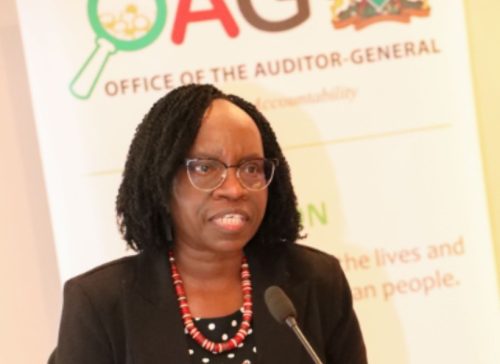
Auditor-General reports covering the 2020/21 to 2024/25 financial years have raised questions about payments to the Kenya Secondary School Heads Association (KSSHA), unpaid school fees, procurement, borrowing, textbook distribution and weaknesses in financial controls.
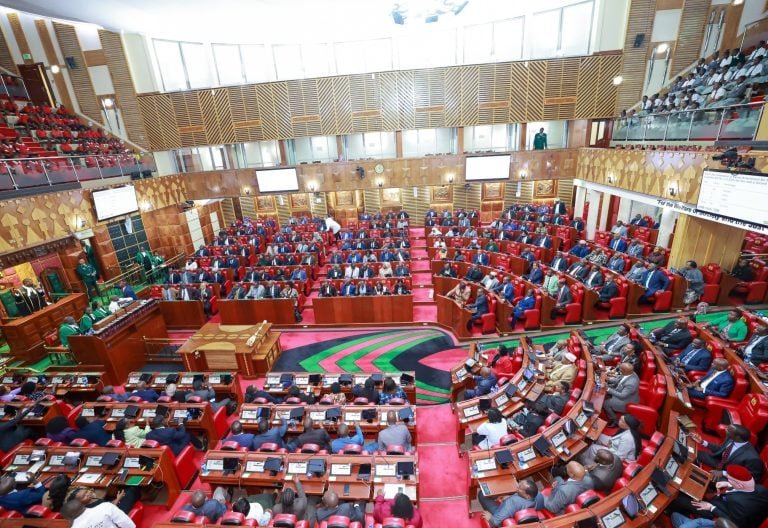
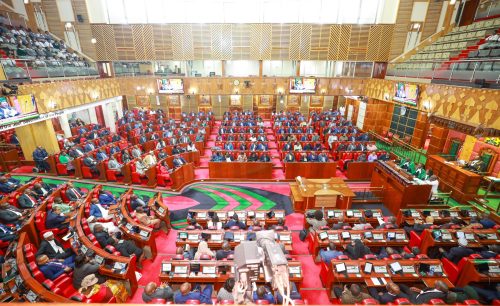
The National Assembly Public Investments Committee on Governance and Education is reviewing the audit queries as principals of national schools, now classified as Cluster One institutions, appear before MPs.
The scrutiny does not mean that money identified in audit queries was necessarily lost. In several cases, auditors and MPs are questioning whether spending had proper authority, documentation, controls or evidence of value for money.
Here are six of the biggest financial questions emerging from the hearings.
Why did public schools send money to KSSHA?
The most significant question concerns payments from public schools to KSSHA, a professional association for secondary school heads.
MPs have estimated that contributions from schools could run into billions of shillings, although the exact national total remains subject to verification.
Committee chairman Dick Maungu said some individual schools had paid millions of shillings to the association.
“If you convert them into all the schools in the country, there are billions going to Kessha,” Maungu told principals, adding that the committee wanted to establish whether KSSHA was a legitimate recipient of public money.
An Auditor-General report cited by the committee found that one school transferred Ksh1.247 million to KSSHA in the year ended June 2024. The auditor said the payment breached public-finance requirements and that “the value for money realised from the expenditure of Sh1,247,220 could not be confirmed.”
Principals have argued that the money supports sports, drama, music and other co-curricular activities.
Maseno School principal Peter Owino said the payments were made in good faith to ensure students could participate in competitions.
“Without paying them, the institution’s students are completely locked out,” he told MPs.
The committee, however, is questioning why schools cannot budget directly for those activities.
How much money remains tied up in unpaid fees?
Fee arrears are another recurring problem. MPs have encountered school debts dating back as far as 2010 and want institutions to prepare detailed schedules showing which fees remain outstanding.
Maungu acknowledged that some receivables may be connected to delayed government capitation rather than parents alone.
“Some of those receivables are due to capitation not being sent,” he said.
At the same time, schools face restrictions on withholding learners’ certificates because of unpaid fees, creating a difficult balance between recovering money and protecting students’ rights.

Why are some schools receiving more textbooks than they need?
The committee has also questioned the distribution of government-provided learning materials.
MPs found cases where schools received hundreds of textbooks beyond their reported requirements while institutions in marginalised and remote areas continued to report shortages.
“We have seen a school that received 400 and 506 extra books,” Maungu said.
The committee wants the Kenya Institute of Curriculum Development to explain how allocations are calculated and whether current enrolment data is being used.
The issue is fundamentally about value for money: a textbook sitting unused in one institution cannot help a learner in another school where the same book is unavailable.
Why are schools borrowing without the required approvals?
The committee has also questioned commercial borrowing by public schools to finance construction and other projects.
Maungu cited a case involving a national school that had previously secured a bank loan of about Ksh50 million for a project estimated at Ksh150 million.
Although the loan had been cleared, MPs said borrowing by public schools must follow the required approval process.
“The law is very clear. No principal can simply walk into a bank and take a facility,” Maungu said, adding that Ministry of Education and Treasury approvals were required.
Are schools following procurement rules?
Auditors and MPs have also raised concerns over procurement practices.
Maungu said some schools did not have qualified procurement officers despite requirements under public procurement law.
“The Public Procurement and Asset Disposal Act is very clear as to how public institutions must procure,” he said. “It is unfortunate that some of our schools procure as if they are procuring for private entities.”
The committee is therefore examining whether schools have the systems and personnel needed to ensure public purchases are properly authorised and documented.
Who is safeguarding school land and other assets?
The financial scrutiny has also extended to public assets.
MPs have questioned cases involving schools operating without secure title documents and properties whose ownership arrangements require clarification.
The concern is significant because school land is a public asset. Without proper documentation, institutions can face disputes, encroachment and uncertainty over ownership.
Taken together, the parliamentary hearings point to a broader accountability question than the controversy over unauthorised levies.
The issue is whether Kenya’s national schools have sufficiently strong systems to authorise spending, document payments, recover debts, manage procurement, control assets and demonstrate value for money.
School heads have also pointed to genuine financial pressures. Earlier this month, KSSHA chairperson Willie Kuria said schools were receiving less than the full annual capitation allocation available on paper, leaving institutions struggling with operational costs.
That financial pressure helps explain why some schools and principals say they have relied on additional contributions or other arrangements to maintain services.
But the parliamentary position is that financial pressure does not remove the requirement to follow public-finance and procurement rules.
The committee is continuing to examine the Auditor-General’s reports and is expected to summon KSSHA and Ministry of Education officials over some of the outstanding questions. Its eventual report could determine whether the concerns lead to tighter controls over how Kenya’s national schools handle public money.