
-
BCG’s Consumer Sentiment Survey Shows Nearly Two-Thirds of Europeans Are Trying to Reduce Consumption
-
62% of Europeans Are Willing to Switch Brands for a Better Deal
-
Health and Wellness Are a Top Priority as Consumers Reduce Spending on Alcohol, Sugary Drinks, and Snacks
BOSTON, June 9, 2026 /PRNewswire/ — European consumer pessimism about the economy has risen for the third consecutive year, reaching 56% in 2026—up from 54% in 2025 and 49% in 2024—as rising energy prices and geopolitical tensions compound years of inflation pressure.

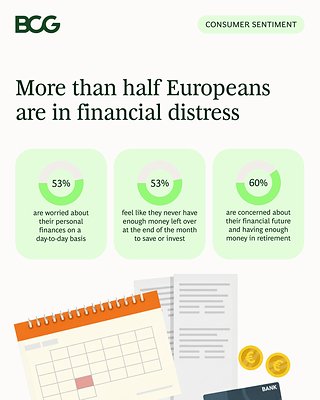
This pessimism translates into financial distress: 53% of European consumers are worried about their daily personal finances, up from 40% in 2024. Six in ten are concerned about having enough money in retirement.
Amid financial pressure, 63% of European consumers will only buy at a discount or actively seek deals, and 62% will switch brands for a better price. That erosion in brand loyalty is reflected in recent purchasing behavior: 44% say their most recent purchase was from a new or unfamiliar brand.
These findings are from the third annual European Consumer Sentiment report from Boston Consulting Group (BCG), titled European Consumers Are Still Cutting Back. The report is based on a survey of more than 20,000 consumers across 11 European countries.
“For a third straight year, European consumers are feeling pessimistic about the economy, and that caution is becoming increasingly embedded in spending behavior,” said Andreas Malby, leader of BCG’s Consumer practice in Europe, the Middle East, Africa, and South America, and a coauthor of the report. “Consumers are pulling back in discretionary categories while protecting the purchases they see as essential, particularly around groceries, pet care, and health and wellness.”
Spending Cuts Across Nearly Every Category
Across 12 categories, groceries (+11 points) and pet care (+12) are the only categories posting positive net spending over the past six months. This is driven by price increases more than volume growth. Every other category is flat or declining, with the steepest cuts in fashion (–25), alcohol (–23), and packaged snacks (–18).
Older generations are cutting discretionary spending significantly more than younger consumers, with net spending over the next six months at –13 points for Gen X and Baby Boomers, compared with –2 points for Gen Z and Millennials.
Across generations, the spending pullback may persist even if economic conditions improve. Given a hypothetical windfall of 10% to 15% extra income, nearly half of consumers say their top priority would be to save rather than spend.
