
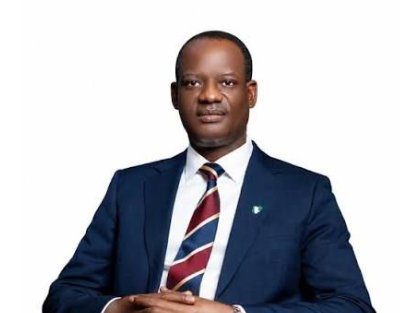
By Henry Ojelu
There are moments in public office when the value of governance is measured not by the size of a new policy announcement, but by the extent to which the government finally resolves problems that have been allowed to linger for years.
The Federal Government’s payment of N18 billion to 2,700 former employees of the defunct Nigeria Airways is one such moment.
For more than two decades, thousands of former workers of the national carrier had waited for their outstanding entitlements following the liquidation of the airline. For many of them, the payment is not a favour from the government. It is the settlement of an obligation that should have been discharged long ago.
Announcing the payment, the Minister of Finance and Coordinating Minister of the Economy, Taiwo Oyedele, acknowledged the long wait and apologised on behalf of the Federal Government.
He said another 600 beneficiaries in batches eight and nine were being finalised for payment, while claims of other former workers were still undergoing verification.
The intervention captures an important aspect of Oyedele’s approach to public finance: that fiscal management is not merely about figures, revenue and expenditure, but also about the credibility of government in meeting legitimate obligations.
For the minister, the question is not simply whether government has enough money. It is how available resources are prioritised.
That philosophy has also shaped the administration’s approach to the huge backlog of debts owed local contractors.
Oyedele disclosed that about 12,000 local contractors had been paid, explaining that government deliberately prioritised smaller contractors whose businesses and workers could be placed under severe pressure by prolonged delays.
Rather than beginning with contractors owed billions of naira, the government started with those owed N50 million or less, covering more than 2,000 contractors in one payment. It subsequently expanded the threshold to N100 million and paid more than 1,000 others.
The reasoning was straightforward. A contractor owed billions may have greater capacity to absorb delays or negotiate a structured settlement, but a small contractor waiting for N10 million may be struggling to pay workers, school fees and other basic obligations.
That intervention represents a departure from a system in which access to government payment could sometimes appear dependent on influence and personal connections.
Oyedele has repeatedly stressed that the objective is to build a public finance system in which citizens and businesses can trust government commitments.
His position on alleged kickbacks is particularly significant. He said once a contractor had completed the work, and the valuation had been properly conducted and validated, the contractor should not need to know the finance minister or any official in the payment chain.
That principle, if sustained, could prove more consequential than any individual payment.
A credible government is one in which people do not have to cultivate political or bureaucratic connections to receive what they have legitimately earned.
It is also why the minister’s emphasis on fiscal discipline has been accompanied by a strong argument for better revenue mobilisation and the creation of fiscal space.
Under Oyedele, the Federal Government has sought to improve revenue collection, reduce leakages, broaden the tax base and strengthen the credibility of the country’s public finances, while insisting that additional resources must translate into better outcomes for citizens.
His interventions have also extended to tax reform. The administration’s tax reform agenda has been presented not merely as an attempt to raise more money, but as part of a broader effort to simplify Nigeria’s tax system, improve compliance and create a more predictable environment for businesses and individuals.
Another important element of his stewardship has been the attempt to bring greater transparency to the country’s fiscal position and communicate difficult economic choices to Nigerians.
This has become particularly important at a time when the government is dealing with the consequences of subsidy removal, rising public expenditure, inherited liabilities and the need to fund critical infrastructure and social interventions.
Oyedele’s argument has consistently been that resources are finite and choices must therefore be deliberate.
That approach does not make the economic pain confronting Nigerians disappear. Nor does it mean every government policy will be universally accepted. But it provides a framework for judging public finance by what government does with scarce resources.
The Nigeria Airways payment therefore carries significance beyond the N18 billion involved.
It sends a message to citizens who have spent years waiting for government to honour commitments: that some inherited obligations can eventually be confronted rather than endlessly transferred from one administration to another.
For the former workers, the money represents dignity restored after years of uncertainty.
For contractors, the emerging payment system offers the prospect that legitimate claims can be settled without political patronage.
And for the wider public, the larger test is whether these interventions can become institutional practices rather than temporary successes attached to one minister or one administration.
Oyedele has repeatedly said government must be trusted not only for the promises it makes, but also for the obligations it honours.
That may ultimately prove to be one of the most important measures of his tenure: not the number of policies announced, but whether public finance becomes more predictable, transparent and responsive to legitimate claims.
In a country where government debts and unpaid obligations have too often become the inheritance of successive administrations, the quiet work of settling old liabilities may be among the more consequential reforms taking place. The challenge now is to sustain it.