
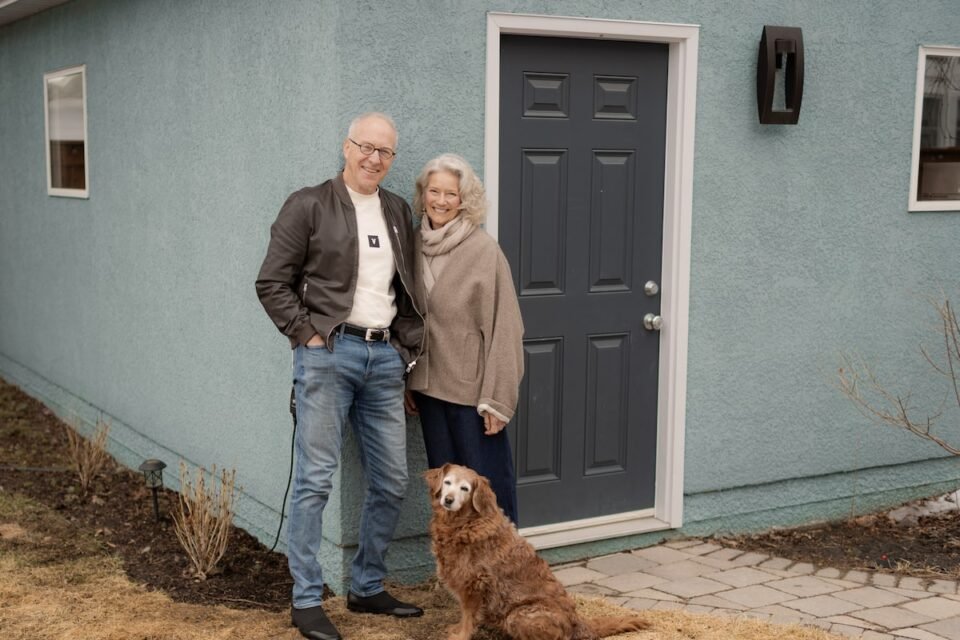
Kerry and Joanne Renaud have lived in their Winnipeg home for 38 years. On future long vacations, the couple plans to book rental properties with kitchens to save money on meals.Matt Horseman/The Globe and Mail
Kelly and Brenda Robinson are adjusting to the rising cost of their travel in retirement. The Calgary couple has noticed higher prices eating into their annual trip to Europe and in their stay in a small community outside of Puerto Vallarta, Mexico, where they have a second home for the winter.
“This year’s trip is more expensive than last year’s trip. Prices are not slowing down at all,” said Mr. Robinson, 64, a retired banker, of their plans to travel to France and Italy. “It’s busy out there and you notice when booking.”
Mr. Robinson said they still plan to travel comfortably, looking for centrally located hotels, direct flights and seat upgrades for long flights. But the couple is planning to spend three to four weeks in Europe this year, compared to five to six weeks in previous years, and has been booking flights and accommodations well in advance to get them cheaper.
They also shifted to travel outside of peak season and rely on their rewards points. Ms. Robinson calls hotels to book with them directly, which has netted them decent savings compared with travel websites and some extra add-ons.
Travel is a big focus for many Canadian retirees, but those booking bucket-list trips may find themselves hit with sticker shock as costs keeps rising, driven by increased demand since the pandemic, inflation and taxes imposed by several destinations cracking down on over-tourism. The war in Iran has boosted oil prices, causing some airlines to hike prices.
Opinion: Home swapping can make travel more affordable and easier for families
While there are ways to travel more cheaply, Shannon Lee Simmons, financial planner and founder of the New School of Finance in Toronto, noted retirees are less likely to want to “rough it” to save on costs.
“The average person who’s over 65 maybe has a mobility issue, maybe wants to stay closer to downtown because hauling it on public transit is harder, they need to have access to amenities, they don’t want to be too remote. There are different needs as you age,” she said. She’s also seen more retirees paying for the cost of their children and grandchildren to join them.
Five years ago, Ms. Simmons said, an annual vacation budget of $5,000 to $10,000 would be considered “extravagant.” Today, she said she’s seeing requests for annual travel budgets in the range of $10,000 to $15,000.
Shannon Tatlock, a certified financial planner with Sun Life in Moncton, N.B., said one often-overlooked cost retirees face is travel insurance, which she estimates has become about 15 to 20 per cent more expensive since the pandemic because of increased claims.
Brett Siborne, a travel agent with Flight Centre Canada in Coquitlam, B.C., said retirees are being more “strategic” about how they spend their dollars, including booking further in advance and travelling during the shoulder seasons of April and May or September and October.
Mr. Siborne said retirees are also looking at locations where they can get more value for their dollar, including Asian countries such as Japan – which have “relatively reasonable” out-of-pocket expenses, although flight costs are pricey and accommodation expenses are rising – and Portugal and Spain, which tend to be cheaper than other parts of Europe.
On Japan’s art islands, I felt the magnetic pull of both human and natural beauty
Ms. Simmons said her clients have adapted to higher costs either by taking big trips only every two or three years, bumping up their travel budget in the first 10 years of retirement and decreasing it later on or taking on part-time work or one-off consulting gigs specifically to cover travel costs. Some have also made classic budgeting trade-offs, such as going from two cars to one, which can save hundreds a month.
Housing swaps or renting out their homes on Airbnb while they travel is one way to save money, but Ms. Simmons said her retired clients are resistant to that idea. She speculated Gen Xers will be more receptive to it, and able to do more travel with less in retirement.
Ms. Tatlock said many of her retiree clients have opted for domestic travel in the past couple of years, partly to save money and partly because of the trade war with the United States.
Owen Winkelmolen, founder of PlanEasy Inc. in London, Ont., acknowledged that many retirees are seeing their vacation costs increase. He said he’s actually encouraging most clients to spend more on discretionary budget items such as travel, since for the most part their investment growth is outpacing their spending growth.
Mr. Winkelmolen said some of his clients who retired during the pandemic and didn’t have an opportunity to travel in those years have been spending down their reserve of earmarked travel funds.
Kerry Renaud bought this fantastical wooden pig, which stands on a hutch in his home, during a cycling trip in Mexico in the 1970s.Matt Horseman/The Globe and Mail
Kerry Renaud, a 70-year-old retired company executive in Winnipeg, said he and his wife haven’t cut back yet. The couple travels four or five times a year, for a little more than a week each time, so they aren’t away from their elderly dog for long.
When they’re able to go away for longer stretches, they plan to book Airbnbs or VRBOs with kitchens to save on eating out and would be more open to staying farther out of city centres and taking public transit.
But for the shorter trips, Mr. Renaud said they want “everything to be right,” and splurge on five-star, centrally located hotels. With few direct flights out of Winnipeg, they do what they can to limit connections and will upgrade to preferred seating for more legroom.
“At this stage of our life … you want it to be comfortable and somewhat seamless,” he said.