
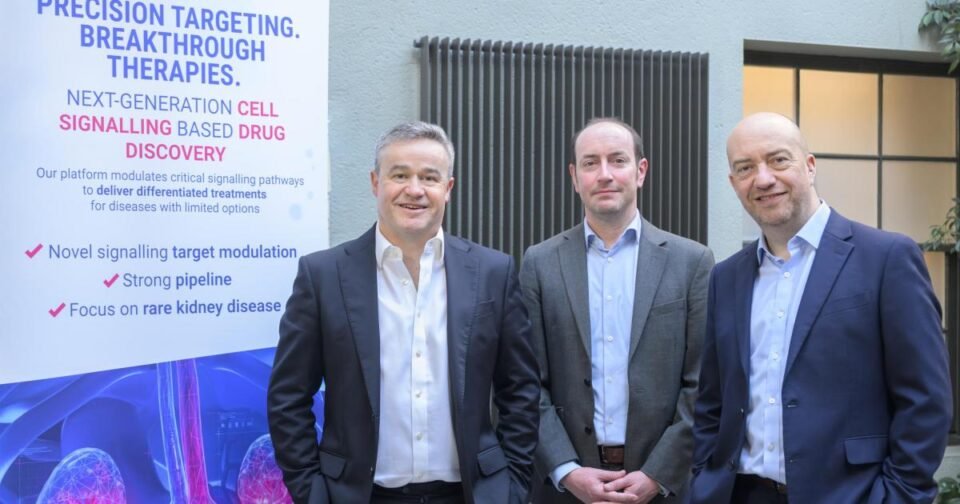
The company’s lead programme is for autosomal dominant polycystic kidney disease (ADPKD), which is characterised by uncontrolled growth of fluid-filled cysts.
ADPKD is one of the more prevalent rare diseases and the most common hereditary kidney disorder but has limited treatment options, Mironid noted.
The Scottish National Investment Bank declared Mironid “exemplifies Scotland’s growing reputation for biotech innovation”.
It confirmed it would be a minority equity investor in Mironid.
Neil Wilkie, chief executive of Mironid, said: “ADPKD is the most common hereditary kidney disorder, affecting over 12 million people worldwide, with 50% of patients developing kidney failure by the age of 60. Securing funding from such a high-calibre syndicate is a strong validator of our approach to treating kidney diseases such as ADPKD.
“This financing will allow us to progress the clinical development of our lead candidate, bringing us closer to transforming the treatment landscape for patients with rare kidney diseases.”
Mironid was founded through collaboration involving the University of Strathclyde and Heriot-Watt University.
Under Mr Wilkie, it has progressed a series of drug development programmes that target specific enzymes to generate novel and differentiated therapies for a range of diseases with high unmet medical need.
Mironid noted its “first-in-class” small-molecule “LoAc” drug candidates directly target the abnormally high kidney cyclic adenosine monophosphate (cAMP) levels that drive cyst formation.
Read more
The Scottish National Investment Bank observed it is joining existing investors in Mironid, including Roche Venture Fund, Epidarex Capital, Sofinnova Partners, BioGeneration Ventures, and the University of Strathclyde.
Paul Callaghan, investment director at the Scottish National Investment Bank, said: “Our investment in Mironid reflects our commitment to backing impactful Scottish businesses with high-growth potential.
“Mironid exemplifies Scotland’s growing reputation for biotech innovation, developing a new treatment approach that could improve options for people living with kidney disease.”
He added: “We are pleased to join a committed group of investors to support the company through this critical stage of development, helping it translate world-class research into clinical progress, commercial opportunity and potential patient benefit.”
The Scottish National Investment Bank declared its funding of the Glasgow biopharmaceutical company builds on its commitment to scaling innovative Scottish firms and “will support Mironid’s growth ambitions as it advances its novel therapy for patients with ADPKD”.
The Scottish Government has committed to capitalising the Scottish National Investment Bank, which was established in November 2020, with £2 billion in its first 10 years.
Over time, as the initial investments of Scotland’s development bank are repaid, the institution will reinvest those funds in more businesses and projects, in what the Scottish National Investment Bank characterises as “creating a perpetual investment fund to support the Scottish economy in the long term”.
The Scottish National Investment Bank noted it exists to “provide patient – long-term – debt or equity investments to businesses and projects that support the development of a fairer, more sustainable Scottish economy”.
It added: “The bank is a public limited company … It is wholly owned by Scottish Government ministers, on behalf of the people of Scotland, but operates independently from government.
“As an impact investor, the bank is focused on delivering both commercial returns and tangible benefits that align with at least one of its three missions: ‘net zero, addressing the climate crisis through growing a fair and sustainable economy; innovation, scaling up innovation and technology for a more competitive and productive economy’; and ‘place, transforming communities to make them places where everyone thrives’.”