
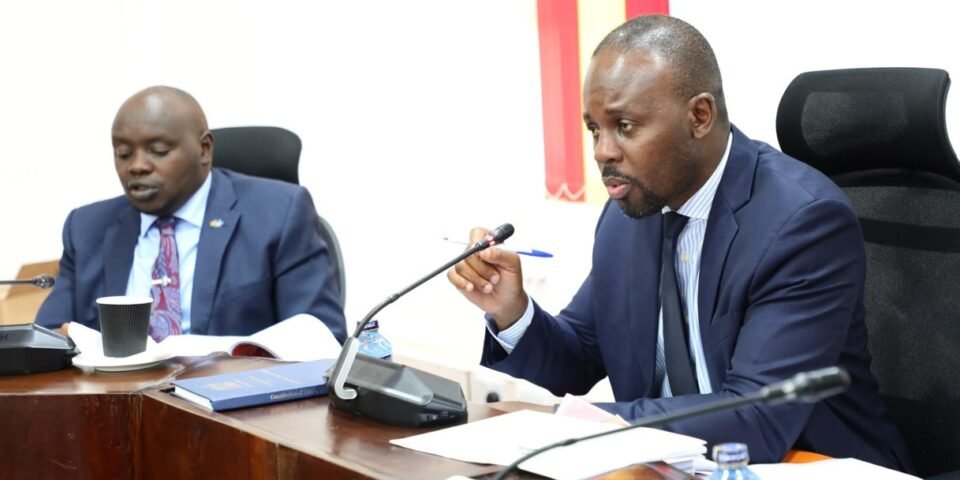
Senators have flagged widespread misuse of public funds in county assemblies, linking the problem to weak oversight systems and gaps in financial management across devolved units.
In a report, the Senate County Public Accounts Committee said the situation has been worsened by persistent failure to implement audit recommendations, allowing irregularities to recur year after year.
The committee, chaired by Homa Bay Senator Moses Kajwang, based its findings on the Auditor General’s reports for the 2024/25 financial year.
The report examined several county assemblies, including Marsabit County, Wajir County, Meru County, Siaya County, Busia County, Murang’a County, Baringo County, Kakamega County, Makueni County, Nyeri County, Tana River County, Nyamira County and Kericho County.
According to the committee, key concerns include irregular expenditure, weak governance structures, and poor management of public assets. It further notes that many assemblies lack strong audit teams and effective internal control systems, leaving public resources exposed to misuse.
“These weaknesses expose public resources to wastage and misappropriation,” reads the report, adding that accounting officers in many counties have also failed to meet their legal obligations under the Public Finance Management Act.
To address these challenges, the committee has recommended strict enforcement of financial regulations and the adoption of automated systems to strengthen accountability. It also wants all unresolved audit issues continuously tracked to ensure compliance and stronger oversight.
The Senators further directed the National Treasury to comply with its constitutional and statutory duties by ensuring the timely and predictable disbursement of funds to county governments in line with approved schedules.
They cited Article 219 of the Constitution, which requires an equitable share of revenue allocated to counties to be transferred without delay or deductions, except where payments are lawfully withheld under Article 225.
The committee noted that the delayed disbursement of funds from the National Treasury remains a major external challenge affecting county assemblies.
“This has led to budget underfunding, under-utilisation of development funds and the accumulation of pending bills, thereby affecting public services and cash flow,” the committee said in its report to the House.
In the case of the Wajir County Assembly, the report revealed that the assembly received Sh98 million after the close of the financial year on June 30, 2025.
The Auditor General found that Sh28.2 million of this amount was tied to delayed Exchequer releases, while the remaining funds were linked to ongoing projects where contractors were only paid for certified completed work. The assembly also reported an under-utilisation of Sh1.3 million, which was returned to the County Revenue Fund.
Overall, the assembly recorded underfunding of Sh171.6 million, representing 13 per cent of its total allocation against the final receipts budget.
“Of the shortfall, Sh28.2 million was attributable to delayed Exchequer disbursements, which hindered timely budget absorption and project implementation, violating the Public Finance Management Act, which mandates disbursement not later than the 15th day from the commencement of every quarter,” the Senate committee noted.
The committee has now urged county executives to strengthen own-source revenue collection to reduce funding gaps and improve financial stability.
It also directed county assemblies to fully exercise their powers under Article 201 of the Constitution to ensure realistic budgeting anchored on effective public participation.