
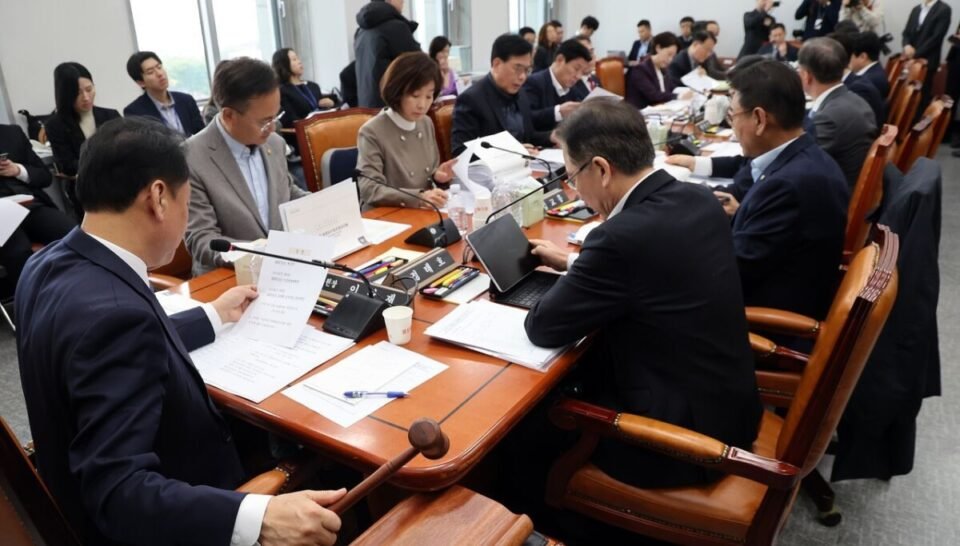
Forty-five current or former presidents and vice presidents of 10 academic associations urged the government to review its 2027 budget proposal in the first collective action by economics-related academic groups since October 2003.
A group of economists and public finance scholars urged the government on Thursday to reconsider its plan to establish the Future Fund, which would set aside surplus tax revenue resulting from the semiconductor boom.
The call for a comprehensive review of the government budget proposal for 2027, including the establishment of the Future Fund, came from 45 current or former presidents and vice presidents of 10 academic associations during a policy forum at the Franciscan Education Center in Jung District, central Seoul.
The representatives — including Korean Association of Public Finance President Kim Woo-chul and Korean Association of Public Policy President Park Myung-ho — signed the statement.
This marks the first collective action by multiple economics-related academic associations since October 2003, when 302 scholars specializing in economics and social welfare issued a statement calling for national pension reform.
“In academic associations, researchers with differing views come together to debate, so we have refrained from speaking with one voice on national issues,” one participant said. “But we felt compelled to speak out about next year’s budget because it [if realized] would no longer be a matter of policy choice and would undermine the fundamental principles of fiscal management.”
The Future Fund would channel additional tax revenue, mostly generated by the semiconductor boom, into investments in future growth industries, youth support, regional development and education, as well as set aside reserves to cushion any future tax revenue shortfalls.
The academic association representatives also criticized the government’s plan to issue more than 106 trillion won ($78.9 billion) in additional government bonds and set aside 104.4 trillion won in surplus funds through the Future Fund’s establishment, even though national tax revenue next year is projected to increase by 194.2 trillion won compared to the figure projected in this year’s original budget.
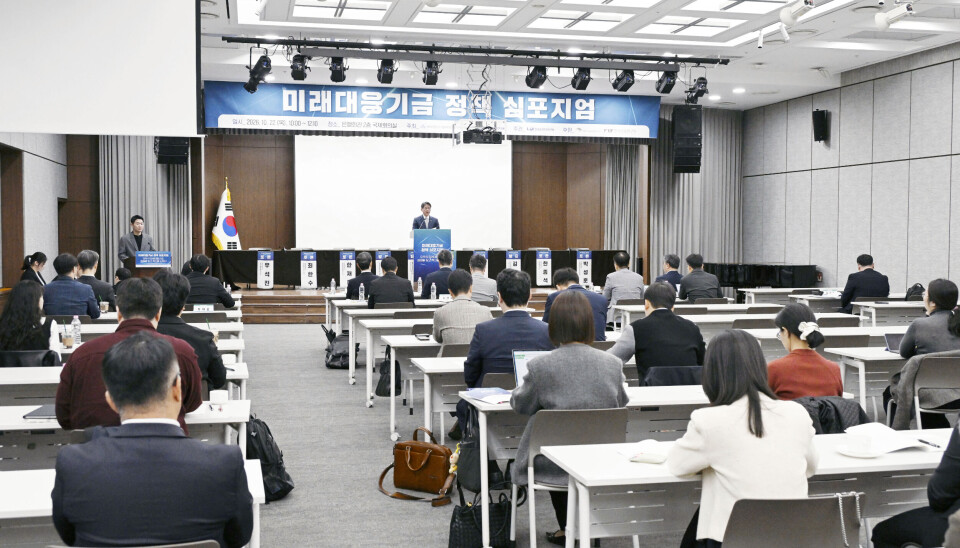
They called for the government to comprehensively review the Future Fund, including by removing a special provision exempting it from prior parliamentary approval and pursuing reforms to local allocation taxes and education finance grants separately from it; reduce government bond issuance; and consider whether surplus funds should be used to fortify reserves or repay debts.
They pointed out that the projected annual rate of return of 3.85 percent for the fund — cited by the government — falls short of the borrowing rate of 4.07 percent.
The scholars also challenged the government’s claim that the national debt-to-GDP ratio would decline, noting that the comparison was based on GDP projections from different points in time. Configured to a consistent basis, the ratio would instead rise to 48.3 percent.
“Excessive spending can be corrected in the following year’s budget, but once [the government] becomes lax with fiscal discipline, [the practice] is difficult to restore,” one participant said. “If the government and the National Assembly review [the 2027 budget proposal], we will gladly take part in discussions to find alternatives.”
BY JANG WON-SEOK [lee.taehee2@joongang.co.kr]